

Ministers are trying to solve the intractable (and some would argue impossible) problem of how to provide a comprehensive public service in a low tax environment.
Last year, the Council’s independent financial advisers – called the Fiscal Policy Panel – said that if Ministers carried out their spending plans but didn’t change the way they did business, the States would be left with a £145m hole in the budget by 2019.
This is an attempt to avoid that.
Understandably Ministers are tackling the issue from both ends: making savings while raising revenue. The headline revenue earner is a health charge, which will raise £15m a year by 2019. States departments themselves are having a good shakedown, too – particularly those whose raison d’être doesn’t fit in with the States’ strategic priorities. Environment and Social Security are two departments conspicuous by their absence.
So, what are the key numbers?
£73m – savings made across departments by 2019
£4m – amount raised through introducing user-pays charges
£10m – saving through containing benefit spending
£11m – amount raised through charging businesses to dispose of their rubbish and liquid waste
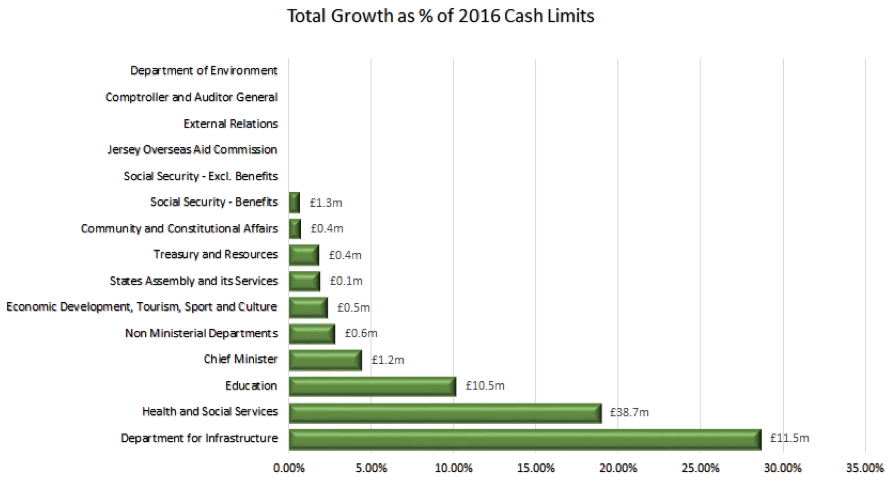
£70m – extra spent on ‘priority’ services by 2019. This includes an extra £40m on health and social care, and £11m on education.
£168m – spent capital projects from 2016-19, including more than £56m for Les Quennevais, Grainville and St Mary’s schools and £43m for a new sewage treatment works. The £450m+ needed for the new hospital is not included in this plan. That’s a debate for another day but Ministers have already said that they may go out to the markets for a bond, as they did with Andium Homes in 2014.
162 – number of States workers whose applications for voluntary redundancy have been approved, which has saved the States £5.2m a year.
£2m – extra funding in education by 2019 to help more young people go to university.
£35m – money set aside for projects that boost economic growth and productivity.
The plan also includes spending that taxpayers won’t have to fund: £200m that Andium Homes is spending from a bond that the States guaranteed in 2014; and £150m that the Jersey Development Company has borrowed to spend on the Waterfront and on the former JCG.
