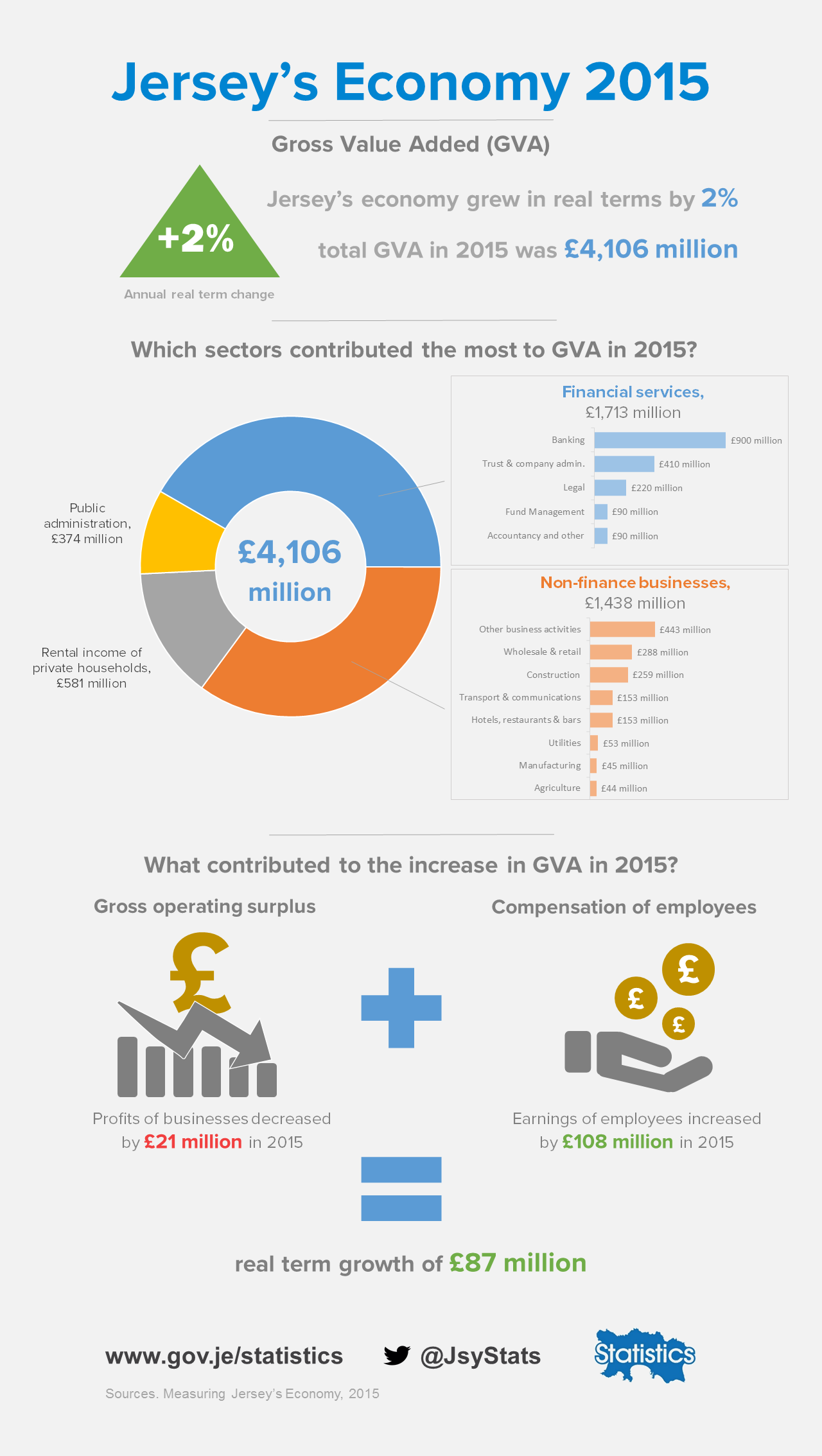
The figures are for 2015, and show that growth was slower than in the previous year (4%), and there was a small decline of 1% in the size of the critical finance sector, which makes up 42% of the Island’s economy. Other sectors, such as agriculture (11%), construction (9%) and Electricity/gas/water (8%) all grew.
The States’ preferred measure of economic size is GVA (gross value added), which they determine by combining total company profits and earnings (including wages, bonus, social security and pension) for all employees.
It was higher total earnings, caused by having 1,000 extra employees in 2015, which drove the growth. Profits in the finance sector where actually down by £77million in 2015, mainly caused by lower profits in banking which is the largest industry sector; however, despite lower profits, the total earnings for finance workers increased by £60million.
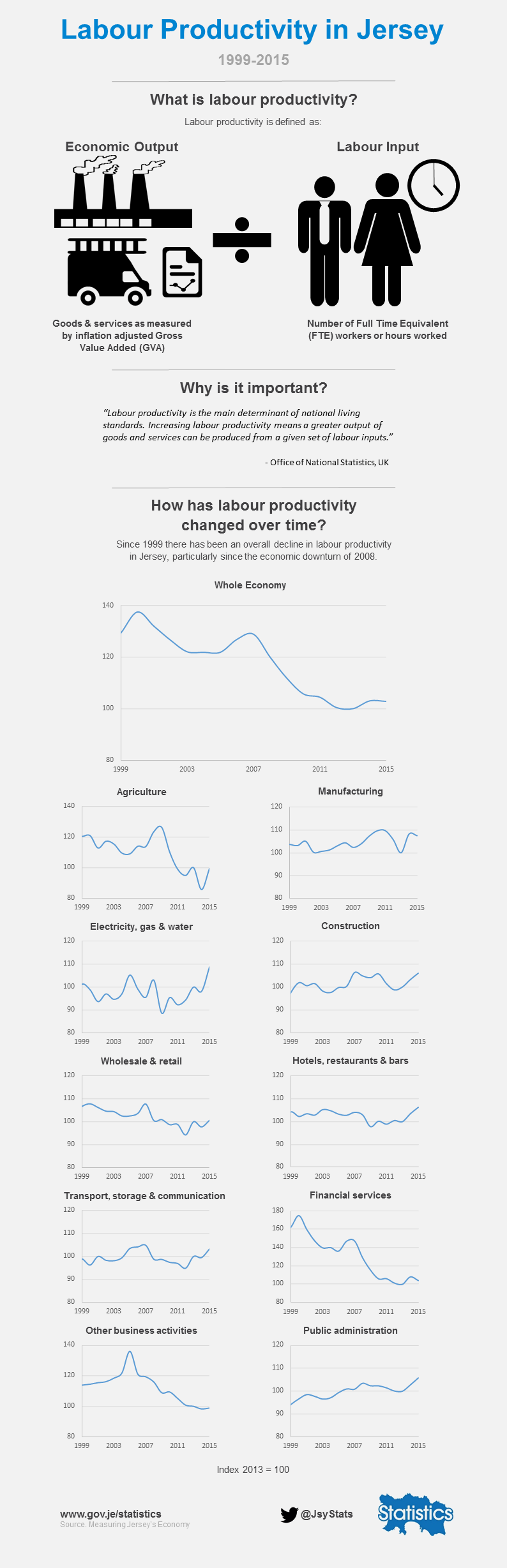
Productivity in the finance sector also fell by 4% in 2015, continuing a decline of 29% from 2007 to 2015.
Generally, the ‘economic standard of living’ for people in Jersey has fallen by 23% in the last fifteen years, from a GVA per person of £51,000 in 2000 to £39,000 in 2015. For comparison the same measure for the UK in 2015 is £25,200 and for Guernsey is £37,400.
The latest figures also give a detailed picture of the economic contributions made by workers in different sectors in 2015. The productivity per full time equivalent employee was:
Finance: £139,000 (a fall of 4% on 2014)
All sectors: £67,000
Public Administration: £55,000
Construction: £51,000
Hospitality: £29,000
Agriculture: £27,000
Those figures reflect a long-term decline in productivity, mainly between 2007 and 2015, when the productivity in the Island’s economy generally fell by 20%.
The productivity per full time employee was £84,000 in 2007, compared to £67,000 in 2015.