


They found that Jersey’s economy, which is measured in Gross Value Added (GVA), was worth around £4.19billion.
While It had grown by around 1% in real terms last year, a rising population had meant that the amount contributed per person fell by 0.3% to £40,200. Jersey residents are still contributing over 50% more than their UK counterparts, however.
Video: What is GVA? The Statistics Unit explains.
Rental incomes from private households were a key driving factor behind the economy’s growth, resulting from an increase in the number of resident households combined with higher rents paid. The island therefore enjoyed a GVA increase of £32million from this sector alone, taking its total value to as much as £617million.
Construction, private sector services and hotels, restaurants and bars enjoyed growth, but the financial services – Jersey’s largest sector – continued with their yearly freefall alongside retail.

Pictured: The construction industry enjoyed strong growth last year.
Public administration recorded the largest decline of all, however, down by as much as 4%.
Agriculture, on the other hand, saw a real-term change of as much as 12%, putting the sector’s GVA income at £51million in 2016, despite volatility in recent years.
The island’s productivity also continued to plummet – a decrease of 2%, linked with the finance sector’s own fall of 3%.
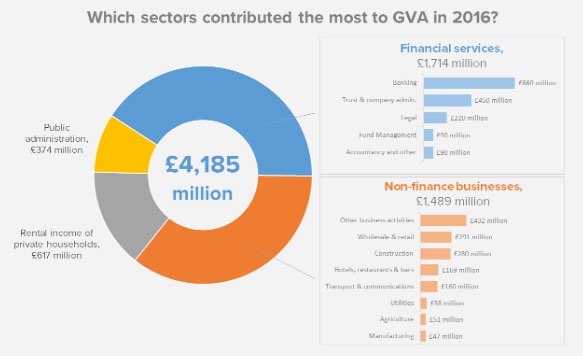
Pictured: Which sectors contributed the most to GVA in 2016? (Statistics Unit)
It follows a long-term trend of declining productivity, which has seen the island’s output fall by more than a fifth since 2007, and the finance industry’s go down by almost a third.
