

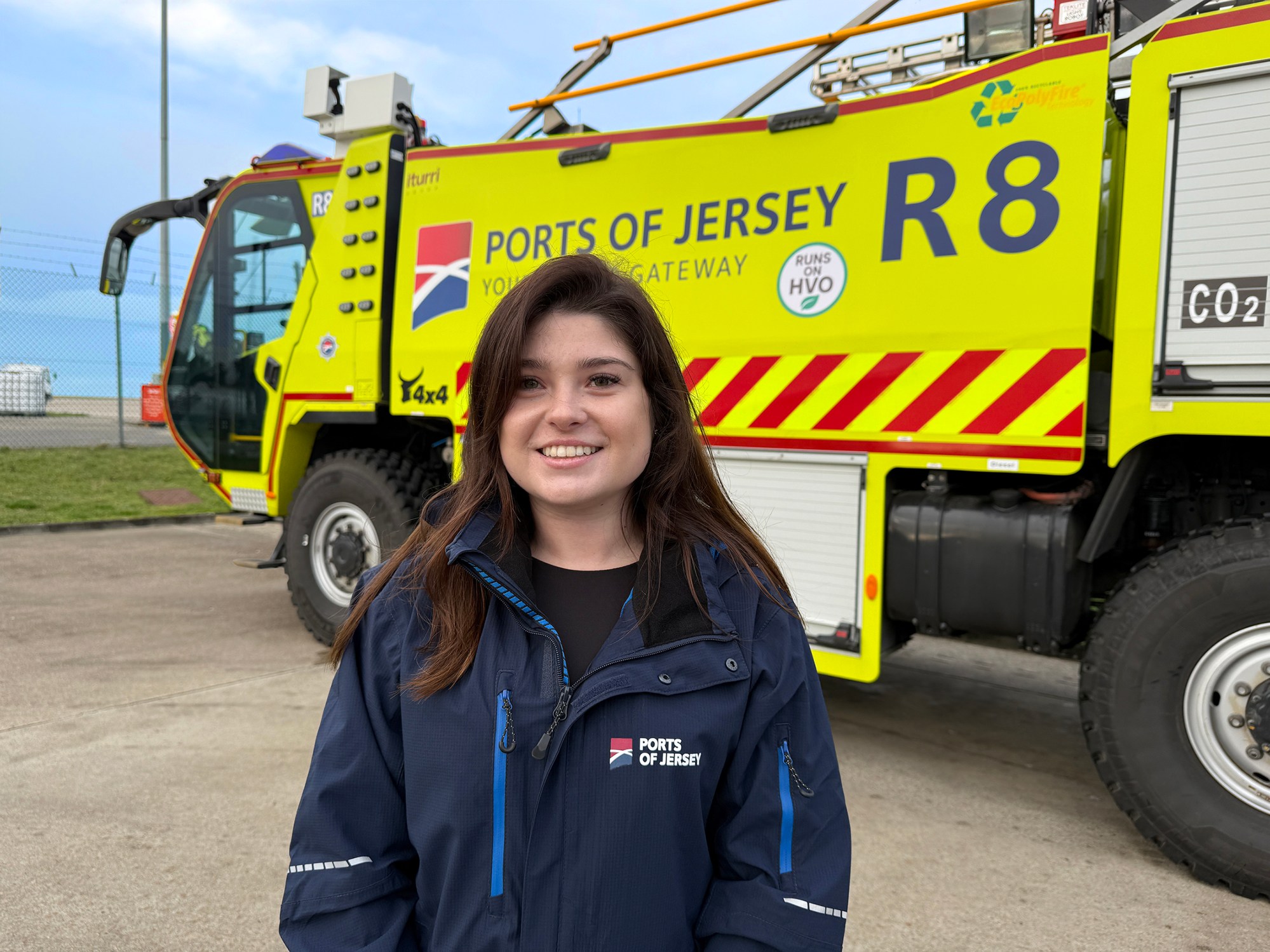
Over 70 vehicles owned by Ports of Jersey have been switched to a low-carbon diesel alternative.
The airport and harbour vehicle fleets have been changed from diesel to hydrotreated vegetable oil – a low-carbon alternative to diesel that can cut emissions by up to 90%.
The fuel is compatible with most diesel engines and can be used without any modification.
In May, Ports introduced a private aviation decarbonisation charge to help fund sustainability initiatives to reduce emissions.
Vehicle conversion to hydrotreated vegetable oil is one of these initiatives and is part of Ports’ wider ambitions to become operationally net-zero by 2030.
Head of sustainability and community value Sophie Alexander said: “Switching our diesel vehicle fleet at the airport and harbour, just over 70 vehicles, to a cleaner, low-emission option is a huge step forward for us, and one we’re really excited about.
“It’s a big win for our net-zero goals and shows what’s possible when we push for real change.
“We’re also thrilled to be supporting our airport operators as they transition to HVO, hitting our sustainability targets is a team effort and we are on this journey together”
The transition was made possible by fuel supplier ATF replacing diesel with hydrotreated vegetable oil at Ports’ fuel tanks.
ATF director Jonathan Best said: “We are delighted to support Ports of Jersey in driving forward its ambitious sustainability goals by enabling the use of HVO across all airside operations – including aviation refuelling trucks, baggage-handling equipment, and firefighting and maintenance vehicles. Every diesel vehicle will now run on HVO.
“And at ATF, we’re leading by example: we’ve committed our entire landside fleet to the same fuel, delivering up to a 90% reduction in tailpipe carbon emissions.
“It’s a powerful step towards cleaner, more responsible operation for the island.”
Business partners Swissport, OceanAir and Loganair have also switched their airside vehicles to hydrotreated vegetable oil.
