

An unconventional proposal to encourage Islanders to travel more sustainably has received a cautious response from Jersey politicians, with many questioning whether it would work in practice.
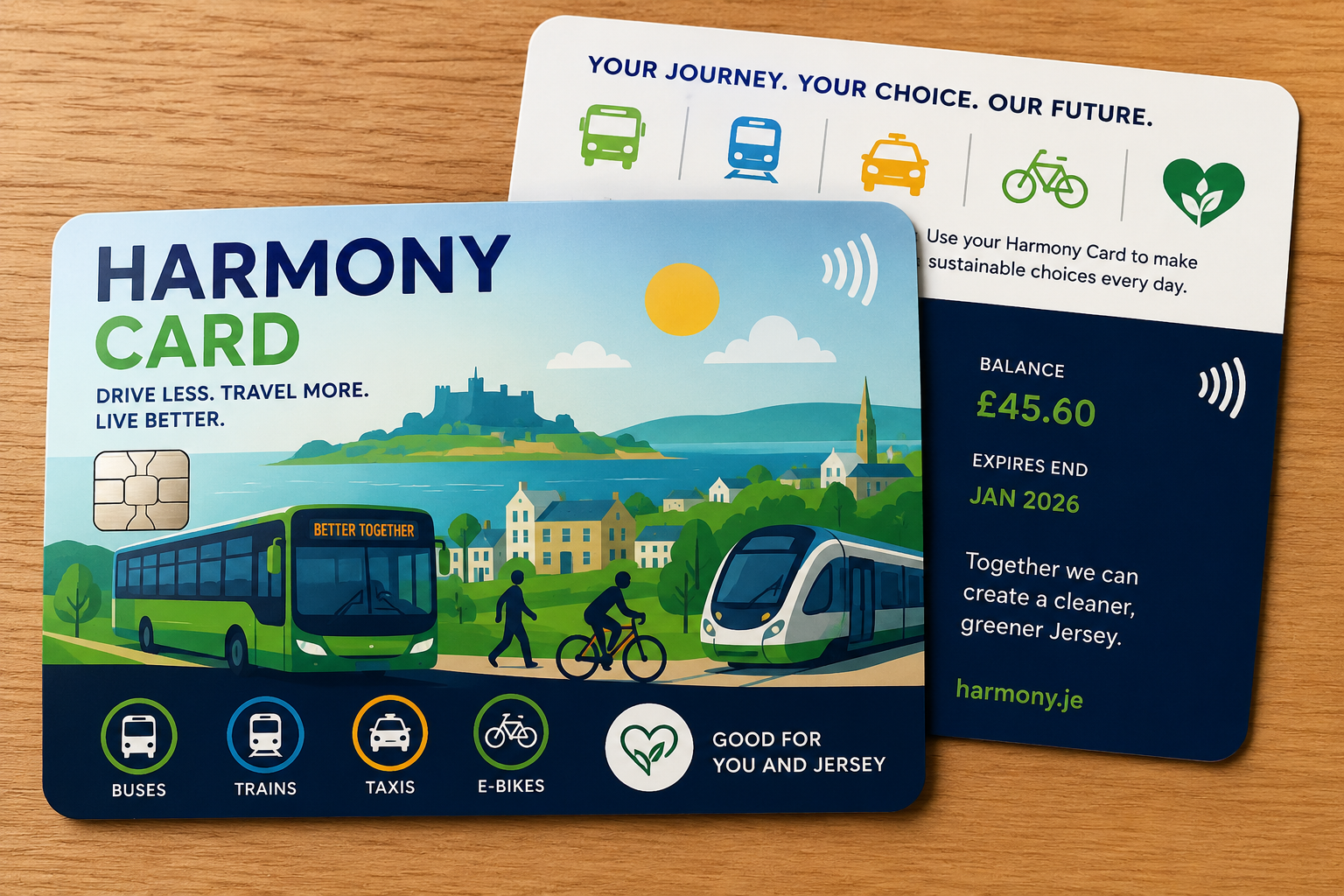
The Anonymous Arts Collective proposed introducing a “new Oyster-style smart card” designed to reward people who choose greener forms of transport.
The proposed Harmony Card would see motorists pay an additional levy on fuel, with the money credited to a smart card that could then be redeemed against bus fares, taxi journeys and e-bike hire.
Supporters believe the scheme could reduce carbon emissions while generating additional funding for public transport.
The proposal comes just days after new Prime Minister Andy Burnham announced the return of a £2 cap on bus fares across the UK.
And the latest annual audit of Jersey’s gas emissions, published this week, found that road vehicles account for almost 27% of Jersey’s total emissions,
Express asked States Members for their views on the Harmony Card idea.
While politicians broadly welcomed new ideas aimed at encouraging more sustainable travel, several questioned whether the proposal would be practical or fair.
What is the Harmony Card?
Under the proposal, the Harmony Card would be issued to motorists and public transport users, with exemptions for emergency vehicles, disabled drivers, buses and certain other users.
Motorists would pay an additional government levy of between 10% and 20% on fossil fuels when refuelling, with that money credited to their Harmony Card.
The credit could then be reclaimed when purchasing bus tickets, season passes, taxi journeys or e-bike hire.
Bus travel and e-bike hire would be rewarded on a 1:1 basis, while taxi journeys would receive a 1:2 ratio.
Any unused credit would remain on the card for six months before being transferred towards improving Jersey’s public transport network.
Cardholders could also choose to sell their credit to another person or donate it to a government-approved environmental charity.
Supporters believe the scheme would encourage more people to leave their cars at home, reducing congestion while helping lower bus fares and fund additional services.
So why are politicians unconvinced?
Hilary Jeune, chair of the Environment, Housing and Infrastructure Scrutiny Panel, said she would want to see evidence that the proposal would actually change people’s behaviour.
“My whole ethos is evidence-based,” she explained. “Therefore, I would need to see a little more workings on whether it will encourage people to make the switch to use buses, for example.”
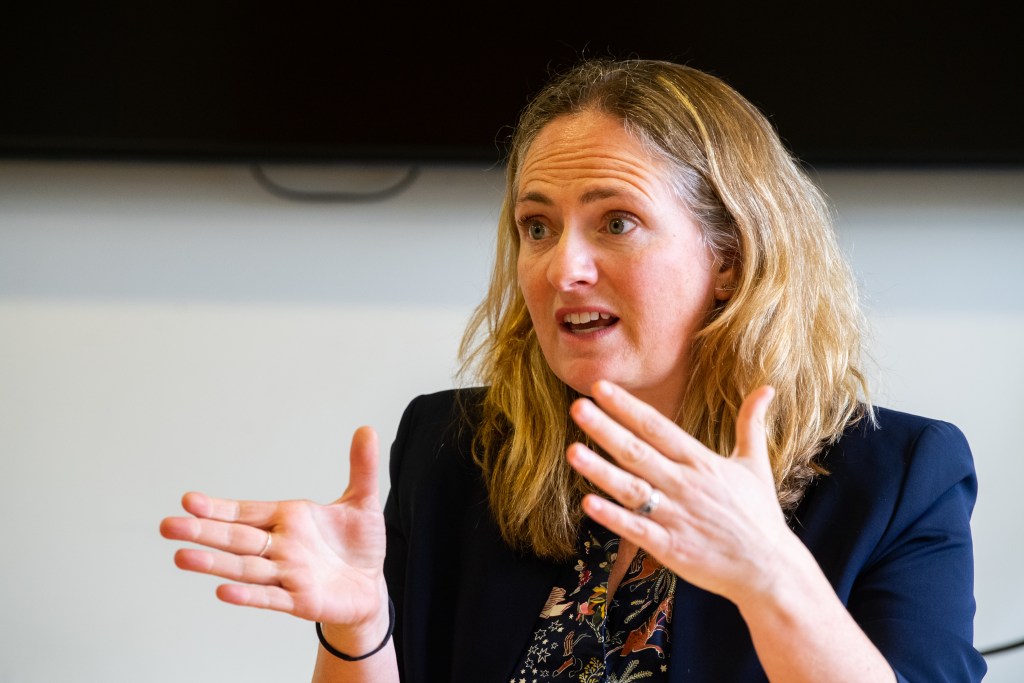
Environment, Housing and Infrastructure Panel member Tom Coles said the proposal had potential but needed to be “better targeted” so that it doesn’t “inadvertently impact the hardworking people who will always need to use a car”.
“We often talk about transport being our main contributor to carbon emissions,” he said.
“We complain about traffic build-up around roadworks and worry about road safety. However, have we seen any initiatives that tackle all three of these problems? In short, no.”
He added that “people have spent weeks angrily sitting in traffic around Rouge Bouillon” following the extensive roadworks in the area.
Deputy Coles said: “The real issue is time. Many people are time-poor, and bus journeys are usually slower than travelling by car.
“Add to that the need to travel on the bus’s schedule rather than your own. The solution is more buses running more frequently – but the challenge is cost.
“But sometimes a good idea gets lost in the pursuit of perfection – and the Harmony Card could be one of those ideas. We have to consider why people prefer using their cars instead of taking the bus.”
St Helier Constable Inna Gardiner said the proposal was an “interesting idea that seeks to reward positive travel choices”, but said it would require further consideration to ensure it was “fair and cost-effective” to administer.

She said: “Fuel duty itself, and the level of any levy, is a matter for the Treasury Minister, and public transport strategy sits with Infrastructure, so I wouldn’t want to comment on the specific mechanics of this scheme.
“I would think as a first step to consider a pilot with travel credit linked to fuel purchases, funded through existing revenues, alongside better bus frequency, evening routes, bus priority and safe walking and cycling connections.
“Sustainable travel must become the easiest choice, not simply another cost imposed on motorists,” added Mrs Gardiner.
Infrastructure Minister Jonathan Renouf thanked the collective for what he described as an “interesting proposal”, but said he did not believe it would be practical.
He said: “We already charge motorists a levy on motor fuel to support the Climate Emergency Fund, and I don’t think an additional levy at the present time is appropriate.”
