


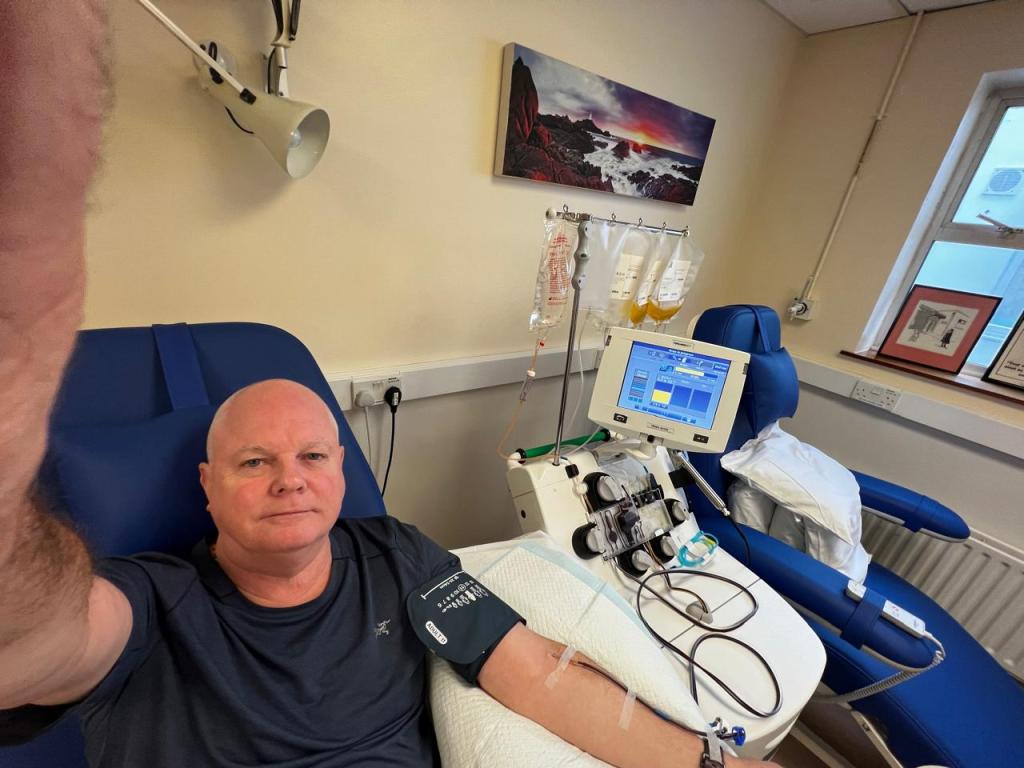
There was cause to celebrate at the hospital last week as Michael Appelqvist made his 100th donation of platelets.
He is believed to be the most prolific platelets donor in Guernsey – helping to supply the 60 units of platelets that are transfused into patients at the Princess Elizabeth Hospital each year.
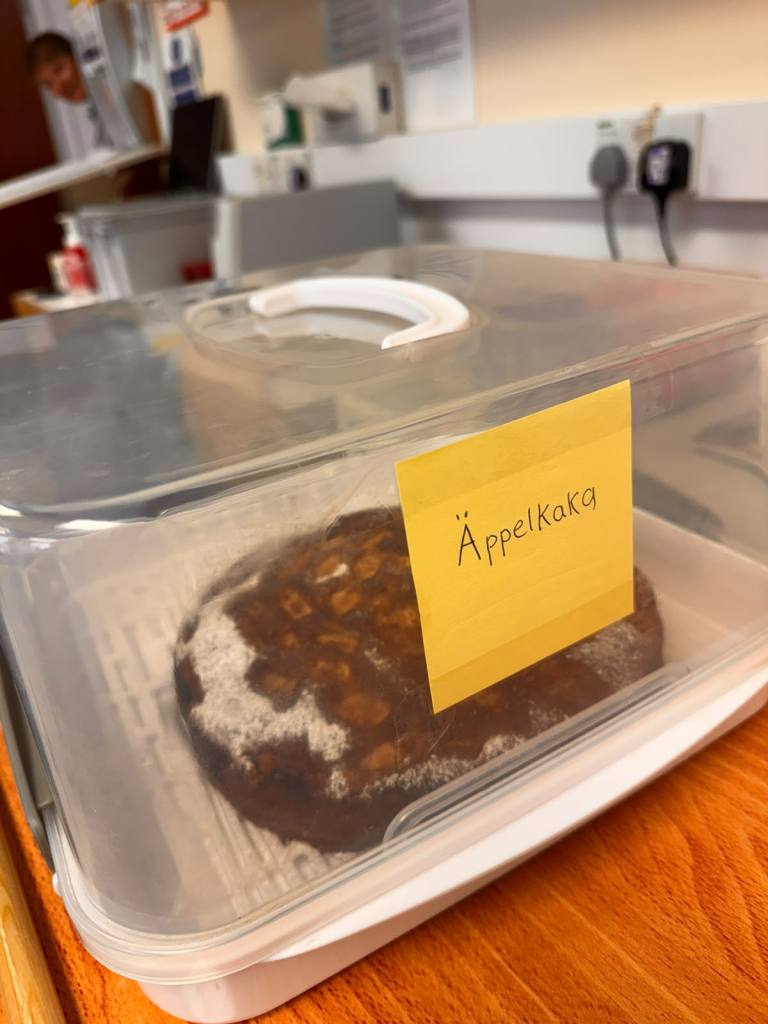
When he checked in for his latest donation on Thursday, the staff made a fuss with a Swedish cake to reflect his nationality and a card to say thank you for his vital contribution to health care in the Bailiwick.

Mr Appelqvist told Express that he has been donating platelets for around five years – on average once a fortnight, and that he doesn’t intend to stop even now he’s reached his centenary.
“It’s easy to do, I think, and why wouldn’t you want to do that to help somebody else if you can?
“My mum and my dad died of cancer, and I’ve had friends who have died of cancer and friends that have cancer now. Why wouldn’t you want to help them?
“I would do it every week if I could, but you’re literally not allowed. It’s something I’m extremely passionate about, and I’ll never stop doing it while I can.”
Platelets are small cells made in the bone marrow and stored in the spleen.
Also called ‘thrombocytes’, they are essential to help the body form clots to stop bleeding.
Approximately 1553 units of blood and 60 units of platelets are transfused into patients in Guernsey and Alderney each year.
They are used in a “variety of therapies” and anyone can receive platelets from any donor as they are not determined by blood type.
Platelets have a ‘shelf life’ of five days once prepared after donation so a continued supply is essential to meet patients’ needs.
Guernsey is the only island in the entire British Isles to collect its own supply of platelets from donors. Other islands import them from supplies donated elsewhere.
Mr Appelqvist’s dedication to donating platelets goes as far as dictating where he goes on holiday, to ensure he remains in good health to be able to continue.
“There’s actually a map that’s forever being updated where various diseases are, and if I was to travel to any of those places, that would stop me donating for at least a month, or some places they probably wouldn’t look at me for six months, depending on what the risk is or how long it would be for any of the diseases that are in that area.”
To ensure donors are in good health, they are emailed on the morning of an appointment to ask if they are fit and well and coming in as scheduled.
They then have to complete a questionnaire when they arrive at the hospital before donating.

“I have to fill in the form each time with a questionnaire of where you’ve been and have you been traveling or whatever,” he explained.
“It’s a big issue if you’ve been traveling,” he reiterated.
“When I went to Costa Rica, they wouldn’t see me for six weeks, and you have to be clear of any symptoms, so if there are any symptoms during that period, then you’d be knocked back for the next one.”
Once the staff have checked you’ve not been anywhere considered a risk, donors have their pulse checked and they give a ‘pinprick’ of blood for a blood count check.
If that gives a good indication of a strong platelets yield, the donor gets plugged into the machine for further tests.
“They do that test, ask you questions about your health, and off you go to get plugged in, basically,” explained Mr Appelqvist.
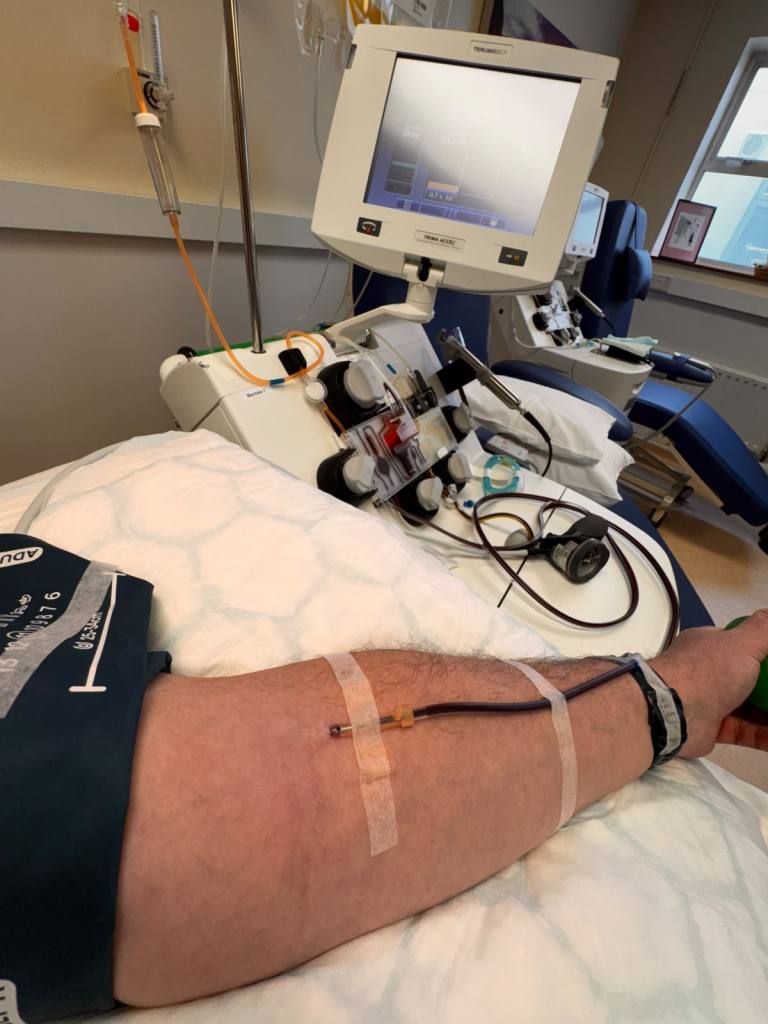
“You have the initial test to see what your blood count is, but when they plug you in they take a bigger sample of your blood, which then gets tested. That gives a more accurate reading of where you’re at and what the (platelets) yield would be. The machine says the yield is going to be X and it’s going to take 55 minutes or 57 minutes or whatever it is, and then when you’re set up you have to sit there rigid.”
Mr Appelqvist was clear to say that donating platelets does not hurt.
It might be uncomfortable for some people, especially if you don’t like needles, but the donation process is pain-free.
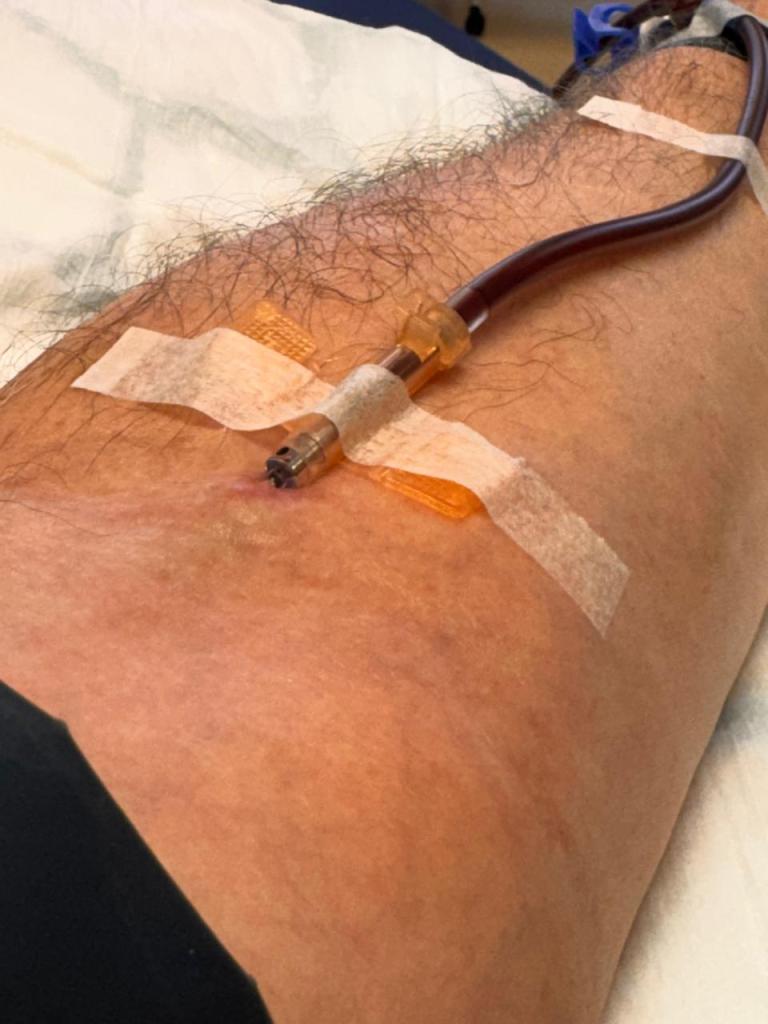
“You get an injection, and it’s a decent sized needle,” he explained.
“Other than that, once it’s in, I wouldn’t say it hurts. You know it’s there, and you can’t move. It does give you pins and needles on occasion, which is why I use a stress ball to try and keep my circulation going but your arm has to stay straight all the time.”
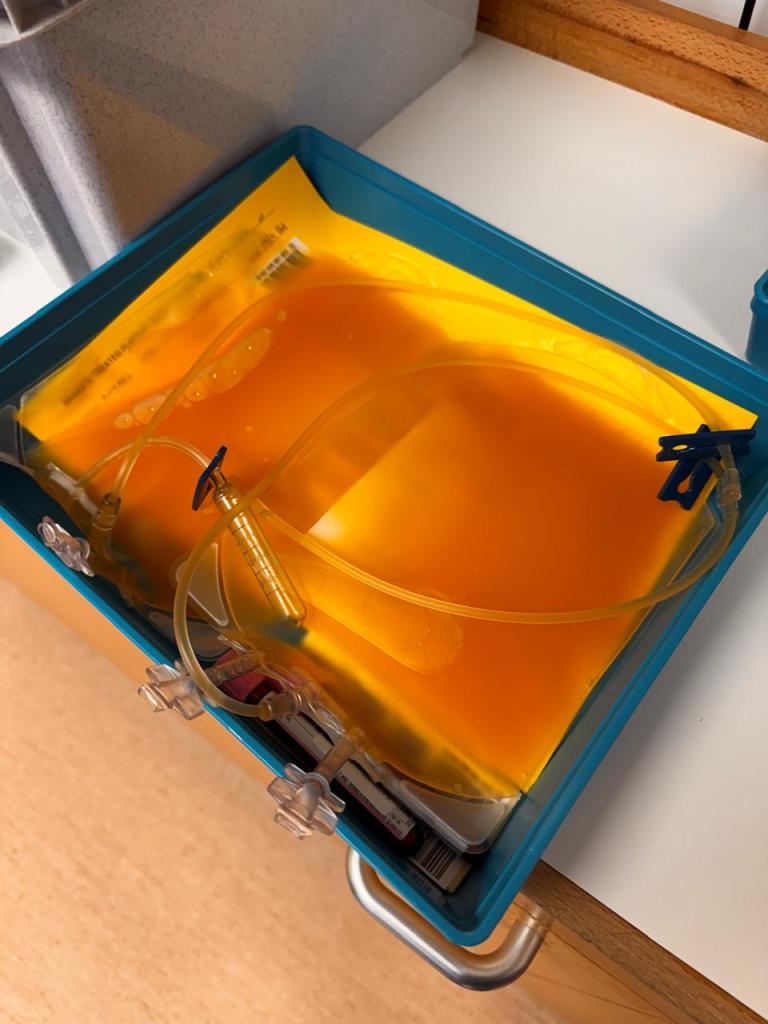
Mr Appelqvist estimates that he donates 450ml of platelets each time – along with around 50ml of blood.
The majority of the blood taken from his arm during the donation process is returned once the platelets have been filtered out.
It then takes on average two to three days for the platelets to replenish in his system.
Donors can only give their platelets once a fortnight, but Mr Appelqvist would do it more often if he could, because he knows the good that it is doing.
“Generally cancer patients who have had chemo or radiotherapy where the system’s basically been sterilised, neonates receive them I believe, and trauma patients where they’ve had an operation maybe or an accident.
“I asked them once: are these platelets actually used, or are they just kept on the shelf and then you throw them away? And they said they often use them the same day or night, or within a couple of days.”
Rachel Norman, Interim Laboratory Services Manager at the PEH said the platelet donation service was set up in 2016 and Guernsey is still the only British Isle off the UK mainland to produce its own supply of platelets.
“As an island we are extremely lucky to have a loyal panel of donors who are willing to give up their time to support their local community through both blood and platelet donation,” she said.
Ms Norman said they welcome applications from people wanting to donate platelets and blood, with the two processes differing slightly.
“The platelet donation process typically takes around 1 hour, during which time donors are ‘hooked up’ to an apheresis machine which separates the platelets from other components of whole blood and returns the remainder back to the donor circulation. Each session generates two adult doses of platelets.
“Platelets have a relatively short shelf life of five days once prepared, so we are hugely grateful for the generosity of donors in maintaining a continued local supply of this life saving blood product,” she added.
Guernsey follows the NHS Blood and Transplant guidance on who can give blood, which can be found here: Who can give blood – NHS Blood Donation
Prospective donors can contact the Pathology Department via the Hospital Switchboard on 220000 for more information about donating.
