


The numbers used to work out the impact of GST and other tax reforms contain sensitive personal information and so can’t be shared with anyone – even most deputies.
That’s the claim from Policy and Resources (P&R), with Vice President Deputy Yvonne Burford saying the committee was “not prepared to issue” the “detailed analysis that by their very nature contain confidential details of individuals et cetera”.
However two deputies who’ve seen some of the numbers say P&R’s claim isn’t true, with one saying P&R’s claim “doesn’t hold water”.
Deputy Rob Curgenven told Express the Excel spreadsheet used by the committee is not the data protection minefield the public has been led to believe.
He said: “It just doesn’t make any sense – there’s no personally identifiable information there.
“There’s no way anyone can work out their own data, let alone anyone else’s, from what I saw.”
Deputy Curgenven recently forced a face-to-face meeting with the States’ senior economist to view the previously-withheld financial model, which he invited Deputies Garry Collins and Haley Camp to.
No personal data on screen
What the three deputies saw on screen directly contradicts the committee’s narrative.
“The spreadsheet that we’ve seen was anonymised,” Deputy Collins said in an exclusive interview with Express.
He added: “It basically just had a load of numbers on it with a different unique identifier [for each].
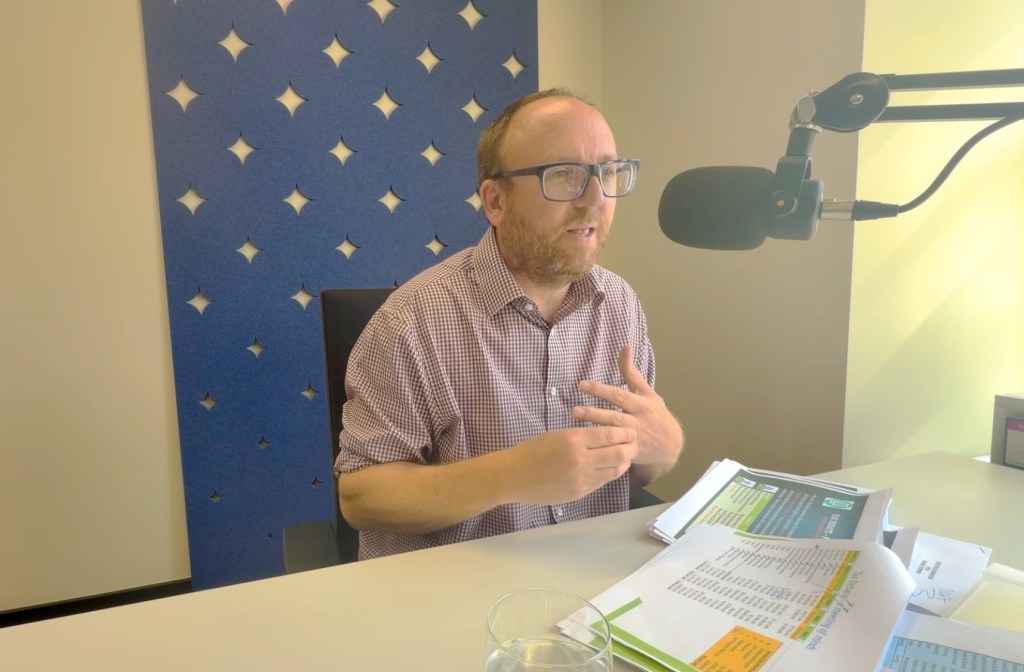
“There’s certainly no question of any data breach or anyone’s data being leaked.”
Deputy Collins, who has extensive experience handling large data systems, said the secrecy simply does not add up.
“The spreadsheet I saw on screen, it could have easily been given to colleagues to go through it, because it was just a bunch of numbers.”
He claimed that by blocking access to the raw figures, P&R is “closing doors” on backbenchers who want to test alternative tax packages against the official model.
Out-of-date numbers
The dispute over transparency hides an even deeper concern for the deputies: the underlying data P&R is using to justify GST is significantly out of date.
The calculations are anchored entirely to a household expenditure survey from 2018–19 and tax revenue figures from 2020.
Critics point out this completely ignores the massive structural shifts of the post-pandemic economy, including a local housing crisis that has seen rental prices skyrocket.
Deputy Curgenven revealed that the Excel spreadsheet was so large – at 66,000 lines of data – that changing a single variable took a full 30 minutes because of sluggish calculations.
He questioned why the model tracks 66,000 individual codes when the island’s population is supposed to be below 65,000, adding “we don’t actually know what the… accurate population data is”.
Guesswork
Deputy Curgenven said that as far as he knew, P&R had not conducted any consumer behaviour modelling to predict how local businesses or islanders will actually react if a 3% tariff is introduced, or about the impact of AI on Guernsey’s finance industry.
“It’s just all guesswork,” the qualified accountant said, “They’ve done a simple extrapolation from the beginning of the 2019 data… and extrapolated it forward to today’s.”
Deputy Curgenven explained that because the numbers had been heavily manipulated, it would be impossible for an islander to spot their own household expenditure.

“You can’t identify yourself, because they’ve done loads of weird modelling stuff and adjusted the figure on what they think that you’d spend – It’s just like a black box,” he said.
He accused P&R of trying to force a major policy through based on deputies towing the “party line”, rather than transparent arithmetic.
He said deputies were being asked to “base their decision on trust… but, that’s the only thing they’re basing it on”.
Show us the evidence
With the deadline for alternative tax amendments passed, the deputies are calling on P&R to drop the secrecy and put their cards on the table.
“Yvonne [Burford] said the other day, ‘let’s base it on evidence’ – we all agree,” Deputy Curgenven said.
“Show us your evidence, show us your workings – otherwise, why should we believe you?”
