


Aurigny has been forecast to lose nearly £10million this year – with a further loss of nearly £6m already estimated for next year.
The States-owned airline is no stranger to losing money but this time the circumstances are considered to be out of its control with the war in Iran and higher fuel prices among the reasons given for the forecast losses.
The impact of the States-subsidised BA run Heathrow service has also been cited as a factor along with “weakening market demand”.
Policy and Resources revealed the predicted near-£16m loss for this year and next year in the 2027 Budget proposal which is published today.

P&R said it’s focused on ensuring Aurigny can continue to serve the islands as necessary.
“The projections remain subject to considerable uncertainty, particularly in relation to
future demand, fuel prices and the outcome of the Air Policy Framework,” said P&R.
“The States’ Trading Supervisory Board is working with Aurigny to determine the appropriate future operating model, which is also likely to affect the projections. Once this work has been completed, the States’ Trading Supervisory Board will bring proposals to the
States setting out any long-term funding requirement for Aurigny.
“In the meantime, recognising Aurigny’s importance to the Islands’ community and economy, the Policy & Resources Committee is ensuring that the airline has sufficient liquidity to maintain the continuity of essential air services.”

Aurigny has set out its own response to the forecast losses with a plan to “reduce losses while protecting Guernsey’s air links”.
The airline said it has already made a number of cost-saving measures during 2026 and has further plans to cut costs next year.
This has included reducing reliance on leased-in aircraft, simplifying the fleet, and matching capacity to demand by increasing or reducing services where necessary.
Acknowledging the factors that have driven this year’s losses, adding the need to step in with additional services after Blue Islands went bust and a “softer travel demand” on some parts of the network to the list given by P&R, Aurigny’s Chairman Kevin George said it has been a “difficult year for airlines”.
Jet fuel prices currently average $152 a barrel, which is 70% higher than last year, and they are expected to continue rising.
This means Aurigny’s fuel costs are rising too, with the current bill 50% higher than a year ago.
“Keeping Guernsey connected is a responsibility we take extremely seriously, and so is running the airline as efficiently as possible,” said Mr George.
“This has been an exceptionally tough year for airlines everywhere, and Aurigny has not been immune. We have acted decisively to control costs throughout 2026, and the reduced loss we are planning for 2027 shows that this work is starting to take effect. The business has managed to deliver profitability in successive years after the COVID pandemic, and while the current conditions are not conducive to positive financial results, we are determined in our resolve to deliver reliable and efficient air services to Guernsey, notwithstanding the challenging conditions.”
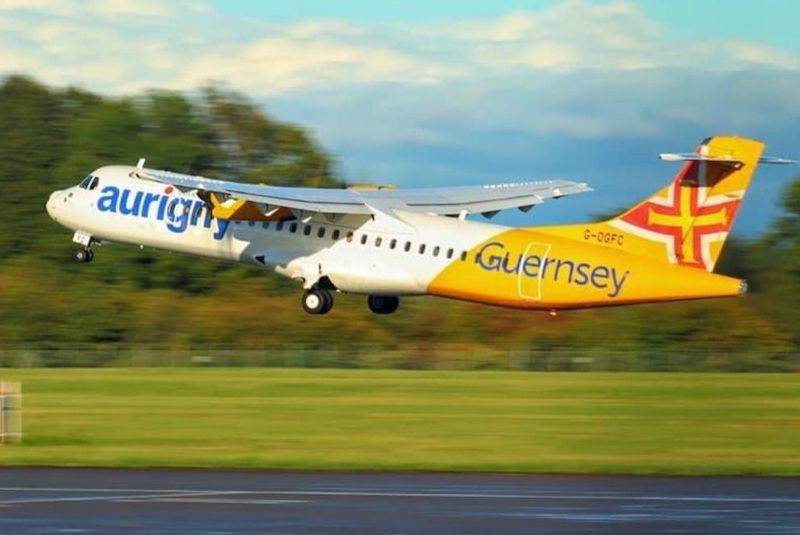
There have been some positives though – with Aurigny claiming that it has kept fares affordable with “average fares around 15% lower than last year”.
Since Aurigny took over as sole operator of the Guernsey-Jersey and Guernsey-Southampton routes there has been an increase in passenger movements – up 10% and 15% respectively.
Passenger numbers have dropped on other UK services though with more people choosing to fly to/from Heathrow with BA.
Aurigny said “this additional capacity, supported by contracted subsidies and preferential airport charges not available to Aurigny, has put sustained pressure on Aurigny’s London revenues and reduced demand on its Southampton and, to a lesser extent, Birmingham services”.
Nico Bezuidenhout, Chief Executive of Aurigny, added that the airline has turned a corner in terms of reliability and its recent efforts to simplify the fleet should also help its finances in the future.
“We have spent the last two years rebuilding the service reliability of our core UK network, and our punctuality rate is again on par with or better than other carriers,” he said.
“We have simplified our fleet, and we are nearing completion of a material engine overhaul investment cycle of our owned ATR fleet, which supports improved fuel efficiency and further increases reliability.”
