


A member of the Brock family has responded with sadness to the news that the Brock University scholarship scheme is ending – but he hopes an alternative situation could be funded instead.
It was announced yesterday that Brock University has decided to end its annual scholarship for a student from the Bailiwick of Guernsey, citing “fiscal planning” as the reason.
Oliver Brock – a seventh generation descendant of Sir Isaac Brock – said “it is a real shame as it has been something that has maintained the connection between Guernsey and Ontario for many years, and has seen countless Guernsey students benefit from the opportunity to study in Canada who may not have otherwise done so.
“I hope that a way might be found for it to be replicated or maintained in some way, perhaps an alternative funding option may be considered. After all, it doesn’t just have to be the University that commits to the valuable cultural connection.”
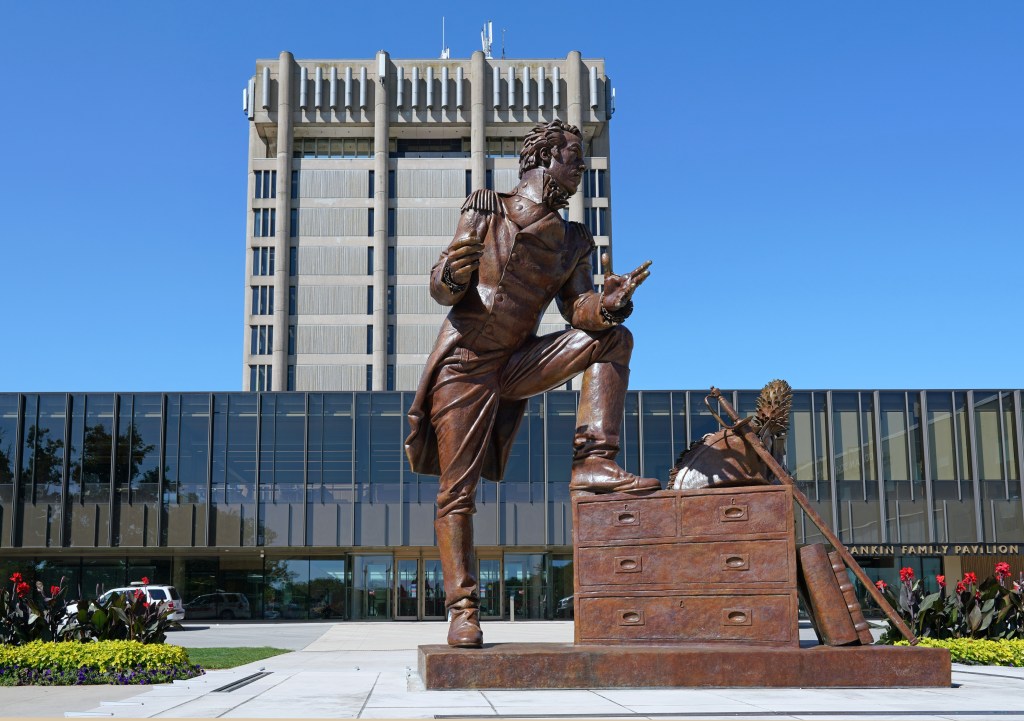
There are currently three students from Guernsey at the Canadian facility – but they will be the last to have fully funded places at the university through the scheme.
Their studies won’t be affected as their scholarships will continue to be funded until the end of their courses. But no new students will be offered the same opportunities.
The university hinted that there may be other opportunities to work with Guernsey students in the future.
“Brock University values its longstanding partnership with the States of Guernsey and does not take the discontinuation of this scholarship lightly,” said David Begg, Associate Vice-President, International at Brock University.
“The decision was made as part of a broader evaluation of institutional priorities and fiscal planning.

“We remain committed to welcoming Guernsey students through our regular admissions process, which includes other scholarship and funding opportunities that provide alternative pathways to study at Brock.
“We hope to explore new educational opportunities for collaboration in the future.”
Brock University had offered fully funded academic opportunities to local students for many years to reflect the historic connection between the island and Major-General Sir Isaac Brock.
He was a Guernsey-born hero of the War of 1812.
The university – and other things in Canada – were named after him to reflect his hero status.

Deputy Paul Montague, President for the Committee for Education, Sport & Culture, said the programme has enabled many young people to study in Canada which in turn has helped them to form international networks and experience a unique educational pathway.
But he appreciates why it is now ending.
“We recognise that difficult fiscal operating climates mean hard decisions must be made over where limited resources are deployed. While we are naturally disappointed that Brock University has chosen to end this scholarship scheme, we understand the pressures affecting universities globally.
“At the same time, it is also a challenging financial landscape for our students and families, and the Committee is reviewing how we support access to higher education opportunities at home and elsewhere, to ensure higher education is as accessible as possible and aligned with the evolving opportunities available.
“Brock University has been a valued partner, and we hope to maintain positive links moving forward. We would be very open to future collaboration opportunities with the University, given our shared heritage through Sir Isaac Brock.”
Sir Isaac Brock
Major-General Sir Isaac Brock KB was born in Guernsey in 1769. His family home was what is now Boots the Chemist on the High Street.

His parents John and Elizabeth Delisle Brock had 14 children. Isaac was the 11th born child.
Military career
In 1785, at the age of fifteen, Isaac Brock bought a commission which enabled him to join the military.
His joining rank was as an ensign of the 8th Regiment. He quickly climbed up through a combination of promotions and purchased commissions.
In 1797, Brock became the senior Lieutenant Colonel in the 49th Regiment. He was assigned to garrison duty in Quebec in 1802 and commanded in Quebec from 1804-1810. At this time he was transferred to Upper Canada.
He was promoted to Colonel in 1805 and Major-General in 1811.
He assumed command over all troops in Upper Canada (now Ontario) from 1810, and the following year he took over the civil administration of the province as well.
Death
At the outset of the 1812 war, Brock was Commander-in-Chief of His Majesty’s Forces in Upper Canada. He undertook the defence of Upper Canada and organized the militia.
He had achieved the rank of Major General by this time, and his responsibilities included both the civil and military administration of the province. He was widely admired for his skilful leadership, steadiness and charisma.
On August 15, 1812, he took Detroit from US forces with the support of British and Native American troops. This was against all odds. As a result of this achievement, he was awarded a knighthood of the Order of the Bath.
On October 13, 1812, Major-General Sir Isaac Brock’s troops won the Battle of Queenston Heights on the Niagara frontier. He was mortally wounded.
Legacy
Major-General Sir Isaac Brock was initially buried at Fort George – in Canada, not Guernsey. This area is now known as Brock’s Bastion.
His remains were later interred within a limestone monument named after hiim, at Queenston Heights Park in Niagara Falls.
Brock University is also within the Niagara region. It describes its namesake as someone who “loved to learn”.
