

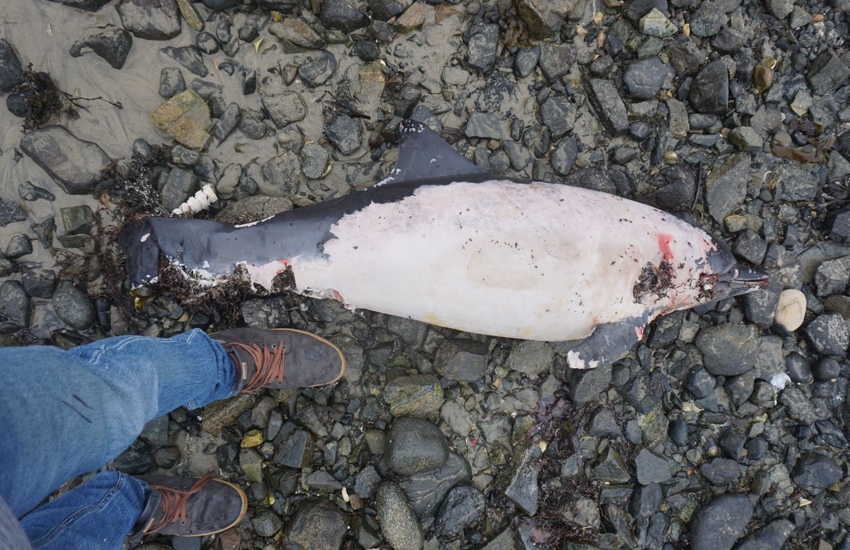
Anyone who finds a dead or stranded dolphin is asked not to touch it and instead to follow reporting guidelines.
DolFin Project Coordinator Nicky Harris said there are two reporting options.
“If it is a live stranding, the public should contact the GSPCA, who are trained to handle and care for these animals,” said Ms Harris.
“If it is a dead stranding, the point of call is Agriculture, Countryside and Land Management Services [ACLMS, a division of the States’ Committee for the Environment & Infrastructure].
“It is very important that the public do not touch either dead or live dolphins because they carry diseases and they are incredibly sensitive animals.”

Pictured: DolFin Project coordinator Nicky Harris said dolphins are highly sensitive
Elizabeth Sweet, Manager of the Guernsey Biological Records Centre, said that removal of dead dolphins is a last resort.
“The preferred option is to allow the body to decay naturally and return to the ecosystem,” said Ms Sweet.
“Removal of dolphin carcasses by ACLMS is typically a last option.”
CONTACT DETAILS…
GSPCA – 01481 257261 for live strandings
ACLMS – 01481 224567 for dead dolphins
Pictured (top): The dolphin which was found this week washed up along the island’s east coast.
