

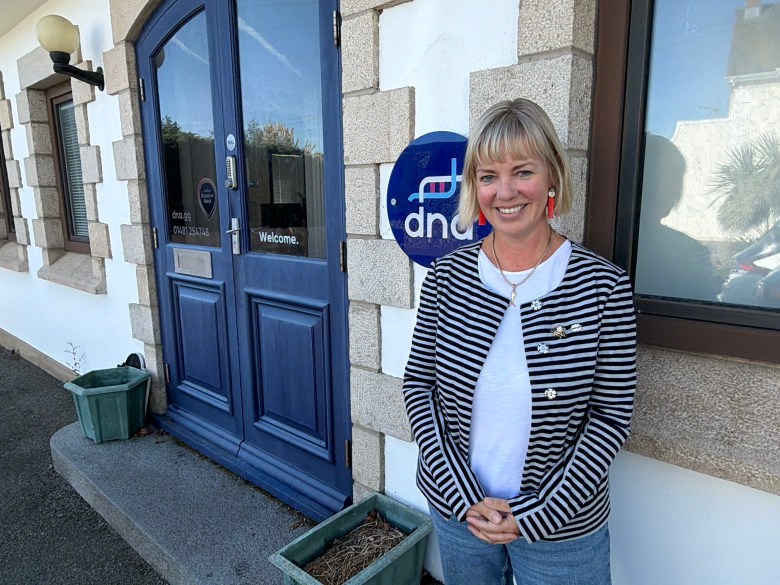
Guernsey’s multi-million-pound tax nightmare was doomed from the start by “fundamentally flawed” government decisions, a former Chamber of Commerce President has warned.
Di de Garis, a local accountant and the Chamber’s current Treasurer, told Express the mountainous Revenue Service backlog was not simply the result of software failures.
Instead, she said the States had built a system around decisions which dumped a huge manual burden onto accountants and businesses while failing to embrace modern tax practices already commonplace elsewhere.
And the Chamber is now calling for a radical rethink, including a move towards UK-style self-assessment and greater automation.
A Chamber spokesperson asked: “Is personal self-assessment being considered?
“Rather than Revenue continuing to assess every personal tax return, is there a plan to move towards taxpayer self-assessment with Revenue focusing on exceptions and compliance checks?”
Express has asked the States for a comment.
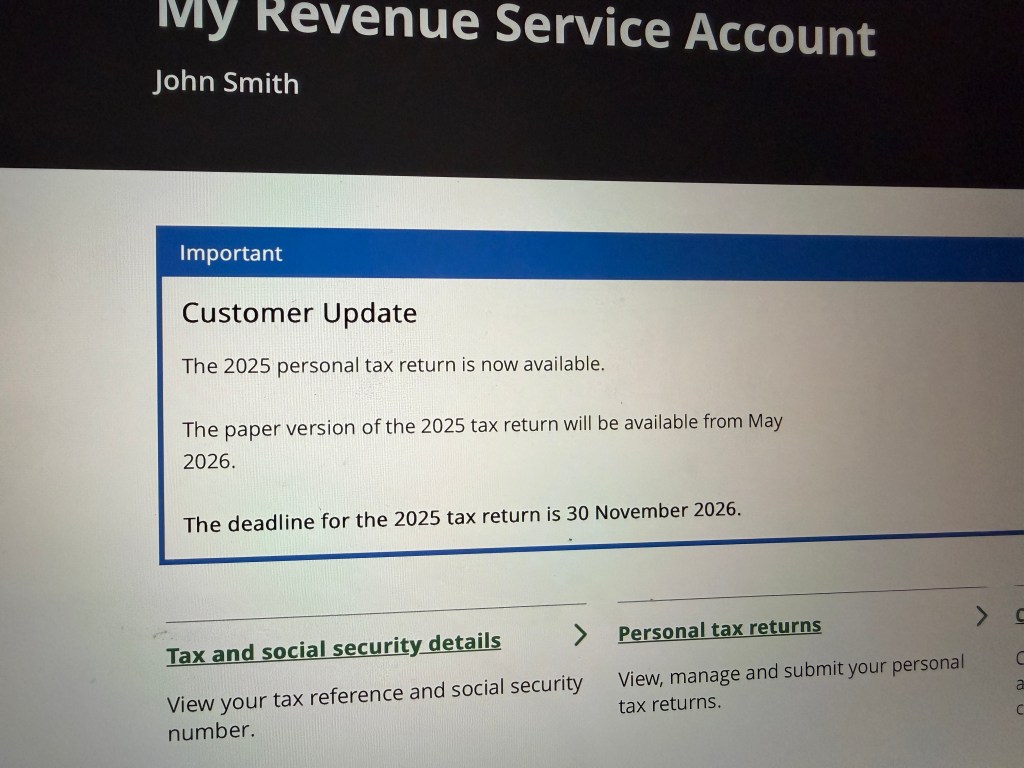
In the UK – and most of the rest of the world – the majority of people don’t do tax returns.
Self-employed people and business owners complete a self-assessment, as do some people with complicated financial affairs, but the average person with an ordinary job doesn’t need to.
By contrast, in Guernsey almost everyone has to.
The Chamber’s latest contribution to the tax debate echoes previous calls from politicians and others to look at how Guernsey does tax returns – or whether we should even do them at all.
‘We’d have issues even if Agilisys had worked’
Mrs de Garis praised the head of the civil service, Boley Smillie, and the Revenue Service’s new boss, Jean Mehers, who both joined after the problems with the backlog and MyGov began.
However, she warned the island could not keep simply blaming the troubled Agilisys transformation programme for the larger-than-previously-thought backlog.
She said: “Agilisys could have delivered perfectly and we would still be talking about the same issues, particularly the lack of real digitalisation.”
“The fundamental decisions themselves were also flawed.”
Mrs de Garis explained that the Chamber had raised concerns from the start of the project, and had asked for greater involvement and to be listened to.
“Are you talking to us? Why are we not planning to go this route?”
She said she had repeatedly questioned why Guernsey was not moving towards self-assessment, automated filing and the ability to automatically upload coded accounts in a standard file format.
“I asked multiple times about self-assessment and uploading of coded accounts and moving to processes that are commonplace in most first-world tax jurisdictions,” she said.
Her warning is stark: even if the technology had worked perfectly, Guernsey could still have ended up with a tax system creating huge amounts of unnecessary work.
‘Less manual work… but for who?’
Mrs de Garis, a director at accountancy firm DNA, said the States’ idea of digitalisation had effectively amounted to taking work away from the Revenue Service and handing it to accountants.
She explained that despite already having the information in digital accounting systems, accountants can be left manually re-entering dozens of figures into online forms.
Since the new system rollout, we input way more.
Di de Garis
“We take those two reports, we jump all around them, and we put dozens of numbers manually into a form.”
She said she’d asked the Revenue Service: “What do you mean by digitalisation?” and was told, “Well, less manual input.”
However she questioned “which side” would have to do less manual input, adding: “Because you’ve entirely moved it to my side.”
“It wasn’t digitalisation.”

Mrs de Garis said firms in the UK could submit coded accounts directly from industry standard accounting software, while Guernsey continued to rely heavily on manual processes.
For businesses already battling rising costs and a mountain of tax administration, she said the supposed digital revolution had simply shifted the workload elsewhere.
She contrasted the manual work accountants have to do in the Bailiwick to the slick automation their compatriots in the UK benefit from.
At a recent UK conference for cloud accounting software Xero, Mrs de Garis said one slide “screamed out at me… where you just click the button within Xero to submit your accounts”, rather than having to “print it off and manually tap in” to the Guernsey system.
‘We’d give anything to have statements back’
The problems do not stop at filing tax returns though, she said, as basic account statements showing liabilities, payments and balances had disappeared from the system.
“We didn’t like the old statements, but now we’d give anything to have them back,” she said.
Without them, accountants can be forced to reconstruct what has happened on a taxpayer’s account using invoices, payment records and information supplied by clients.
And when they ask the Revenue Service for help, Mrs de Garis said their questions can disappear into a “black hole”.
“We send a question to the tax office and it just goes into an ether. We never ever hear,” she said.
Mrs de Garis revealed she had repeatedly asked the same question about her own tax affairs for around four years without receiving an answer.
She said she didn’t believe the Revenue Service had a modern “ticketing system” to track questions, so emails just went into an inbox, meaning it didn’t really understand how many outstanding queries it had.
She also questioned whether the official backlog figures capture the full scale of the problem, because a return can be marked as completed while separate queries about it remain unresolved.
‘We’ve become the front line’
The fallout is being felt far beyond the Revenue Service, Mrs de Garis said, as accountancy firms had effectively become the front line for taxpayers frustrated by the system.
“It’s not just the poor, under-resourced Revenue Service’s team that are impacted,” she said, “It’s our industry.”
“We’ve become the front line, and some of our clients are angry.”
She said firms were spending increasing amounts of time chasing information, dealing with frustrated clients and reconstructing tax positions.
As DNA generally charges fixed fees, the firm was forced to “absorb” the extra work.
“But it probably has pushed our prices up a bit, because with more manual input everything takes longer right from the start.”
In other words, part of the cost of the States’ tax system is now being picked up by the private sector.
Time for ‘exception-based’ tax
The Chamber has submitted eight questions to Policy & Resources and Revenue Services following publication of the backlog report.
One of the central questions is whether Guernsey should move towards self-assessment, allowing straightforward taxpayers and businesses to submit their own returns while Revenue Services concentrates on exceptions, compliance and higher-risk cases.
Mrs de Garis said that would make far better use of taxpayers’ money.
“We should be getting the best value from our money, shouldn’t we?” she said.
“Potentially we are wasting taxpayers’ money doing this.”
The Chamber is also asking whether accounting software could eventually connect directly to the States’ systems, allowing information already held digitally to be transferred automatically instead of being typed in again.
Mrs de Garis warned that simply spending the next few years clearing the backlog would miss the bigger problem.
“We shouldn’t just wait until we eventually get through this backlog,” she said.
“If we keep building out a system that is fundamentally flawed, we are just wasting taxpayers’ money.”

‘A clear roadmap’
Despite her severe frustrations with the system, Mrs de Garis praised the recent shift in direction at the Revenue Service and welcomed the fresh approach from current leadership.
Mrs de Garis said: “It was so refreshing to have the honesty and see some change being made. I have a lot more faith that we’re going to make progress with the people in charge now.”
A Chamber spokesperson said it was “ready to work constructively with the Revenue Service and Policy & Resources on the next phase of recovery”.
Mrs de Garis also welcomed the greater transparency around the scale of the backlog.
But she said islanders deserved to know how the States intended to make sure the same disaster did not happen again.
“The very least, I think my industry and the people of Guernsey are owed is that information,” she said.
“This is why it won’t recur. This is the way we’re going to move forward.”
She added: “I have a lot more faith in the new leadership now, but my industry and the people of Guernsey are owed a clear roadmap.”
