


A former teacher has turned his passion into a potentially game-changing idea – one built on eco-friendly fuel with potential to have a global impact.
Dave Herschel has been powering his boat with vegetable-based fuel, and he plans to build on this by offering environmentally-friendly training for those looking to learn how to pilot the vessels.
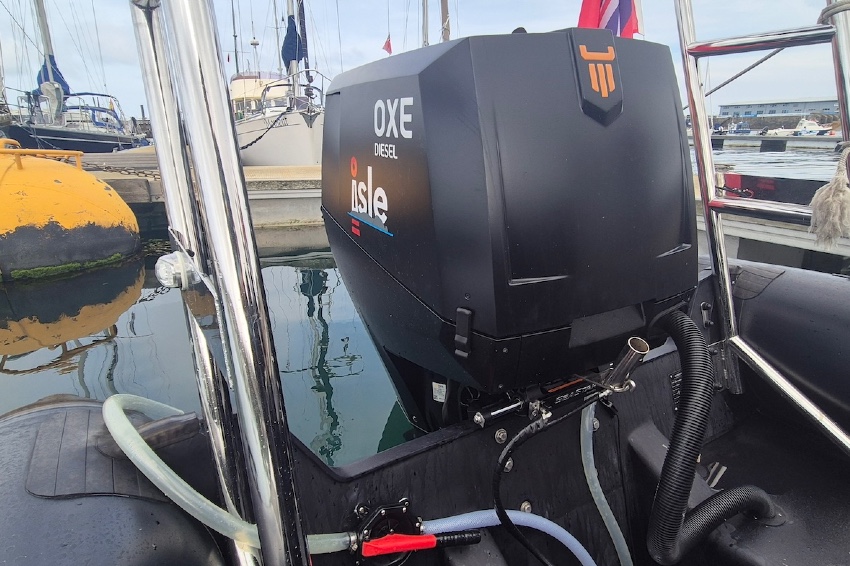
The ‘Paloma’ is fitted with a large leased diesel outboard that’s perfect for running hydrotreated vegetable oil, (HVO), a renewable diesel alternative made from waste oils and fats.
It’s a “drop-in” fuel, meaning it’s highly compatible with most existing diesel engines without modifications. It burns cleaner, reducing emissions and potentially improving engine life.
These are all major positives for Dave Herschel, the director of Isle Maritime Training Limited.
“It’s not the same as previous generations of biofuel. Manufacturers love it. It’s really good for engines. It reduces service intervals. It burns very, very clean, because what it is is basically a plant-produced version of the diesel molecule.”

On the pontoon next to the Paloma, Mr Herschel explained the science behind it: “The plants produce vegetable oil, and then, just like when the fossil fuel refineries turn crude oil into different fractions, they can do that with vegetable oil as well.
“So you use hydrogen to treat the vegetable oil to turn it basically into diesel, but unlike diesel, unlike fossil fuel diesel, it is pure. So there’s none of the impurities that don’t burn properly and cause particulates to build up in cities. There are very much lower levels of sulphur and nitrous oxides given off. So it’s much lower in terms of its contribution to acid rain.”
HVO also comes with boons to other industries, such as farming: “It’s a wonder crop in terms of its agricultural use as well. It fixes nitrogen, so it’s used in the crop rotation cycle, in between food crops in order to replenish the soil and give the farmer a yield when the field might otherwise be fallow.”
HVO does have its detractors, and they’d point to the fact it is generally more expensive than traditional diesel. However, it can offer long-term savings through reduced maintenance and significant environmental benefits, with up to 90% fewer CO2 emissions.
Plus, there are local suppliers in Guernsey that offer HVO, and you can purchase it from the pump if you fancy running your car on vegetables.
It’s this local supply that has given Isle Maritime Training a potential window. The company is the first to be purchasing HVO dockside, but that’s for a good reason:
“Here we pay duty on petrol for marine use, but not for diesel, and HVO is categorised with diesel. So you know, if you take the duty into account, a litre of HVO is very little more in cost than a litre of petrol, and because it’s a diesel engine, I’m putting a lot less fluid through the engine.”
Mr Herschel continued: “It has a higher energy density, so I can just about save money on fuel, as against petrol in Guernsey and save the planet at the same time.”
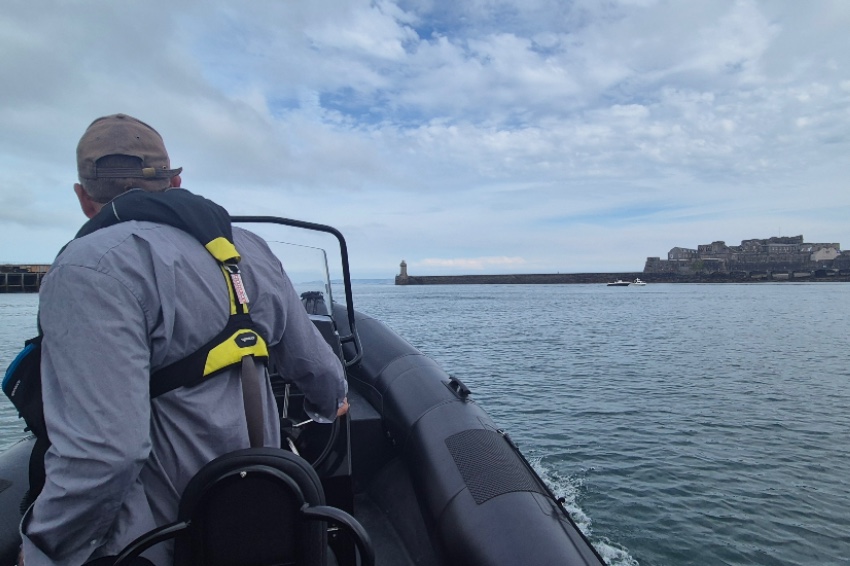
The fuel may be more costly, but thanks to those duty breaks on HVO, Mr Herschel says it means Isle Maritime can offer lessons at the same price as in a petrol-powered boat, but with the confidence that they’re not damaging the planet in the process:
“We’re not looking to charge more, we’re not charging a planet premium. You’re not paying more because your seat has far less impact on the planet. By offering people a viable green choice, and then hopefully having a package that enables people to walk away thinking about the other choices they can make in their lives, hopefully there will be more and more viable green choices that people can make.”
He also plans on marketing far and wide, as thanks to the low-emission fuel, he believes that it’ll be more environmentally friendly to fly to Guernsey for powerboat certifications than to train on a petrol-powered boat in the UK.
“In terms of our training, you can imagine driving a powerboat all weekend to get your powerboat level two has quite a big carbon footprint. We’re still looking at the maths on this, but it’s my belief that you could fly from certainly anywhere in England to here with Aurigny, do a powerboat course on this boat, burning HVO, and then get back on your plane and go home in Manchester or wherever, and your carbon footprint would be lower than it would have been if you’d stayed at home.”
That’s a big claim, and Mr Herschel is still working out the exact maths to bolster it, but his confidence in HVO is clear.
To help illustrate his point, Mr Herschel invited Deputies Adrian Gabriel (president of E&I) and Andy Cameron (member of E&I and vice-president of ESC) onboard the Paloma for a tour, a test, and Bailiwick Express was there as an exclusive to capture it.
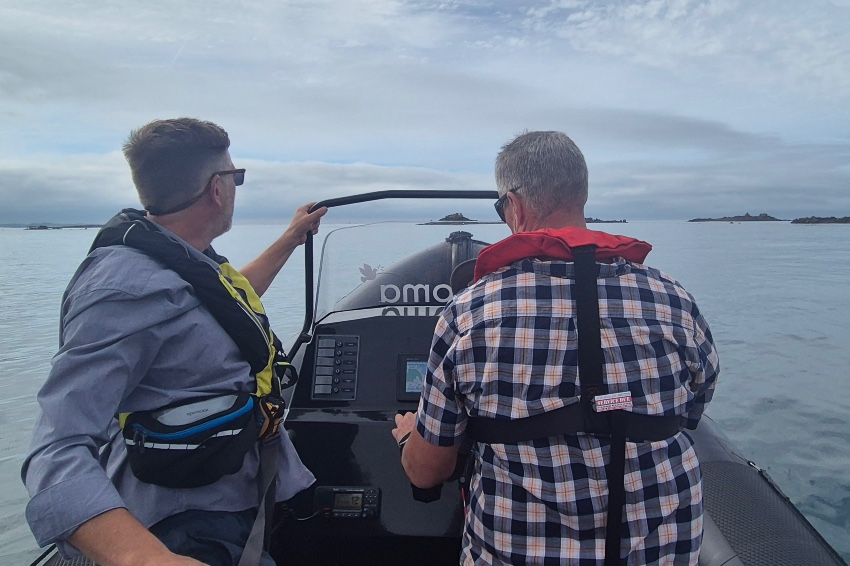

You can learn more about the deputies’ thoughts in a separate story coming soon, but Mr Herschel made clear his point for bringing along the elected representatives, to show the benefits of modern fuel solutions that work with existing technology:
“We have a slightly weird situation in that I can very cheaply fuel this boat with diesel and not pay any duty, but at the moment when I take my car to the forecourt and fill it with HVO, I’m paying duty, the incentives are all wrong, so that’s one of the big questions for the gentlemen today.”
