

Guernsey Electricity has posted a £4million pound profit for last year – but its debts remain high with £48m owed.
The utility published its Annual Report this week, covering the 15 months to the end of 2024. It includes details around tariffs – including the price rise seen earlier this year, and future increases – as well as how GEL is investing our money, and how it is helping customers who need to cut their bills.
The annual report also revealed details around two key documents outlining the utility’s strategic direction and the steps it says we need to follow to continue Guernsey’s energy transition.
Tariffs
GEL says it is committed to future affordability, with its Annual Report for the 15-month period ending 31 December 2024, looking at recent price rises and how tariffs may evolve in the future.
It says tariff increases are necessary to support ongoing investment in Guernsey’s electricity infrastructure, and this includes maintaining and upgrading the island’s underground cable network and the power station to ensure security of supply.
This also includes an element of “catching up” though – created by tariffs historically not increasing. Catching up means GEL can “appropriately invest in its assets”, it says.
Recognising the financial pressures many customers face, which prompted a petition and protest earlier this year, Guernsey Electricity said it has taken steps to minimise the impact of the tariff increase by taking on additional debt and continues to offer a range of support services for customers who may need help managing their electricity bills.
Alan Bates, Guernsey Electricity’s Chief Executive, said they do listen to customers and he knows how people feel about the rising price of electricity.
“It’s essential we create greater understanding and transparency around how costs are created within the business,” he said. “Our recent customer survey highlighted that, for most customers, cost is their primary concern followed by security of supply.
“We want to reassure our customers that we are listening and actively taking steps to ensure future pricing reflects both fairness and transparency.
“As GEL looks to the future, we remain focused on delivering a secure, sustainable, and affordable electricity supply for all islanders.”
Low Carbon Electricity
GEL says our local environment is benefitting from the continued importation of low carbon electricity through the subsea cable that connects us to the European grid.
It also says that more can be done – and will be done – in this area.
The annual report shows a reduction in both carbon intensity and lifecycle greenhouse gas intensity for distributed electricity in Guernsey in 2024 compared to 2023.
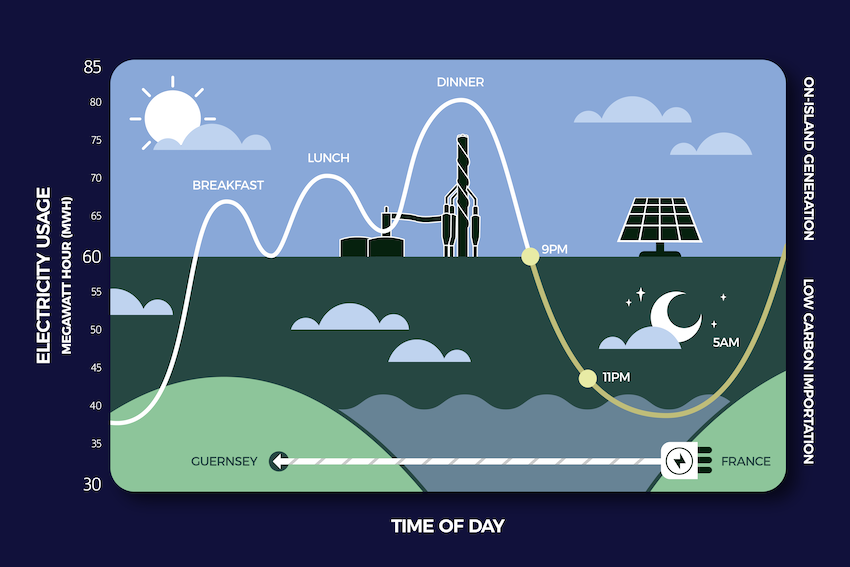
Since the installation of the subsea cable, on-island generation and associated emissions have reduced, with more than 90% of the island’s demand now met by low-carbon electricity through the cable, said GEL.
During 2024, 92% of our electricity came from low carbon imports through the cable with GEL’s data showing there was a decrease in the carbon intensity of distributed electricity during the year.
This is down to several factors including higher use of the subsea cable and the use of imported hydro power.
GEL says its advertising campaigns promoting using electricity ‘off peak’ have also helped along with increased uptake of on-island Community Solar photovoltaic (PV) generation.
Matthew Le Maitre, Environmental Sustainability Manager at GEL, said; “We are pleased that the latest data shows a decrease in the carbon intensity and lifecycle intensity of distributed electricity compared to last year.
“Achieving carbon neutrality and a 100% low-carbon electricity supply for the island remains a key priority for GEL.
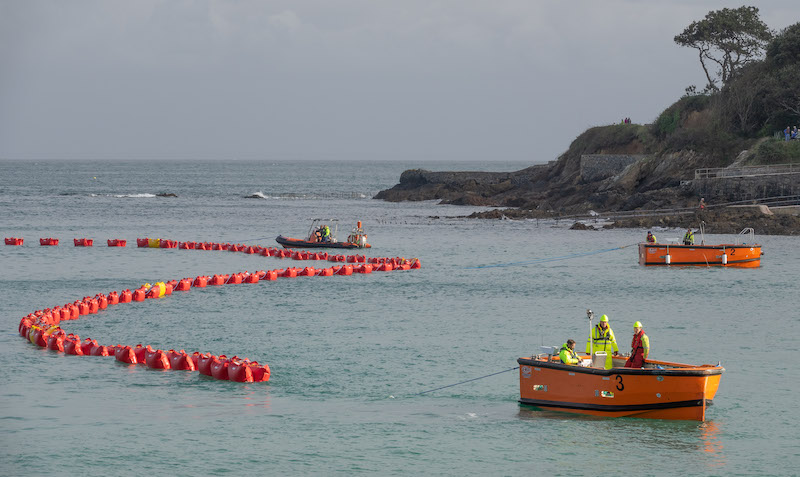
“Installation of a second subsea cable will facilitate the distribution of low-carbon electricity year-round, improving local air quality, biodiversity, and sustainability, whilst maintaining security of supply, without burning fossil fuels.”
Investment
Guernsey Electricity increased investment to £15.8 million pounds of capital expenditure in the island’s electricity infrastructure during the 15-month period to 31 December 2024.
This included the continuation of the project to install a Bulk Supply Point at the Princess Elizabeth Hospital, while other projects include a major upgrade to the electricity infrastructure in Doyle Road and the local vicinity, plus upgrades to the electricity infrastructure in the High Street and Commercial Arcade.
There was also significant capital and operational maintenance activity at the Vale Power Station, including work on primary generators, the ongoing programme of work on fuel storage facilities, and maintenance works on the legacy exhaust systems said Mr Bates.
“This investment is crucial in helping ensure that we continue to provide a secure and reliable supply of electricity to our customers, minimising the risk of power outages whilst also putting the business on a resilient footing to invest further towards decarbonising the island in line with the States Electricity Strategy.
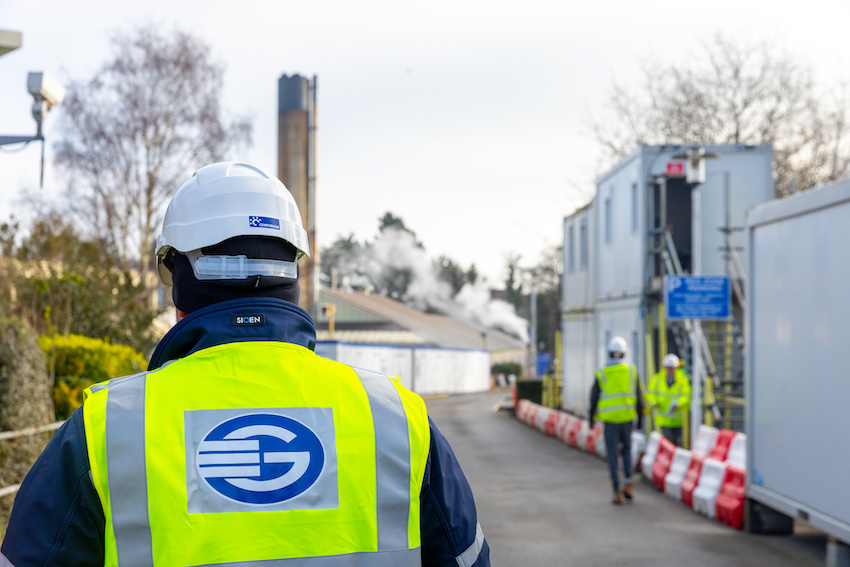
“During the reporting period, making the necessary investments in maintaining and upgrading our electricity infrastructure did unfortunately mean increasing electricity tariffs. We remain mindful of the impact that increasing energy costs has on our customers and we are committed to making continued efficiency savings within the business to help reduce that burden wherever possible.”
Strategic Vision
Guernsey Electricity Limited has published two key documents outlining its strategic direction and the steps it says we need to follow to continue Guernsey’s energy transition.
The ‘Strategic Vision 2035’ and the five-year ‘Strategic Plan’ are intended to “define the key delivery milestones between now and 2030”. They focus on ways of meeting Guernsey’s carbon neutral goals.
In producing the documents, GEL found that there are two crucial elements that are fundamental to delivering the ambitious change set out in the island’s Electricity Strategy.
This includes the fact that energy transition is underpinned by greater access to secure, low-carbon electricity capacity through further interconnection to the European grid and the fact that the Electricity Strategy itself identified the benefit of managing and controlling the maximum electricity demand on the island.
The latter is already a principal focus for GEL, with advertising campaigns launched recently to promote off-peak water and central heating solutions.

Mr Bates said: “Following the States of Guernsey’s approval of the Electricity Strategy for Guernsey in September 2023, we began a programme of detailed planning work to embed the States’ Strategy into our own corporate strategy.
“The focus for the business is now turning towards the key investment decision points and implementation milestones required to deliver this bold strategy.
“We are working on the development of a formal business case for further interconnection; the next step will be to discuss with the STSB in the coming months before presenting to the States of Guernsey next year.
“Another key focus for GEL is managing demand. Our financial modelling has shown that the potential savings in investment cost by managing demand across the next 25 years is over £160m.”
Customer support
Guernsey Electricity has also used its annual report to reaffirm its commitment to supporting customers, particularly those who may be facing financial pressures and cost-of-living challenges.
As part of its ongoing commitment to identify ways to support customers, GEL launched the Powering Life for Less initiative which this year included a free, family-friendly event showcasing how households can achieve meaningful savings.
To make sure wider support is accessible, GEL works with charities and support groups and shares energy-saving awareness information with those who might benefit.
Other support from GEL is available throughout the year, and includes but not limited to:
- Emergency credit for customers on prepayment meters should they be unable to get to a top up location urgently.
- ‘Friendly Times’ for customers on prepayment meters to ensure they don’t get cut off during evenings, weekend and bank holidays
- One-off payment holidays or account freezes for those affected by life events such as bereavement or illness.
- A variety of ways to pay
- Extended repayment plans for customers in debt on their account, arranged on a case-by-case basis
Steven Parks, Head of Customer Experience at Guernsey Electricity, said: “The rising cost of living continues to impact households across the island.
“We remain committed to supporting customers who may be having trouble paying their bills.
“Through close collaboration with local charities and support groups, the range of available support is being continually refined and expanded.
“This includes increasing our emergency credit on prepayment meters from £5 to £10, and our friendly times policy means electricity stays on overnight, weekends, and holidays, even if credit runs out.
“These changes help ensure our most vulnerable customers have power when they need it most.”
