


The only political party to field candidates in this year’s Island Wide Election has agreed with the visiting observers that there needs to be a framework drafted for parties participating in the future.
The Commonwealth Parliamentary Association sent over the independent observers, who have now written a list of recommendations for the Bailiwick.
The nine recommendations could improve the system for the next time we go to the polls, said the observers, with their ideas ranging from the implementation of various codes of conduct, to establishing a permanent electoral roll.
Party politics also came under the CPA’s concerns with more rules needed, it said.
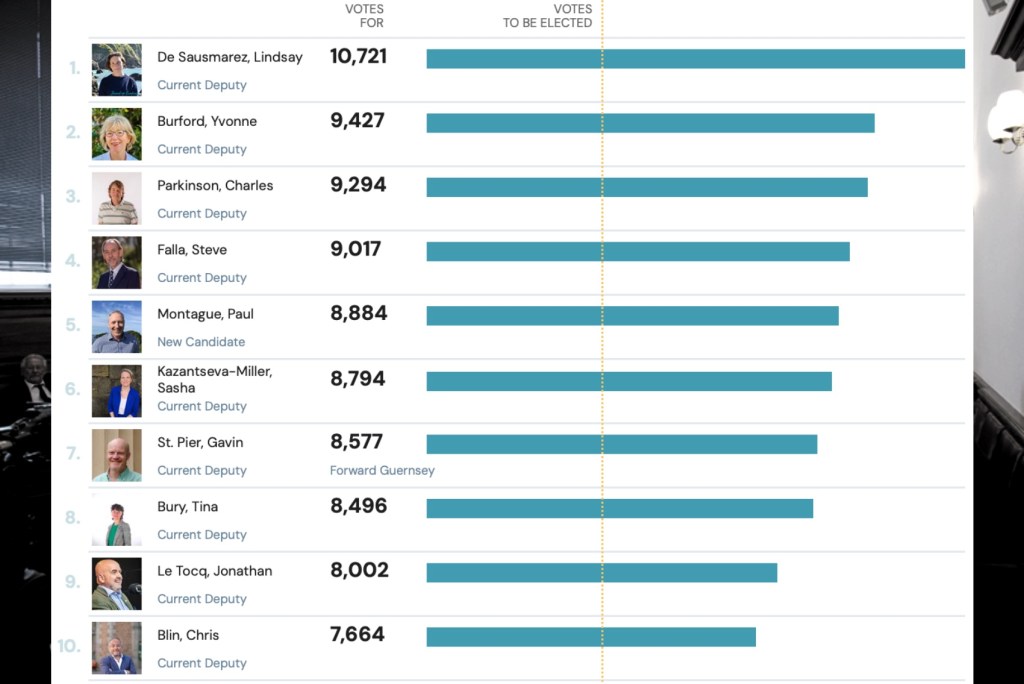
June saw Guernsey’s second fully Island Wide Vote and it was the second time that party politics played a notable part in any election, albeit a greatly reduced role from 2020.
Five year’s ago 41 candidates stood on party platforms including 21 from Deputy Gavin St Pier’s ‘Partnership of Independents’, 11 representing the Alliance Party Guernsey, and nine from the Guernsey Party.
This year there was just one registered political party – Forward Guernsey. It ran with six candidates, with half being successful. Those being party leader Deputy Gavin St Pier, alongside new Deputies Tom Rylatt and Rhona Humphreys.
Despite a greatly reduced presence this time round, recommendations around party was one of the larger topics raised by the Election Observers.
They’ve suggested that Guernsey: “considers developing a comprehensive legal framework to address current regulatory gaps, including rules on party organisation, campaign conduct, third-party involvement, in-kind contributions, media coverage during campaigns, and the resolution of electoral complaints and appeals”.
They added that the island should: “establish a permanent supervisory authority to ensure consistent enforcement and accountability.”
Guernsey’s solo political party at the time of publication has agreed with the observers findings, said Deputy Tom Rylatt.
“As Forward Guernsey, we have maintained that political parties are a normal and uncontroversial feature of almost every other modern democracy.” said Deputy Rylatt.
“We believe Guernsey must, therefore, have a framework that adequately accommodates parties – while at the same time ensuring their transparency and accountability. We will be working to achieve this over the next four years.”
Although a believer in the potential of party politics in Guernsey, Deputy Rylatt also wants the States to hold on to its independent roots.
“Guernsey has a tradition of independent politics and that is something we should be proud of. At the same time, there must be room for a more organised, professional and policy-based approach to politics which parties can bring – albeit with appropriate regulation.”

It’s not clear how much setting up a permanent body like this would cost the island financially – especially if party politics itself is not a permanent fixture.
Indeed, the Commonwealth Parliamentary Association British Islands and Mediterranean Region, which carried out the Election Observation Mission, noted that the nature of party politics in Guernsey is “fleeting”.
“In the October 2020 general election – the first under island-wide voting – three registered political parties competed; none of these parties survived through to the 2025 election, illustrating the fleeting nature of party structures in Guernsey’s fluid political landscape.” – Page 5, Guernsey EOM 2025 – Final Report
The observers also confirmed that the island does already have rules and laws that are upheld by recently updated legislation.
“Elections are governed by the Reform (Guernsey) Law, 1948, which has been amended on multiple occasions, most recently in 2025. It regulates key elements of the electoral process, including the electoral system, suffrage rights, candidate and party registration, campaign finance, voting procedures, election observation, and recount mechanisms.” – Page 5, Guernsey EOM 2025 – Final Report
The observers also confirmed that some of these changes were too last minute, with the standard practice for healthy democracies, to have laws governing elections set at least a year prior to their taking place.
