

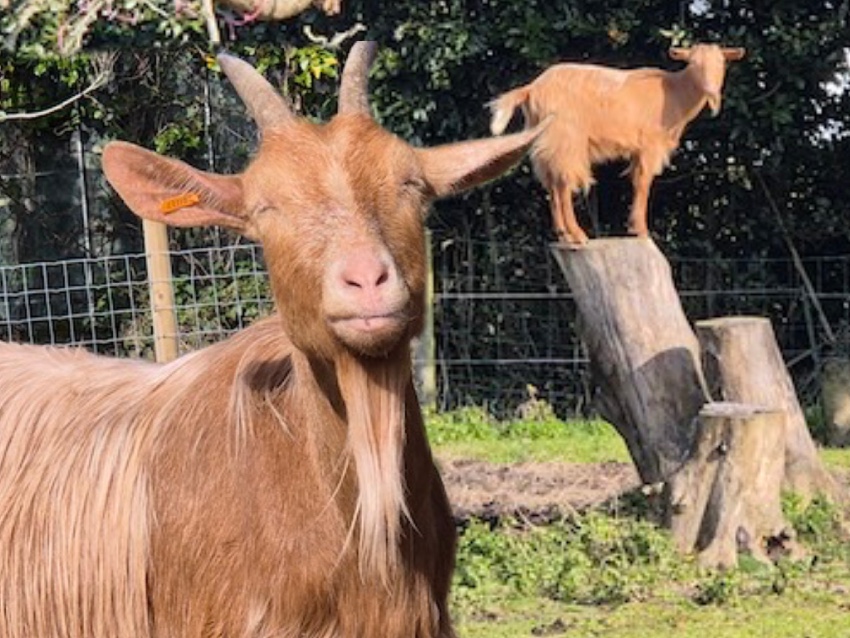
The Royal Golden Guernsey Goat is entwined with Guernsey’s wartime and occupation history.
It’s a breed which is as Guernsey as a ‘Le Lacheur’, ‘Brouard’ or ‘Ozanne’, yet despite receiving a Royal title last year, there’s a potentially fateful pitfall awaiting if more people don’t take an interest in the breed.
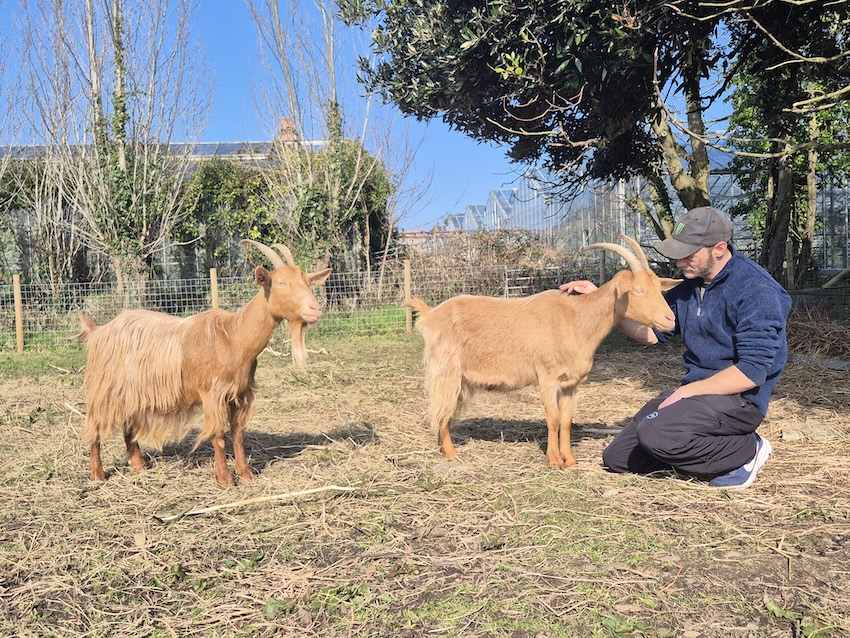
The Golden Guernsey Goat, (Capra aegagrus hircus), is a dairy breed that has grown in popularity in recent years as a useful household goat. Their placid temperament and reliability in food conversion make them an economical proposition as a family animal.
The true origin of the Golden Guernsey Goat is uncertain, though research on DNA by the University of Cordoba concluded that it is indigenous to Guernsey.
They have been known in Guernsey for around two hundred years, with the first documented reference published in 1826.
According to the President of the Royal Golden Guernsey Goat Society; Keith Opie, more people are needed in order to make sure they’re sticking around for hundreds more years.
“We would love to have a few more people keeping Royal Guernsey Golden Goats and showing, we’ve had a situation recently where we haven’t had enough entries into the annual show at Saumarez Park to justify having a proper show.
“We’ve had a display and presence, thanks to Becca and Becca’s late mum, Linda, they have put on a really nice show, but it would be great if we could have enough entries to have the old show back at volume.”
It’s not the first time the breed has been at risk, however.
It’s presence on the island was almost snuffed out during the war years, but thanks to Miriam Milbourne, who noticed a few golden goats amongst the local scrub herds, the golden goat survived, although population dips have occurred, specifically during the 1990’s.
Miss Milbourne’s efforts have been well documented by various organisations including The Golden Guernsey Goat Society, The Guernsey Goat Society, Guernsey Museums, Jimmy’s Farm, Country Life UK, The Goat Life, The Financial Times, and many more.
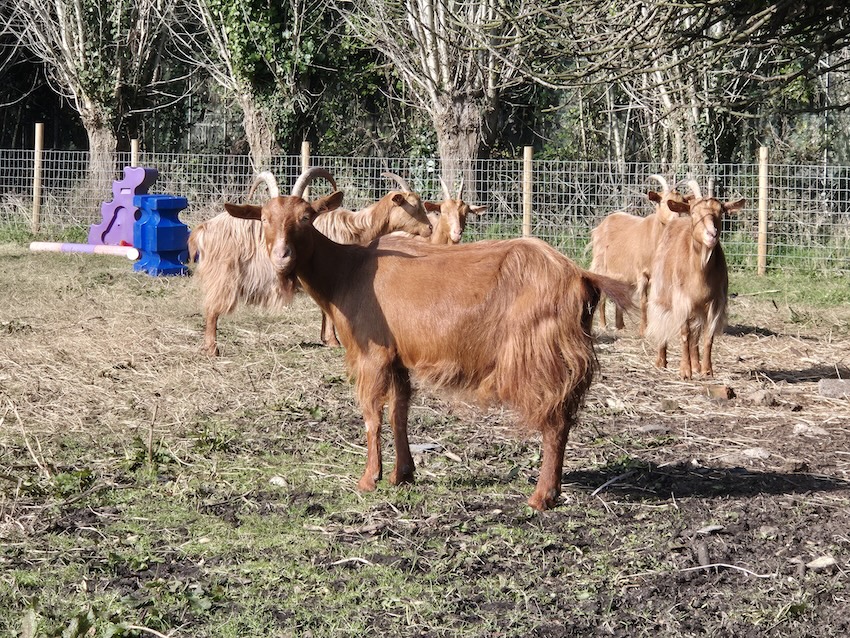
“It goes back even before the days of Miss Melbourne, who is credited with saving the breed during the Second World War and afterwards, when most of the goats, well a lot of them, were eaten,” said Mr Opie. “People were starving at that time, but she made a fantastic contribution, and was able to save the breed, really.
“What we’re hoping is that the profile has been raised so much now with the Royal accreditation, that it will encourage people to get on board and to keep Goldens and show them as well.”
The bestowing of a Royal title for the breed came last year, and there were hopes it could help elevate awareness of the Royal Golden Guernsey Goat.
It has done that, with more people now aware of the breed which has been exported all across the world, and is much loved across the UK, but more still needs to be done locally said Mr Opie.
Rebecca Martin from Guernsey’s Summerville Farm said it takes a lot of time and dedication to raise Golden’s, but it’s well worth the effort.
“First of all, you need to start with two goats, but it’s not just a case of, ‘Oh well, I like that boy and I like that girl, and so because they’re boy and a girl, we’re just throw them together’ you’ve got to think a little bit about genetics, how they’re put together.
“You want to breed animals that are going to have a good, healthy life. They’re well put together. They’re not going to have feet problems or back problems. If you want a nice, strong, healthy goat, if you’ve got to have a goat that’s up to a certain standard.
“Then you’ve got your five months of pregnancy, if you’re going to have bottles? If you’ve got little ones, you’ve got to be prepared! Obviously, you’ve got milking at least twice a day. Babies need bottles at least four times a day when they’re really small, and it depends if you’ve got them on mum’s milk or if you’re on powder milk. You want the good goat powder milk. You can’t just chuck them anything. At the same time, it is really, really rewarding. Yes, it takes a lot of time and effort, but it is worth it.”

Part of that reward is the connection Mrs Martin clearly has with her herd.
Each and every goat has it’s own personality, their own quirks, she said.
“They can all be very strong personalities, but that comes out as they grow. Sometimes you see it when they’re really, really tiny. They just stand there and go ‘ha, look at me! Yeah, I’m cheeky and I’m wicked, and I’m going to be trouble for the rest of my life’.
“You’ve got Cara, she’s getting a little bit older now, but she adores my son, and has done since the day she was born. She’s eight now, my son was only a toddler when she was born, but it was a case, with Cara and her brother, my son had to go and give their bottles to them before he went to playschool, and now, literally, you find the two of them just sat in the stable just chilling.
“If someone’s going to be naughty it’s normally Amber. She’ll say ‘I don’t feel like doing this’ and she’ll let you know about it.
“Then you’ve got the really chilled out ones. You’ve got Pippa, who’s the younger one, or you’ve got Tam, who is the royal goat without horns. She’s very much a chilled out one as well. She likes a good head scratch. If I get up in the mornings, and I come up to the stable, Tamsin will be the one that’s still sound asleep. She won’t bother getting up.”
Mrs Martin is under no illusion that raising Golden’s comes with a set of challenges, but she says it’s all worthwhile.
“It’s very rewarding, yeah, but you’ve got to put the time and the effort. You’ve got to get to know them and spend time with them.
“You’ve got the basics of their care, their feeding routine, checking their feet, housing! They don’t like the rain, and certainly don’t like mud! I have known some over the years that don’t even like a dew on the grass, but I wouldn’t be without them.”
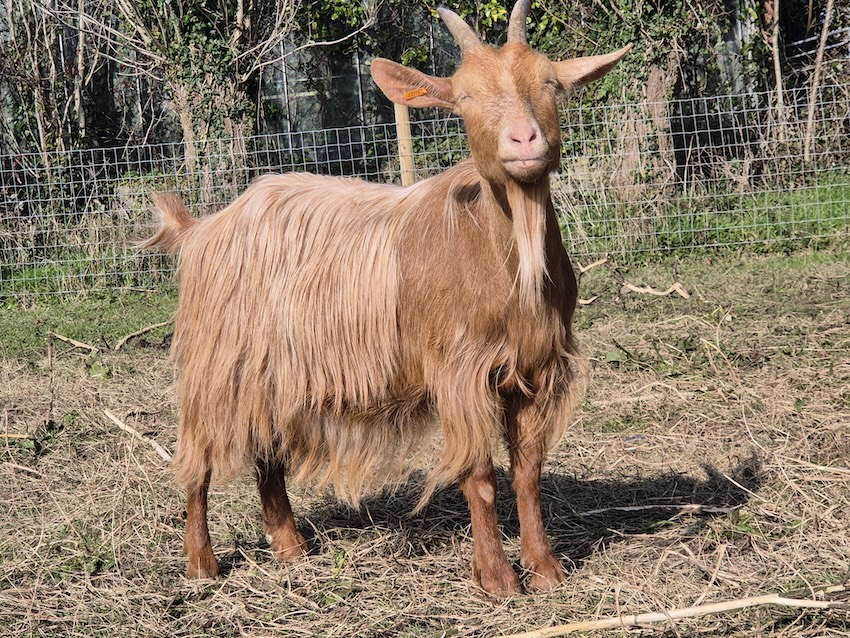
The society is looking for new members, and for interested members of the public, who might consider raising some goats, and getting involved with the breed. They have their Annual General Meeting on Wednesday next week, (12 March 2025), and will be appointing a new secretary.
Did you know Bailiwick Express is now on Tiktok? Find our video about the Guernsey Goats here…
If you’d like to learn more about the Society, or to get involved, you can visit their website HERE.
