


Guernsey is hosting the first ever Royal Golden Guernsey Goat Symposium.
Held at Government House, it aims to bring together local, national and international experts to try and safeguard the future of the native breed.
Despite being awarded the Royal title by His Majesty King Charles III just last summer experts have continued to sound the alarm that without coordinated support, the future of the Royal Golden Guernsey Goat on its home island remains at risk.
The Lieutenant-Governor of the Bailiwick of Guernsey, Lieutenant General Sir Richard Cripwell, said that the new Royal title was wonderful, but highlighted the responsibility in keeping the breed alive on its native island.
“When His Majesty granted the royal title last year to the goats, uniquely, that was a wonderful thing for the island, but it came with responsibilities as well.
“Today really was about understanding the State of the Nation, if you like, for Guernsey’s on the island, for understanding where we are, what might be done and what we can do, not simply to preserve the health of the breed on the island, but also to make sure that Guernsey remains the spiritual home for the breed.”
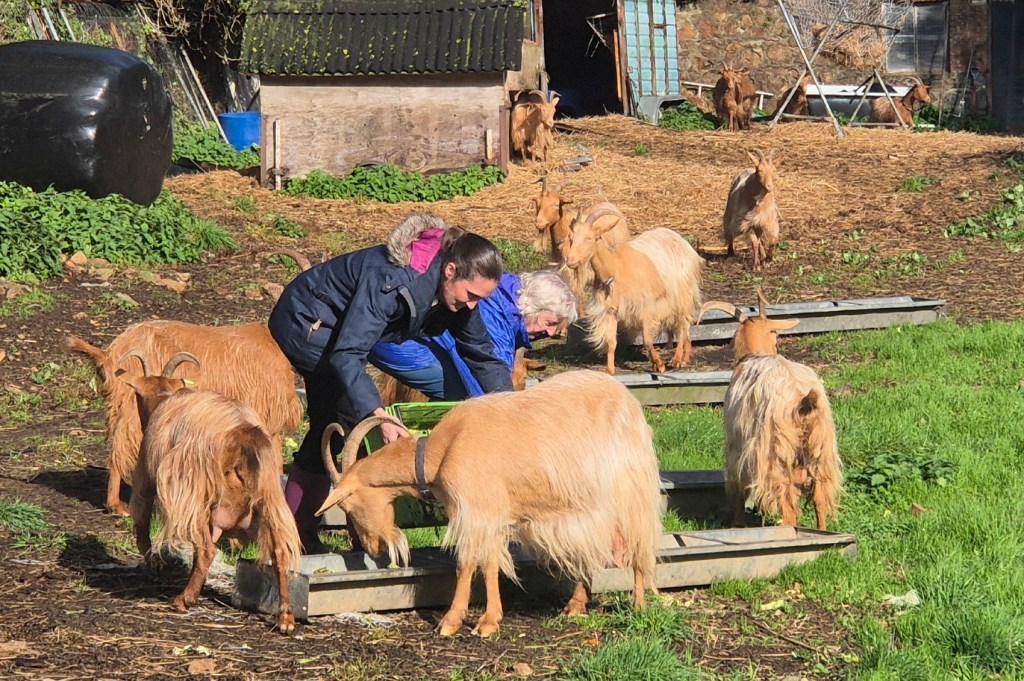
The Symposium brought together a range of global experts, who utilise the breed for a wide range of uses, including dairy products and conservation projects.
Christopher Price is the Chief Executive of the Rare Breeds Survival Trust, and one of the experts who visited the island as part of the Symposium.
Mr Price said bringing together experts from across the globe has led to some food for thought on the breed’s future, and potential uses.
“One of the things we’ve been learning about today is the breed’s impact. As a conservation grazer, you know that we’re all very keen to go and preserve landscapes and habitats across the world.”
He added: “What better way to do that than by using the animals which first help shape those landscapes and habitats? And here, of course, that is the Royal Golden Guernsey.”
The conservation efforts in question partially revolve around a Yorkshire company.
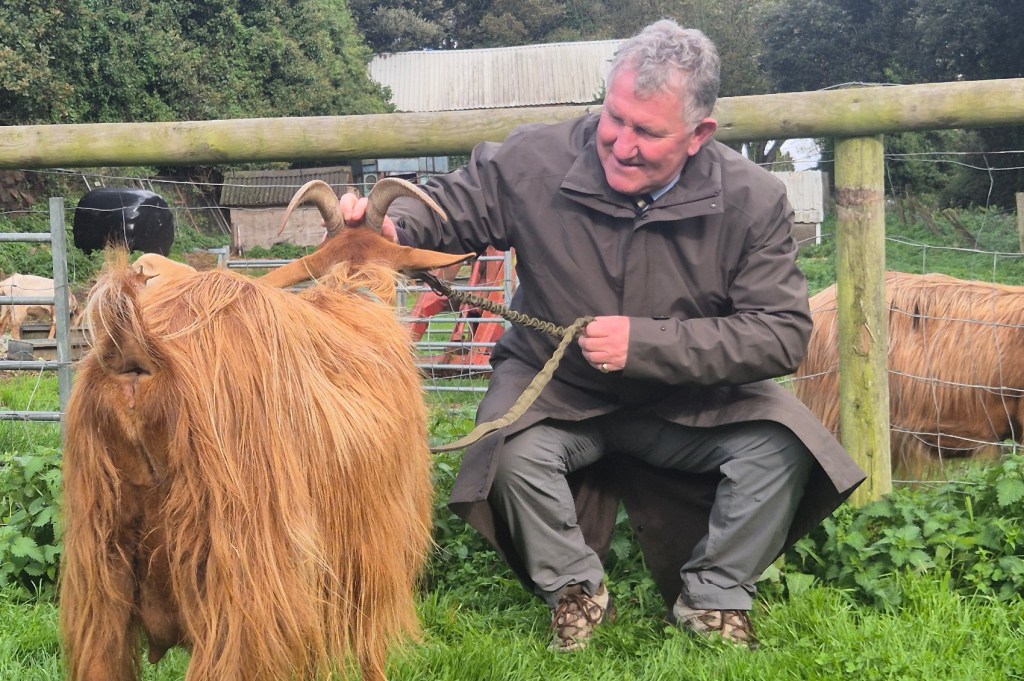
Mossy Oaks are a conservation focussed business, that look to use Royal Golden Guernsey’s to help with eco-focussed goals, and their “bespoke conservation grazing service”.
Oli Harris is one of the co-owners, who explained how their company works.
“We have a large herd of Royal Golden Guernsey goats, and we work with nature organisations, wildlife charities, and private clients.
“The goats go out and graze and work on different habitat goals, like scrub clearance, meadow management, all sorts.”
Danny Wellsted, the other Co-Owner, said the breed’s hardiness and positive personality are real bonuses to their usage.
“Royal Golden Guernsey Goats are amazing conservation grazers. They’re very hardy, so they can live outside year round rain, so everything, they grow a really thick winter coat.
“Because they’re a native breed, it means that their natural behaviors really fit in with our habitats, and they’re also very docile, which makes handling a lot easier.”
Further afield, Royal Golden Guernsey’s are also being bred as far away as America’s West Coast.
Sarah Owens, a Doctor of Veterinary Medicine from Seattle, has her own herd of Royal Golden Guernsey’s. She says they’re very popular in her neck of the woods, thanks to their personality.
“They have such an incredible character. They’re very Instagrammable. They’re stunning.
“I got attention from the entire county, people knew exactly where my farm is from the minute I put them out in the pasture the first time. So they’ve changed a lot of people’s lives, getting to know them and owning them as pets.”

Dr Owens said the Symposium has been extremely helpful in terms of connecting people already using and utilising the Royal Golden Guernsey.
“It’s been more useful than I could have guessed, and it’s going to be very useful for us in the US as well.
“To take a lot of things back from this, I think each area in it, between England, and the US, and Guernsey, we’ve all done things differently, accomplished things that the other areas have not and failed on areas that the other areas have succeeded.
“So it’s going to be very useful for me to bring back to the US, as well as contribute anything I can, obviously, to their heartland here.”
The symposium continues today, with a focus on future proofing the historic breed’s prospects.
