


A new dedicated committee will take responsibility for housing in the next political term.
The States backed stripping certain powers from the mandates of Environment & Infrastructure, Employment & Social Security and Policy & Resources and placing them in one place by 21 votes to 15.
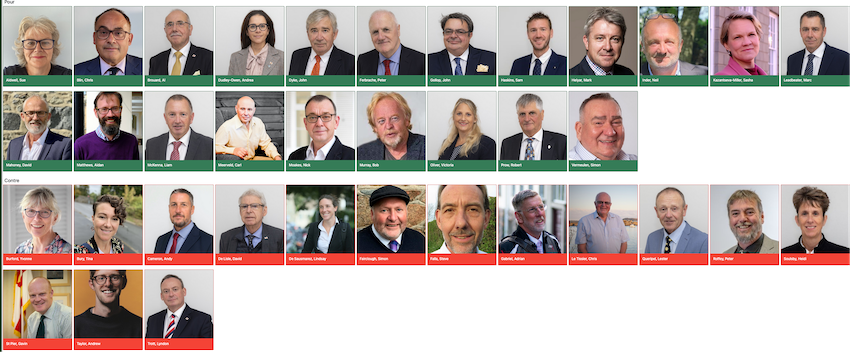
Supporters argue it will give a laser-like focus to help address what they described as a housing crisis, while those opposed said it would create a silo, cost more and does not address the real issue of actually delivering more houses.
The requete that brought about the change was led by Deputy Sasha Kazantseva-Miller.
“I don’t know if at this stage it will make a difference, but there’s absolutely no evidence that continuing with what we’ve got will actually deliver what we need,” she said in summing up the debate.
“And to me, it’s always about our capacity to act. I’ve been part of many small teams within small and big organisations which have the power to drive real change. And what I see, the way we work, the structures we’re in, is not really working, and what I’m desperately trying to bring more is that power of a small group of people to go ahead and really make a decision, rather than the trickle of government we are stuck in.”
Currently there was a policy vacuum as different committees had different views on issues like GP11, a policy for providing affordable housing in large scale private developments, she said.
If they felt the people on the committee were underdelivering, it would now be much easier to replace them, she argued.
Old school thinking about how the committee should be staffed needed to change, she said.
“This is a really good chance for some fresh thinking about how these structures are set up so we remove bureaucracy,” she said.
“The main committees affected, ESS and E&I, have told us how busy they are with housing, I’ve said that they’ve done huge amounts of work, it’s very often on their agenda. So if we remove that from their mandates, surely that creates capacity within their own organisations.”
Deputy Kazantseva-Miller believed that the committee’s mandate could be expanded in the future to include planning.
Fears about costs
E&I President Lindsay de Sausmarez was among those arguing against the change.
The funding numbers for the housing committee in the requete did not add up, she said, and there would be a significant ongoing cost.
“I think building on some of the other points that have been made during general debate of particular relevance to the committee for the Environment and Infrastructure, is the risk that we will be actually creating more silos,” she said.
“I’ve already mentioned the fact that when you have a large site and it hasn’t come forward for housing, often the factors that are preventing it coming forward for development are infrastructure related, and so it is really important that that work is done holistically.”
Housing only happens with supporting infrastructure, she said.
“There are other things, like in terms of energy efficiency measures for housing stock, to help people keep their energy bills down, etc, and improve their health outcomes, improve their quality of life. Would that sit under E&I, or would that sit under the committee for housing? So I do think we do run the risk of creating as many silos, if not more, than creating a committee for housing could possibly reduce.”
There was a genuine desire from deputies to do something.
“Everyone wants to feel like they’re doing something, but others have said, it doesn’t do what people think it’s going to do. It is just an exercise in moving some of the political deck chairs around the deck, and we have had precisely nothing specific about what any new committee would do differently otherwise, other than have a different name and cost more and have to liaise with more other committees.”
ESS President Peter Roffey described the new committee proposal as “cosmetic nonsense”.
Earlier yesterday deputies rejected the option of setting up a housing commission.
