

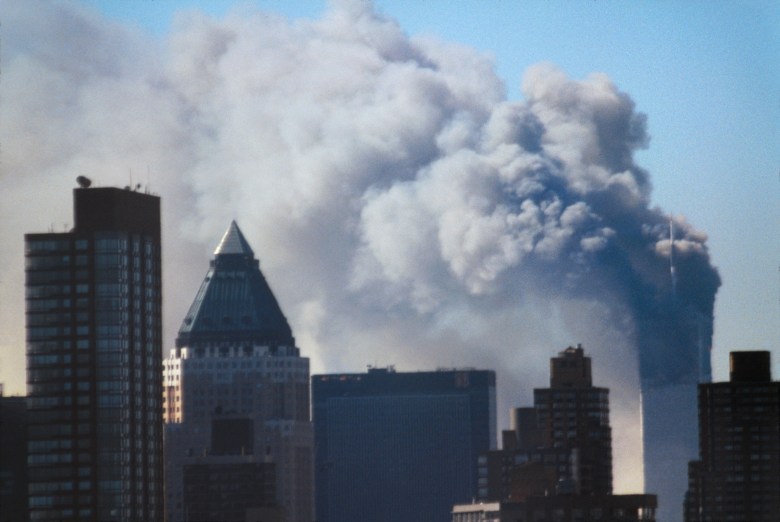
Every generation has a “Where were you when it happened?” moment.
For my parents it was when US President John F Kennedy was assassinated. For today’s teenagers, perhaps it will be where they were when the Covid lockdown was announced.
But for my generation, while we’ve lived through many life-altering events, the moment we found out the Twin Towers had been hit will be indelibly seared into our memories for as long as we are lucky enough to live.
Here’s the story of my 9/11.
At the start of 2001 I’d moved back to the UK from the British Virgin Islands to take up a job as a web designer (and occasional copywriter) in the in-house marketing department of what was then the largest retail investment company in the world – managing over $1tn of assets.
The pay was ridiculous (especially given my age), the perks were fantastic, and I liked the job and the people I worked with. In short, life was good (though I did miss island life and the BVI weather).
Back then, the web was a new phenomenon with the first ‘dot com’ bubble having only recently burst, so many of the fund managers and finance professionals didn’t understand the ‘information superhighway’ (as people used to call it) at all.
A Sharpie and a spooky coincidence
And so, at around lunchtime on Tuesday, 11 September 2001 I found myself in a beige room in Surrey, presenting to a group of pin-stripe-suit-wearing finance folk on a topic named something like ‘What is the web?’.
As you’d expect, I started at the beginning, explaining that there’s a difference between the internet (the wires and computers) and the web (the pages you see in a browser).
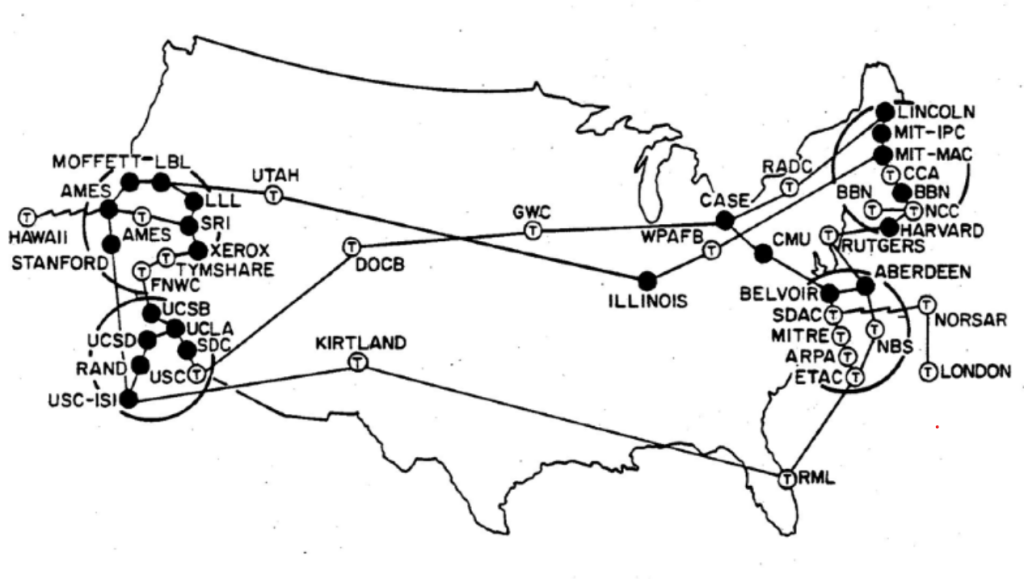
And then I dived into a bit of history – a thing called ARPANET.
I explained that during the Cold War, the US military realised that traditional communications systems would be useless in the event of a nuclear strike.
Then I pulled out a Sharpie, drew a very crude world map on a flip chart, and explained why.
Traditional telephone networks had exchanges which all local phones and faxes (remember them?) connected to.
A picture paints a thousand words, they say, so I drew out a rough ‘hub and spoke’ diagram of the US telephone system, with large dots for the exchanges in all the major cities, small dots to represent individual telephones, and lines connecting them all.
Then, to illustrate why this was a problem in a nuclear war, I picked a city at random and said: “Let’s say we blew up New York,” – and scribbled all over the Big Apple in red marker pen.
I even remember it got a laugh.
The problem, I explained to the men in pin-stripes (it was all men), was that all an enemy of the US would need to do to bring down their telephone network was bomb a few big cities first and the whole network would collapse.
I said: ‘Let’s say we blew up New York’ – and scribbled all over my map in red pen… within minutes, the first plane hit the North Tower.
And then I explained how the US military came up with APRANET – the precursor of the modern internet – to solve the problem.
Little did I know that within minutes of me speaking those words, the first plane hit the North Tower of the iconic World Trade Center.
Rumours and phone calls
Less than an hour later, I necked the last of the free red wine we had at every in-house event (I said the perks were good) and walked back onto my floor, content with the knowledge this young ‘whizkid’ had imparted to my elders.
The second I walked in the atmosphere was prickly – something was… electric.
People were talking. Working. Focussed. Scared?
I caught snippets of conversations:
“Is Rowena safe? Are you sure?”
“They’re saying there are 100 planes in the air.”
“Guys, they’ve hit Paris. They think London’s next.”
“How many? 100,000 dead?! Holy f***!”
I started to piece together what had happened.
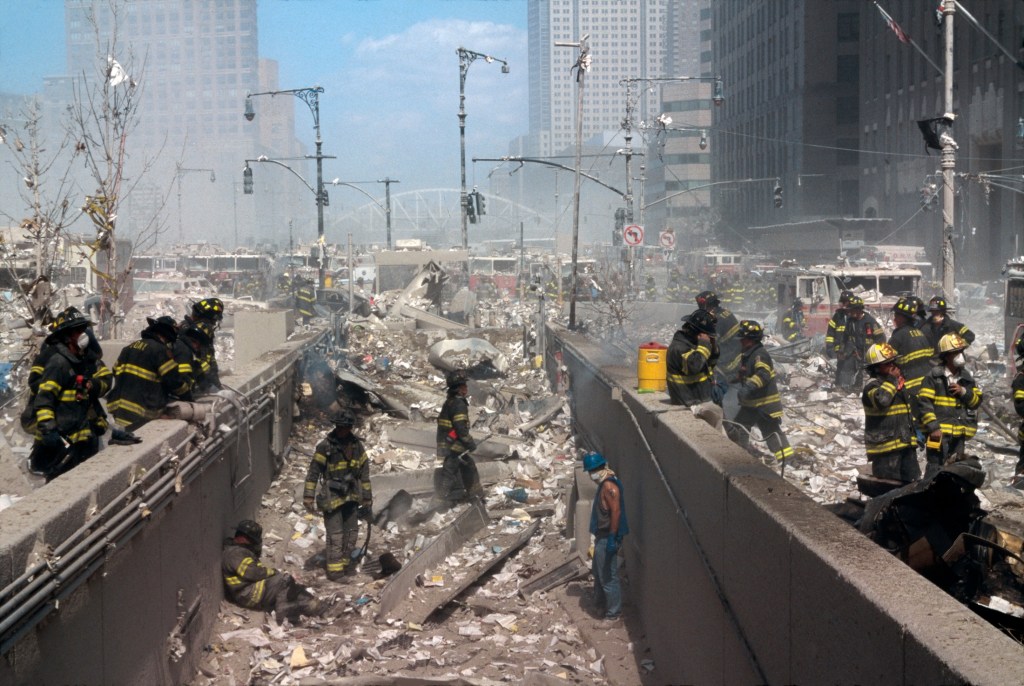
Two and a half decades later, we know the facts. Four commercial passenger planes were hijacked. About 3,000 people died.
Back then rumours flew. Half-truths turned into wild, irresponsible guesses.
The company I worked for had offices in the World Trade Centre, though fortunately not in the two main towers.
People on my floor had been on phone calls with our colleagues in New York when the first plane hit. They’d heard the explosion.
Stock prices and late night pizza
“Call your girlfriend and tell her you’re not coming home.”
Despite knowing full well I was single, that’s how my boss decided to break the news I’d need to stay late – very late.
My firm managed assets. If you invested £100 with us, we charged you an annual percentage for our troubles.
And if that £100 dropped to £50, our profits halved.
Before the second tower had even fallen, the company knew the news was more than just a human tragedy; it was a potential financial disaster.
Just 29 minutes after the first plane hit, the New York Stock Exchange and NASDAQ cancelled the day’s trading before it had even started.
While firms in skyscrapers evacuated non-essential staff around the world, the markets in London and Tokyo plummeted around 6% in a few hours – Frankfurt over 8%.
The firm’s revenue was about to nosedive, there was no way around it, but the worst-case financial scenario was even more grim.
If our investors got spooked and pulled their money out, it would potentially be game over for the 50-year-old firm.
So a small group of my colleagues and I ordered pizza and beers from a local takeaway and got to work.
We would be redesigning the homepage of every non-US website to send a simple message to our investors – ‘don’t panic’.
We got to work designing and coding the templates, while the board in Boston worked with copywriters, translators, and lawyers to agree the message.
We finished the templates in a relatively short time, but it was close to midnight when we got the final copy and the go-ahead to put them live.
We said our goodbyes, took taxis home, and finally got the time to process the enormity of what had just happened.
I imagine I was not alone in breaking down the second I got through my front door.
Next day carnage
Our UK headquarters was spread over three, sprawling floors in the Surrey countryside, with a shiny skyscraper in the heart of the City of London for the traders.
On Tuesday, the second floor was buzzing with more than 500 software developers from all over the world.
When I came in on Wednesday, there were fewer than 50. It was a ghost town.
The markets would be closed for a few days, but when they reopened everyone knew what was next – carnage.
So, facing a financial black hole, the firm’s upper management had acted swiftly and ruthlessly.
I later found out the phone calls were made and emails went out before I’d even got in the taxi the night before.
Luckily I was spared. Perhaps it was because I was considered valuable – or perhaps I was just fortunate to have been one of the people they needed that evening, but I escaped the chop.
Normality and ugliness
As the days went on, tumbleweed on the second floor became my new normal.
Those of us who remained got on with the day-to-day, updating other parts of the websites, changing the small print on investment calculators, and working out which projects we’d still be doing and which would be canned.
The next few weeks of aftermath showcased the best and worst of humanity, and taught me more about human nature than I ever imagined I’d understand.
We started learning about a – to most people – new terrorist group called al-Qaeda and its leader Osama Bin Laden.
Inaccurate stories came out about a trainee pilot who didn’t want to be taught how to land, while conspiracy theories emerged blaming everyone from the US Government to the Israeli secret service for the tragedy.
But we heard stories of incredible heroism and kindness.
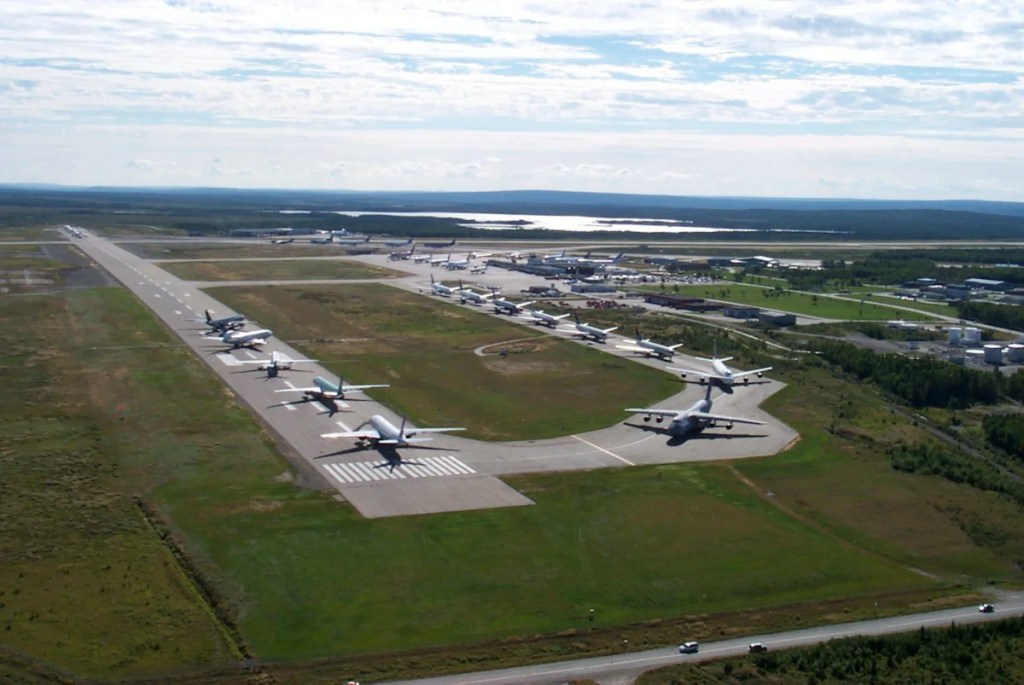
From Rick Rescorla, Morgan Stanley’s fire-drill-obsessed head of security, who saved more than 2,500 people before dying when the tower collapsed, to the people of Gander, Newfoundland who housed and fed more than 6,500 stranded plane passengers.
While there was no blockbuster-movie-worthy heroism in Surrey, I did notice a new-found sense of kindness and tolerance in those subsequent days and weeks.
And while it was far from the evil actions we saw on the day itself, I saw a darker side of human nature at work.
Suddenly, people who were friendly and collegiate started throwing around blame, desperately trying to make sure if more cuts came, they’d be spared.
People’s lives are built around their financial means, and if you lose a very well-paid job that you’re unlikely to get again, there will be consequences.
You’ll suddenly be unable to pay the mortgage of your beautiful, four-bedroom detached home, make the payments on the sports car, or afford little Persephone’s school fees.
I understood it. But I didn’t like it.
So, I decided to fall on my sword, save the company one ridiculous salary, and handed in my notice.

A boat, a plane – and silver linings
I once wrote the words, ‘Out of brokenness shines unexpected beauty.’
Storms clear, and sometimes leave behind rainbows.
For me, the rainbows were a boat, a free flight to Venice, and eventually a change of career direction.
In the immediate aftermath of 9/11, flights were grounded.
When they restarted, almost nobody flew. People were, understandably, terrified.
So Ryanair, ever the out-of-the-box thinkers, offered free flights to entice people back in the air – all you had to pay was the airport tax.
I took my little sister to Verona – to see Juliet’s balcony – and on to Venice.
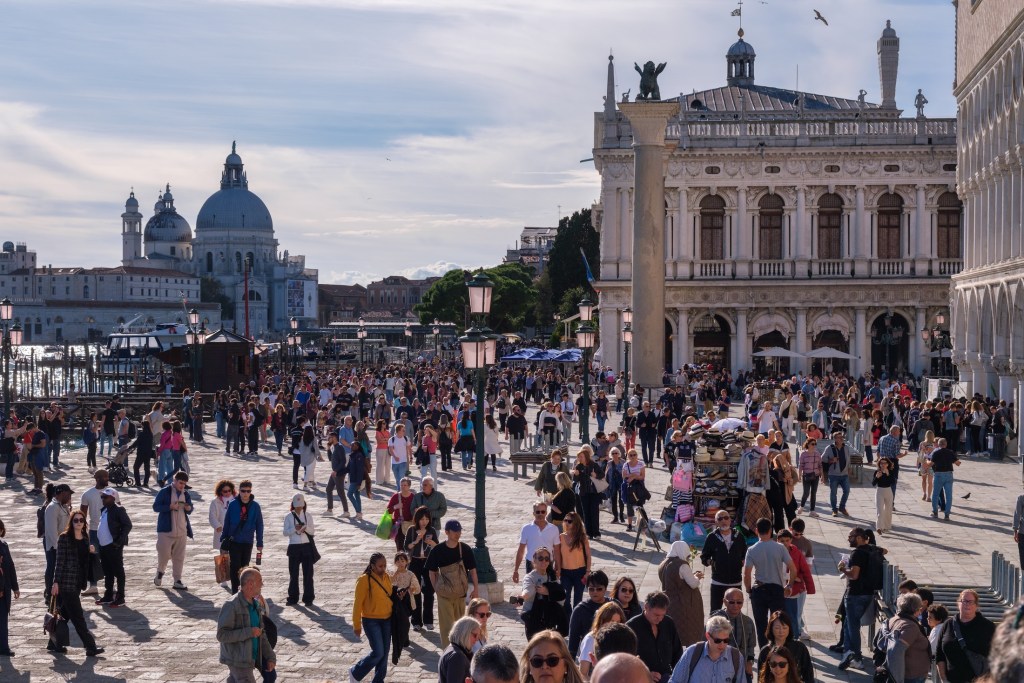
We had the city almost to ourselves. We were able to walk into tourist hotspots that a month earlier would have had hours-long queues.
St Mark’s Square had less than a dozen people in it. It would have been eerie if it weren’t for the thousands of pigeons.
When I returned home, I used the money I’d saved – which as my rent was £300 a month was a lot – to buy a small, semi-traditional canal boat.
I lived on it for a year, moving to a different canal in a different town whenever the urge took me.
I designed and coded websites and wrote marketing copy for my freelance clients, using a Sony laptop and my 9k – yes, nine – mobile internet connection to check emails and upload files.
I’d pull up at thatched riverside pubs, read a book and down a pint or two, and every few days I’d shower in the nearest council leisure centre – as the boat only had a sink.
And I thought a lot about what I wanted to do with my life.
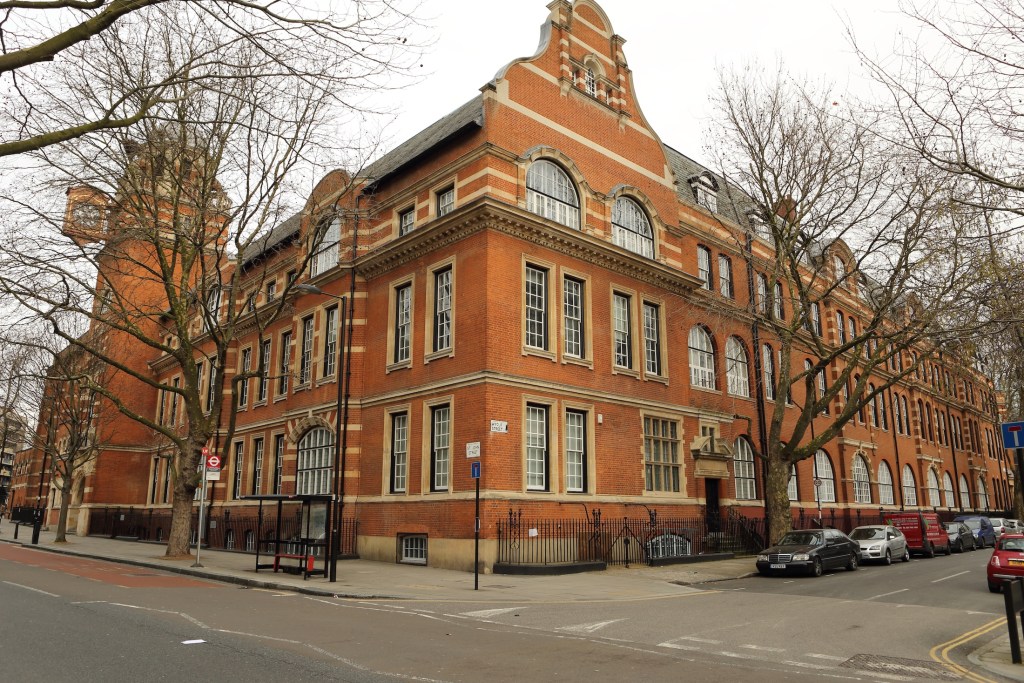
The autumn after 9/11, I enrolled in a brand new course that was being run jointly by City University and Queen Mary College, University of London – called ‘Journalism and Contemporary History’.
Twenty-five years later, I’m privileged to be alive, relatively healthy and have a job I love, writing for a wonderful local news publication that embodies the values that were instilled in me over two decades ago, to “comfort the afflicted and afflict the comfortable”.
They say news is the “first rough draft of history”, which brings me full circle to my small but eventful slice of what was once breaking news – and is now firmly ‘contemporary history’.
Jack Silver is a reporter for Express. At the time of 9/11 he was the Lead Web Designer for a large US-based investment company.
