

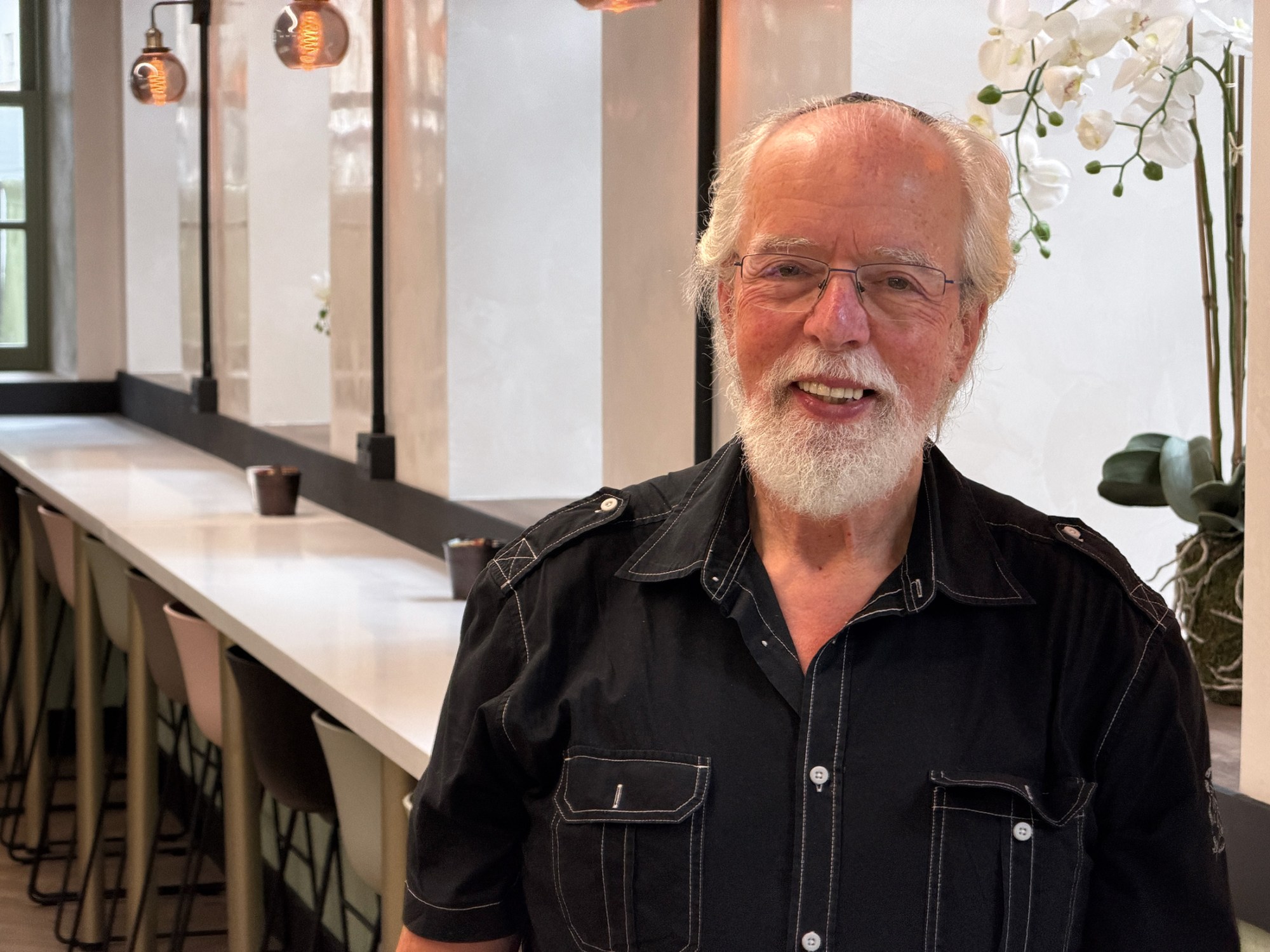
Guernsey should have a formal definition of antisemitism, according to a leading Jewish educator, broadcaster, and community leader.
In an exclusive interview with Express, Clive Lawton OBE said he didn’t believe the “malevolent” form of bigotry was currently a “blazing problem” in the Bailiwick.
However, he said the time was right to consider the move, given the Isle of Man recently joined Jersey and the UK in explicitly adopting the International Holocaust Remembrance Alliance (IHRA) definition of antisemitism.
Mr Lawton, who is visiting Guernsey to speak with local students, told Express: “If you can’t define it, you can’t recognise it.”
While antisemitism is illegal in Guernsey under hate speech and anti-discrimination laws, the States has yet to explicitly adopt a formal definition of it – unlike the other Crown Dependencies.
A spokesperson for the States of Guernsey said it had “agreed to support the UK’s membership of the IHRA” in 2016, including supporting a joint delegate at IHRA meetings, with Jersey and Alderney.
“Implicit in that support is the support for all the work of the IHRA, including its working definition of antisemitism, so Guernsey has adopted it via its support of the IHRA a decade ago,” they said.
Guernsey’s 2023 anti-discrimination law also provided “protections against antisemitism”, they added.
Although the UK, Isle of Man and Jersey have explicitly adopted the IHRA definition, it is not legally-binding – meaning a court would be free to come to a different interpretation.
Shape-shifting
Mr Lawton is the Executive Chair of the Commonwealth Jewish Council and a former member of Board of Deputies of British Jews.
He explained that while anti-Jewish bigotry had existed for hundreds of years, it had “shape-shifted” throughout history.
“The earliest anti-Jewish hatred was against Jews because of their religion – we killed Jesus, right?”
This shifted to focusing on their wealth, then to class, and then it became “about politics – they’re all communists, or whatever”, he said.
“The Nazis introduced racial antisemitism, which was much more difficult to escape.
“You couldn’t convert your race, and that’s what made their programme so much more catastrophic than any previous programme.”
Mr Lawton said antisemitism had shifted in the last 50 years to become about “nation” and “anti-Zionism”.
“It’s transmuted again… it’s transferred itself to Israel,” he said.
“Jews get accused of everything that Israel does, and Israel gets demonised in the same old way that Jews were demonised.”
Legitimate criticism
The IHRA definition of antisemitism has been criticised by some people over accusations it had been “misused” to conflate criticism of Israel with accusations of antisemitism.
Israel has come under increasing criticism from politicians across the world and humanitarian organisations over its military action in Gaza, with even US President Donald Trump publicly disagreeing with Israel on some occasions.
The Israeli Prime Minister, Benjamin Netanyahu, has consistently defended the military action, which was a response to the killing of about 1,200 people and kidnapping of 240 hostages including women and children on 7 October 2023 by Hamas – the group which controls Gaza.

Critics of Israel argue that the response has been disproportionate, with more than 70,000 people reported to have been killed since the start of the conflict, according to a BBC report, with many more displaced and living in dangerous conditions.
Following the October 7 attacks and subsequent conflict, some members of Guernsey’s Jewish community reported seeing a rise in antisemitism locally.
Mr Lawton said it was important to be able to criticise the actions of Israel and the Israeli government and military, and he stressed that doing so didn’t cross the line into antisemitism.
“If Israel’s doing something wrong, you should call it out,” he said.
Crossing a line
However, some people weaponised damaging tropes that had historically been used to attack Jewish people, Mr Lawton said.
“You get the kind of lies about [Jewish people] harvesting organs or making special attempts to kill children – these things go back to the Middle Ages.”
People on all sides of the conflict have also been criticised for spreading disinformation and misinformation, including creating false reports using recycled footage, video generated using AI, or even taken from computer games.
Mr Lawton drew a distinction between criticising Israel and being “fundamentally anti-Israel or fundamentally anti-Zionist”.
He added: “There are 193 members of the United Nations, why is this the one country in all the world the one country that should not exist?
“I think you are in dangerous territory, not being able to explain why you picked on the Jews.”
Mr Lawton said people who wanted to “know how to criticise Israel legitimately”, without crossing the line into antisemitism, should, “just go to Israel and talk to Israelis – they are criticising it continuously”.
You can’t possibly criticise Israel more vigorously than Israelis do themselves.
He compared the media coverage of protests in the United States about Donald Trump’s government – including its anti-immigration ICE agency – to the lack of coverage of protests in Israel.
“There were weekly demonstrations on the streets [of Israel], bringing the country to a halt” over proposed constitutional changes from Netanyahu’s government.
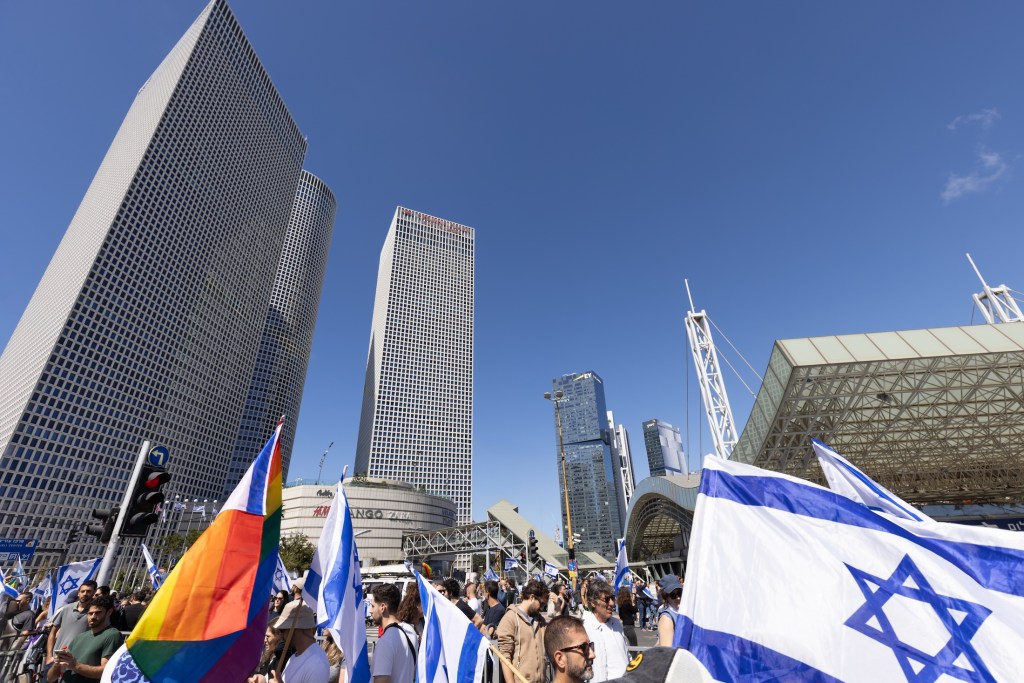
He said: “One is a vigorous democracy, which is holding to real values, while the other is a bit of a mess.
“And yet, Israel is never characterised as a vigorous democracy, it’s characterised as a police state.”
Occupation
Mr Lawton is visiting Guernsey to speak to a number of schools and colleges about Jewish history and culture.
However, he argued that it was ultimately adults who needed to do the hardest thinking, with many people “very concerned to commemorate and to say ‘never again’… but they don’t think very hard”.
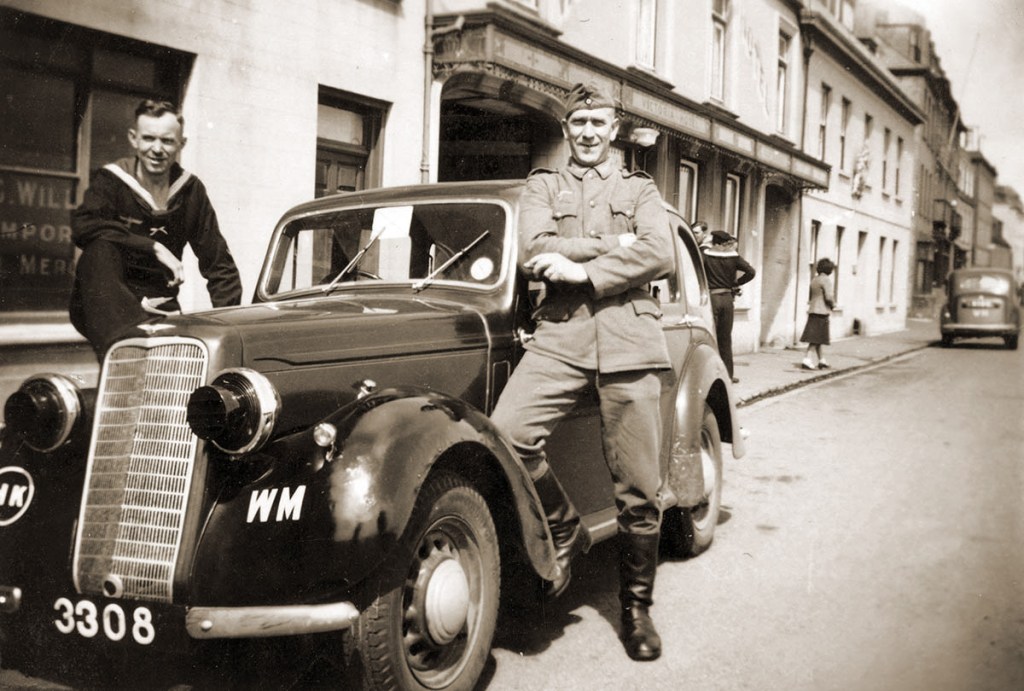
The Channel Islands’ history as the only part of the British Isles to be occupied in World War Two gave people in the Bailiwick a particularly strong foundation to understand some of the issues, Mr Lawton said.
The Channel Islands were occupied by the German forces from 1940 until 1945, with Alderney being used to house four Nazi forced labour camps filled with nearly 8,000 prisoners from all over Europe and the Channel Islands, including at least 594 Jews.
Between 641 and 1,027 people are believed to have died there during the Occupation, according to a 2024 report, though the number could be as high as 1,134.
While the exact number of Jewish people who died or were murdered in the island may never be known for certain, four Jews from France are known to have died there and eight Jewish graves have been confirmed.
Three Jewish women who lived in Guernsey are also known to have been deported in April 1942, with all three later being murdered at the notorious Auschwitz-Birkenau death camp.

However, Mr Lawton stressed it was important to remember that – while the experience of non-Jewish civilians living in the islands at the time was very hard – they did not have direct experience of the Holocaust itself.
He warned there was a “danger” that familiarity with the islands’ wartime history could lead people to assume they already understand the Holocaust, when that may not be the case.
“Guernsey didn’t experience the Holocaust… it experienced the Occupation.”
