


On International Women’s Day, one of Guernsey’s female leaders is encouraging continuing discussion of gender bias and discrimination to help future generations of women recognise and address challenges in their own lives.
Liz Coffey is the Executive Principal of Guernsey’s Secondary School Partnership – overseeing the education of thousands of young people across the high schools and special educational needs facilities.
She told Express that “openly discussing gender bias and discrimination can help girls recognise and address these challenges in their own lives” and that “these areas are part of many areas of the formal curriculum, in PSHE for example” but there are also opportunities within other areas of the curriculum that can be utilised to educate and empower girls.

Women make up a large proportion of the staff numbers across educational settings, which Ms Coffey says is a positive.
“Studies suggest that women often demonstrate strong interpersonal communication skills and a high degree of empathy,” she said. “These traits are invaluable in creating supportive learning environments and understanding students’ individual needs.”
Women are “often noted for their organisational abilities,” Ms Coffey continued, saying “these are essential for effective planning, classroom management, and some of the administrative activities that are part of a teachers work”.
She also said that the nurturing characteristic often associated with women “can foster a sense of security and belonging in the classroom, while a collaborative style encourages teamwork and peer learning in the classroom.”
“That is not to say that any of these identified strengths are not present in our male counterparts; it’s just that women are noted for these skills,” she added.
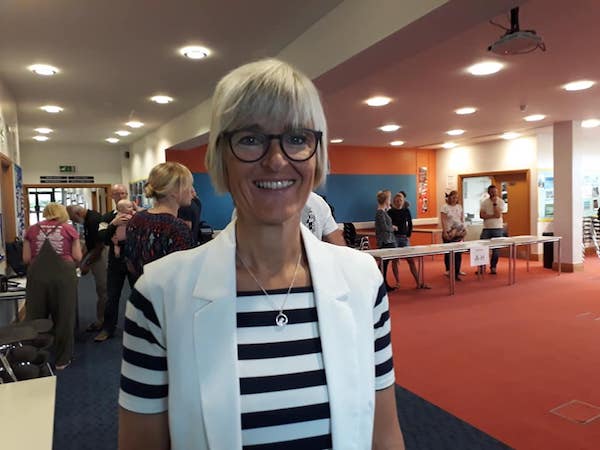
Events were scheduled across the island’s schools to mark International Women’s Day with some students invited to events organised by business leaders too.
Ms Coffey said boys were also included in these lessons and events to ensure the messages around challenging gender bias are shared with everyone.
“I would say this is very important,” she said. “Diverse role models provide students with a more complete understanding of gender roles and expectations.”
She added: “Exposure to both male and female perspectives can help students develop a more nuanced understanding of gender dynamics and promote respectful interactions between genders.”
How can female role models – such as teachers – help to empower their female students?
- Demonstrate Achievement: By showcasing their own accomplishments, female teachers can inspire their students to have high aspirations and achieve their personal ambitions. I recently heard one of the Principals speak at a presentation event and she was open about her own journey to her current role. This was inspiring for everyone but particularly so for female students.
- Provide Mentorship and Support: They can offer guidance, encouragement, and support to female students, helping them navigate academic and personal challenges.
- Promote Confidence and Self-Efficacy: Female teachers can help their students develop confidence in their abilities and believe in their potential for success.
How can teachers help to guide young women to tackle those challenges in their own careers?
- Promote Gender Equality: Teachers can foster a classroom culture that values gender equality and challenges gender stereotypes.
- Encourage participation in careers and further study. They can encourage girls to pursue studies and careers in fields such as Science, technology, engineering, and mathematics, for example, , where women are often underrepresented.
- Develop Leadership Skills: Teachers can provide opportunities for girls to develop leadership skills through classroom activities, enrichment activities, and mentoring.
- Discuss Gender Bias: Openly discussing gender bias and discrimination can help girls recognise and address these challenges in their own lives. These areas are part of many areas of the formal curriculum, in PSHE for example but opportunities within other areas of the curriculum can be utilised.
Ms Coffey was clear that female and male students need teachers of both genders to empower and educate them throughout their school lives.
She said that during her own education her most influential teachers were male.
“Male teachers can provide diverse perspectives and role models, particularly for boys and they help to create a more balanced and inclusive learning environment,” she added.
“Individual teachers, both male and female, have different teaching styles and approaches. Whilst we try to ensure there is a level of consistency in the routines used in everyday classroom practice, the richness of any school and the classes that operate within them, comes from the fact that teachers and our students, are unique individuals.”
