
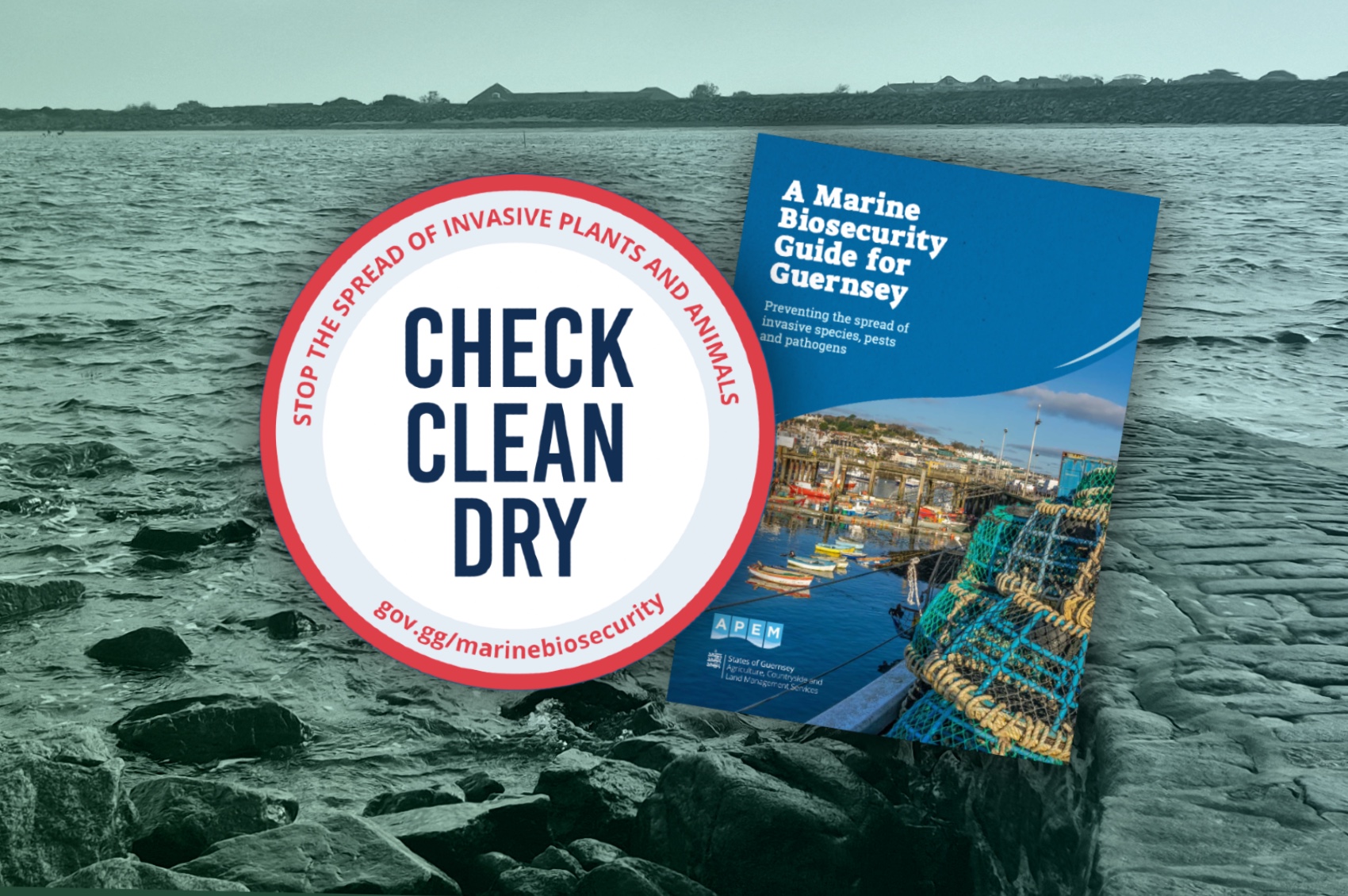

A new ‘Marine Biosecurity Guide’ is being published featuring a range of advice to help prevent potentially damaging invasive species spreading across the island.
Agriculture, Countryside and Land Management Services and Guernsey Ports have teamed up to produce the guide.
It includes specific advice for anyone who interacts with Guernsey’s marine environments, including recreational boaters, divers, and for people working in commercial fishing and shipping.
Available online through the States website, the guide aims to crack down on the chances of invasive species, pests, and disease spreading in our sea and on the island’s shoreline.
The advice centres around keeping any contagion, contamination, or cross-contamination to a minimum, while ensuring that all equipment is properly washed out and cleaned, before re-entering aquatic and marine spaces.
The steps are crucial to complete if Guernsey is going to continue its fight against invasive species, but put simply the core advice for everyone is to follow the ‘check, clean, dry’ protocol.
According to Guernsey’s Senior Natural Environment Officer, the primary objective of the new guide is to stop the introduction and spread of invasive marine species, pests, and diseases in Guernsey.
“It’s all about trying to prevent the introduction and spread of marine invasive non-native species, so sort of species that don’t belong here, but get brought here from further afield, but also looking at pests and diseases as well,” said Julia Henney.
“So these things that might have significant economic or environmental consequences to the island, it’s all about providing practical biosecurity actions that the Guernsey community can implement to try and reduce that risk of bringing them here.”
The guide highlights the impact that human activity has on enabling the spread of invasive species in all their forms.
Those activities range from international shipping to local industries, and recreational hobbies.
Ms Henney told Express: “One of the key messages we’re trying to push is stop the spread. So exactly that, thinking about every site that you visit as being a different site, especially where we’re near a harbour. That’s one of the sort of the hotspots where you might find invasives being introduced.
“If you’re then moving, from there to another part of the island, it’s really easy to carry those invasive species with you. If you’re leaving the water or taking equipment out of the water, check it, clean it, dry it before you take it somewhere new.”
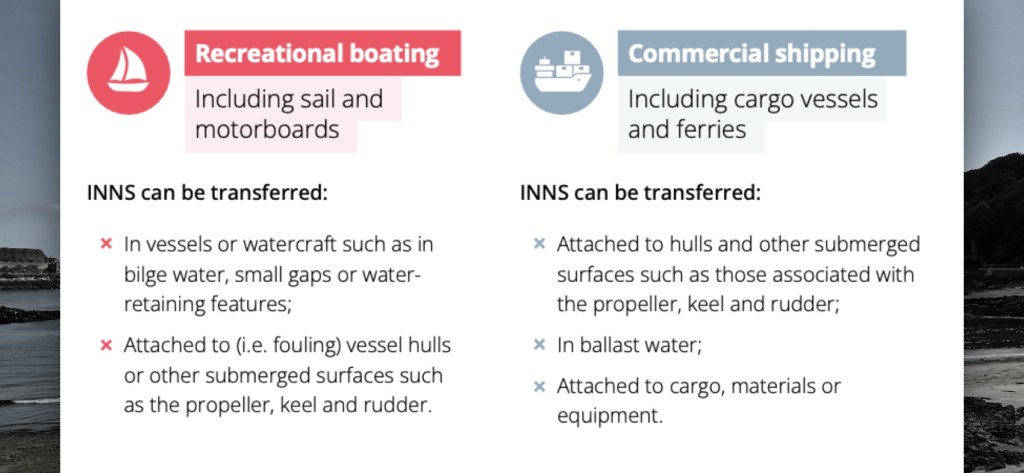
Pictured: How Invasive Non-Native Species, (INNS), can spread through a variety of ways, (Page 7, A Marine Biosecurity Guide for Guernsey). 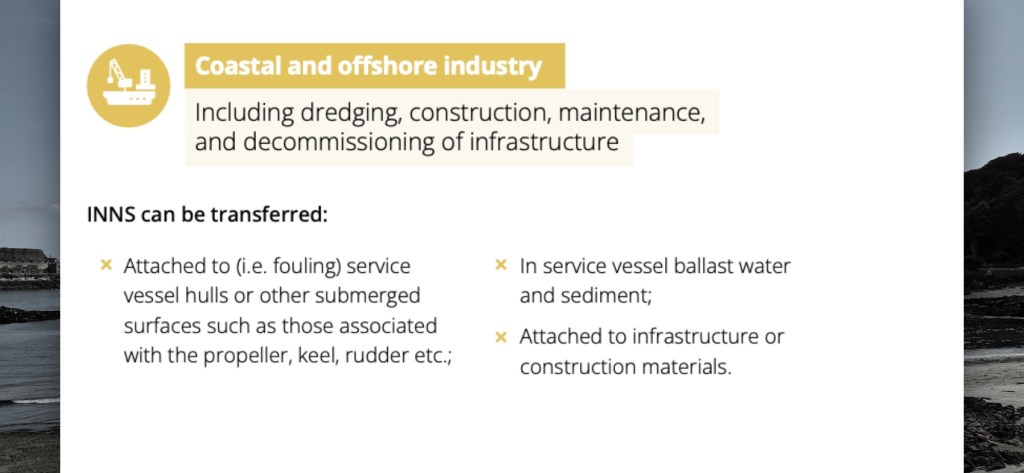
Pictured: How Invasive Non-Native Species, (INNS), can spread through a variety of ways, (Page 7, A Marine Biosecurity Guide for Guernsey). 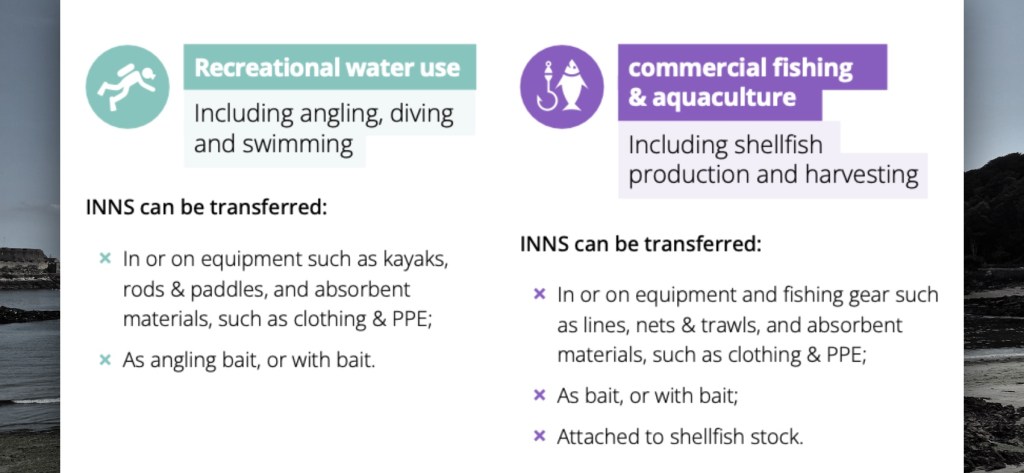
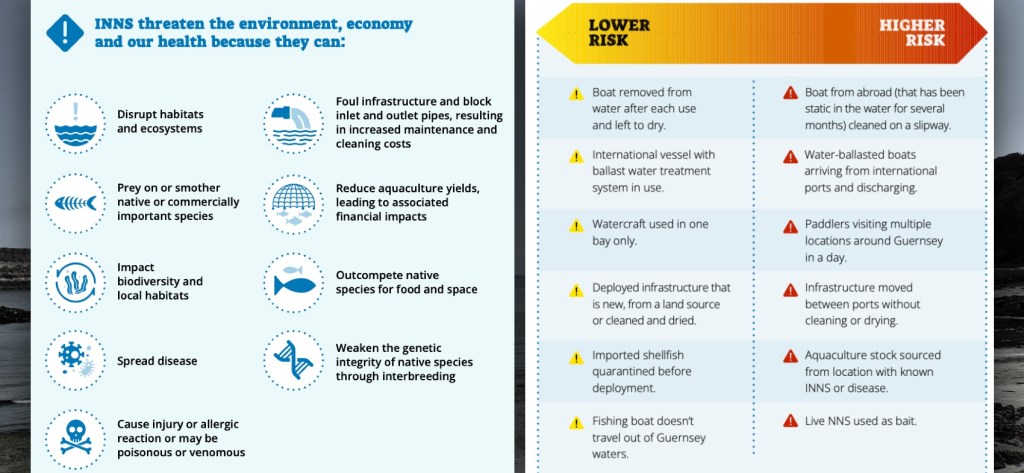
Pictured: How Invasive Non-Native Species, (INNS), can spread through a variety of ways, (Page 8, A Marine Biosecurity Guide for Guernsey).
The advice is particularly important to local industries, including shipping, freight and fishing, with the likelihood of picking up an invasive species greater, due to their mobile nature, said James Way, the island’s Harbour Master.
“It’s all about keeping the bottom of the vessels clean in the first instance, so making sure that the hulls are cleaned regularly, that anti-foul products are applied regularly, and that you’re not letting a significant layer of growth develop, other than perhaps just a sort of a slime layer.
“That’s probably the first and probably the most important thing to do. Then it’s all about checking the bottom of your boat regularly, cleaning it regularly, and when you do take it out of the water, giving it time to dry off. In some cases, there are certain organisms and pathogens that can survive outside of the water for up to two weeks.”
Mr Way continued: “Ultimately it’s about recognising that we’ve got a really important part to play as the kind of gateways to Guernsey. We have vessels calling internationally, from France, from the UK, from sometimes further afield, commercial vessels.
“In the summer, we get 1,000’s and 1,000’s of visiting boats that are coming from all over Europe. So it is really important to make sure that we’re being proactive in terms of our messaging for us as well.
“The marine ecosystems around the island extend well into our harbours as well, but also there is a risk to our infrastructure. Extensive marine growth on things like Ro-Ro ramps or pontoons can have an operational impact on us as well, and the removal of these things often takes a lot of time and a lot of cost, so it’s in everybody’s interest to try and keep on top of marine biosecurity.”
