


Ports of Jersey collaborated with the Infrastructure and Environment Department to host a talk on the safe removal and disposal of the invasive ‘carpet sea squirt’ species, and discuss how to avoid it spreading to other boats and equipment.
In May, officials spotted four small colonies of the sea squirt on the underside of several pontoons in the Elizabeth Marina. It soon spread to nearby boats.
Marine expert Chris Isaacs showed examples of the organism to the group, which learned how to report any sightings to the Natural Environment team or Ports of Jersey.
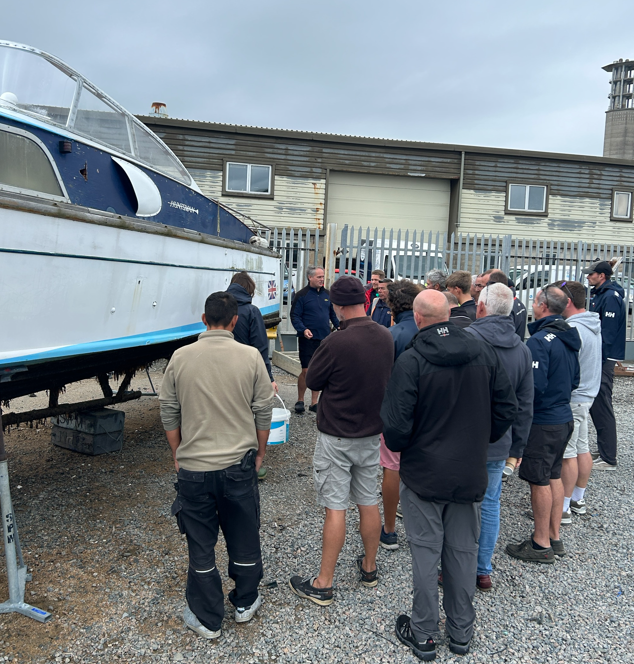
Pictured: local marine traders attended the talk on how to deal with the invasive species.
Survey work is under way in the marina – and other harbours and parts of the coast – to assess how far the invasive species, which can have a negative impact on aquaculture businesses, has spread.
Alastair Christie, senior scientific officer for invasive species in Jersey, has previously said that the species could damage stocks, foul boat hulls, and have a negative effect on native marine ecology as a competitor with existing species.
He added that there was “little that could be done” once the species was “well established” and said that he hoped their swift action would mitigate further infestations and their effects.
What is a sea squirt?

The carpet sea squirt, Didemnum vexillum, originates in Japan and hasspread to the British Isles inrecent decades, arriving inIreland and north Wales in 2008.
Mr Christie previously said it had a presence in southern UK ports and was ‘likely to be just a matter of time before it arrived here in Jersey’.
What should mariners do?
Mariners are advised to:
-
Check your equipment, boat, and clothing after leaving the water for mud, aquatic animals or plant material. Remove anything you find and leave it at the site.
-
Clean everything thoroughly as soon as you can, paying attention to areas that are damp or hard to access. Use hot water if possible.
-
Dry everything for as long as you can before using it elsewhere, as some invasive plants and animals can survive for more than two weeks in damp conditions.
