


Policy & Resources wants tens-of-millions of pounds extra to be spent on major projects and rebuilding the public sector’s reserves each year as financial forecasts for the island worsen.
The Committee announced on Friday that it had revised its long term fiscal rules using new data and calculations which have pushed up the island’s structural deficit to £98m per year every year.
A structural deficit is the long-term imbalance between what the government spends and receives that is not linked to temporary economic conditions such as a recession.
This has been revised up from £77m, which appeared in the States’ 2026 budget which was approved just a few weeks ago.
The new fiscal policy will need approval from deputies, and if approved it would see £12m more spent on public infrastructure and £9m extra bolstering public sector insurance funds which pay out for pensions and care.
The changes have also been proposed due to a change in how GDP – the measure of all goods and services produced in a set period – is calculated as well as new accounting standards being applied to the States’ accounts.
If approved, Environment & Infrastructure would work with the top political committee to produce a long-term vision for funding and delivering major infrastructure projects across the island – which will also be presented to the States Assembly for approval.
Deputy Gavin St Pier, Vice-President of P&R, said while this update provides clarity over “what good management of our finances should look like over the long-term”, he acknowledged “that as things stand there are areas where we are not meeting those objectives”.
He said they are committing to rebuilding the public sector reserves, but answers over how that will be achieved will be revealed when P&R publishes its tax review options in the first half of 2026.
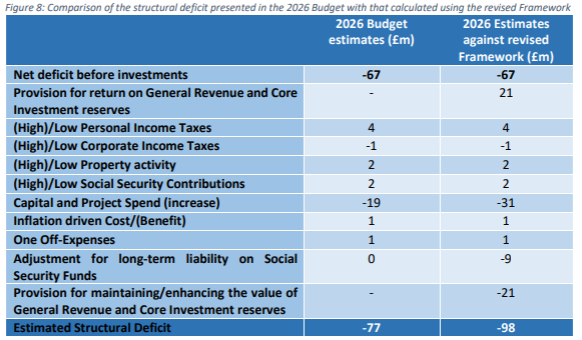
“As this Framework proposes increased investment in major projects and infrastructure, this will have a consequential impact on the calculation of the structural deficit. It also recommends revised treatment of the Social Security Funds – recognising their long-term liabilities rather than focusing solely on in-year deficits as currently reflected in the Budget. These changes increase the estimated structural deficit to £98m,” P&R’s policy letter says.
“The States have consistently fallen short of the previous principle of investing 2% of GDP in routine capital and major projects. This suggests that a revised approach is needed to more effectively define and measure success.
“There is a clear need to strengthen long-term planning and adopt a more holistic approach to identifying infrastructure requirements and strategic opportunities. This would support a more consistent and sustainable flow of projects over the medium-term.”
