


Raymond Evison CBE is launching three new varieties of clematis at this year’s RHS Chelsea Flower Show, which gets underway today.
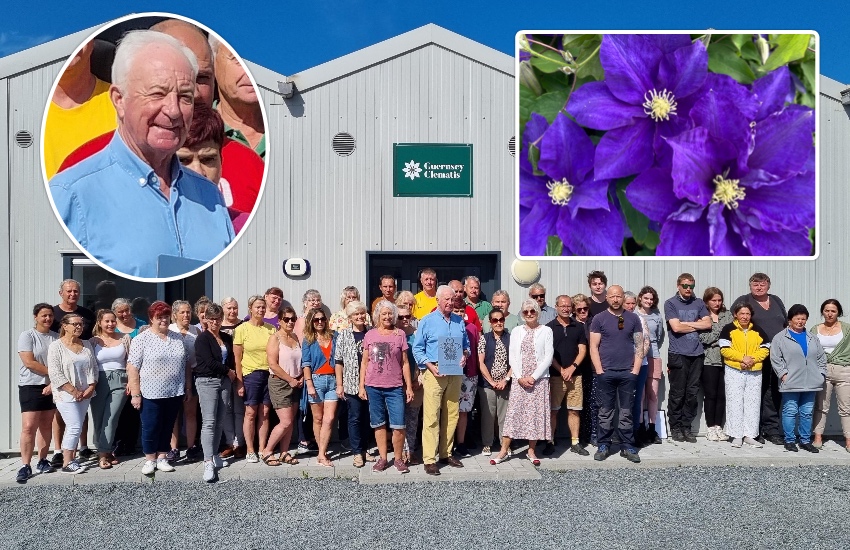
Mr Evison’s award winning Guernsey Clematis (stock image above) has previously won prizes at the iconic show, with his 2026 display hotly anticipated by horticulturists and gardeners.
The new varieties are designed to suit smaller settings with their maximum height expected to be three to four feet tall. This differs to the traditional clematis which is known for “climbing trellises, scrambling through shrubs and being great companions for roses”.
The new varieties are called ‘Ithemba’; which produces white blooms with a delicate pink bar, ‘Eliza’; a large flowered variety maturing from pale blue to pure white, and ‘Queens Nurse’, which bears deep rosy pink flowers.
Each of the three new varieties would suit containers in a small space, said Andy Jeanes, International Sales and Marketing Director at Guernsey Clematis.
“They’re perfect for a small urban garden, because they’re only going to get to about four or five feet tall,” he explained.
“Containers are perfect. You could have them against the back wall of your house or plant them in the garden as they don’t take up much horizontal space, it’s all vertical.”
Mr Jeanes said the new clematis can work in hanging baskets as well as containers, but they need some structure if intended to grow vertically.
He also warned against over-watering the plants.
“For our clematis, we recommend a minimum-size container to be 18in/450cm cubed and the container needs to have drainage holes,” said Mr Jeanes.
“Clematis hate to be wet over winter, so you’ll need plenty of drainage, good free-draining compost and underplant them with some bedding or trailing plants to go over the outside of the container.
“Water them moderately – never overwater. As soon as you see the first flower buds being produced, start feeding them with a high potash feed, something like a tomato feed, and continue to feed them until the first flowers are just about to open, then stop feeding.
“That will stress the plant even further, which will produce more blooms.”
