

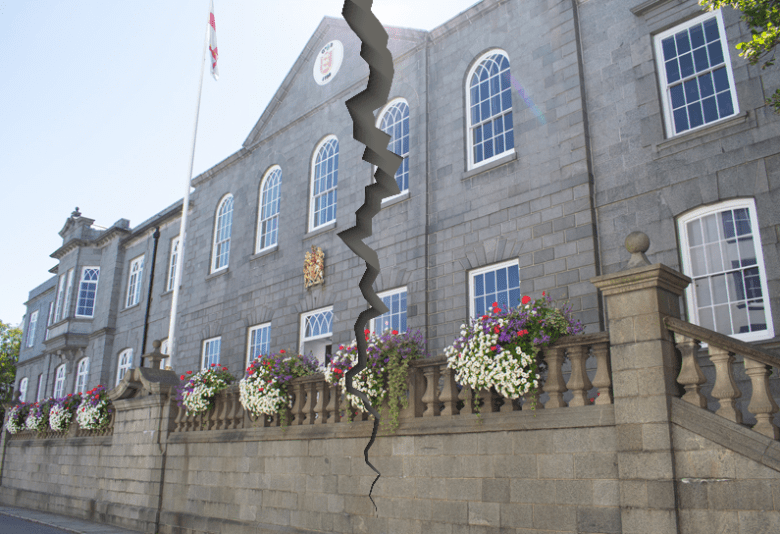
A think-tank is warning that Guernsey’s electoral system needs overhauling again, ahead of the second fully island wide vote, describing the number of people registering to have their say in June as “incredibly disappointing”.
When Guernsey held its first island wide vote in October 2020, there were 30,899 people registered to vote out of an approximate population of 63,155 people (March 2020).
The population now is higher at around 64,781 (December 2024) but 3,000 fewer people have signed up to vote.
Those 27,316 people will be voting for 38 members of the States of Deliberation in June, but research has suggested that many voters don’t think their views are well-represented by the island’s government anyway.

Future Guernsey – the policy-led political movement launched last year – says its research suggests that 6/10 people think there are too many competing opinions in the States with a third saying their views are not well-represented.
“The fact that six in ten islanders feel there are too many competing opinions in the States clearly leads to a conversation as to whether the island’s system of government is working,” said Future Guernsey Chair, John Hardie.
“The topic of electoral reform is never far away from public debate and is one we expect to see featured in candidate manifestos. Future Guernsey supports the need to review Guernsey’s electoral system and system of government, and it’s why our manifesto outlines a plan to establish an independent commission to do so, meaning it wouldn’t impact on the day-to-day business of the States.
“We’re keenly aware of the risk that the next four years will be spent tinkering with the system, when the direction from across the community is that our elected representatives should be focussed on delivering policy. That’s one of the many reasons we created this manifesto. If representatives enter the house with a single position on issues, rather than up to thirty eight different positions, the next States Assembly will be able to take positive and decisive steps much more quickly.”

Feelings of disenfranchisement appear to be more heightened among young voters, with Future Guernsey saying its research showed that 42% of people aged between 16 and 29 don’t think their views are well-represented.
A third of 30–44-year-olds said the same, while just 10% of over 65s did.
Research commissioned by Future Guernsey also found that 40% of 16–29-year-olds and 43% of 30–44-year-olds couldn’t give an opinion when asked if they felt well-informed about politics in Guernsey.
Females were far less likely to feel well-informed, with less than half feeling informed about local politics, compared with 62% of men.
“Time and again, our research findings have shown that large pockets of our society have become disengaged from local politics, most markedly islanders under the age of 44 and women,” warned Future Guernsey Chief Executive, Lindsey Freeman.
“This chimes with the fact we have seen incredibly disappointing uptake in the number of people choosing to register on the electoral roll this time – and the figures are particularly stark in these very same demographics.
“Our government has clearly lost the will of the electorate. It’s vital this lack of engagement is addressed and the next States Assembly takes action on pressing topics -quickly and decisively – to gain back the trust and will of islanders. That’s why we are urging candidates to listen to needs of the community by adopting our manifesto, meaning they can hit the ground running as soon as they are elected.”
The Future Guernsey manifesto has been adopted in full by the only political party registered for the 2025 election; Forward Guernsey.
Dubbed a ‘plan for Guernsey 2025-29 and beyond’ the Future Guernsey manifesto includes details on what the organisation intends to do to around housing, health services, and education.
Other areas of priority include the island’s efforts to decarbonise, streamlining government, and balancing the books.
One of the manifesto pledges includes looking at the way Guernsey taxes businesses – suggesting 0/10 could become 0/15.
