


Recycling Officer Tina Norman-Ross said they had searched for a more environmental way of dealing with plasterboard, which is currently disposed of at Mont Cuet.
“We are unable to include plasterboard in the material that we export for energy recovery, so until now we have had to dispose of it at Mont Cuet,” she said.
“However that is not ideal, because apart from taking up valuable void space, when plasterboard breaks down in landfill it can produce a toxic gas. High concentrations of this gas can pollute the air and have a major environmental impact.
“Now that we can accept it for recycling at the HWRC, it can be used to produce new plasterboard instead.”
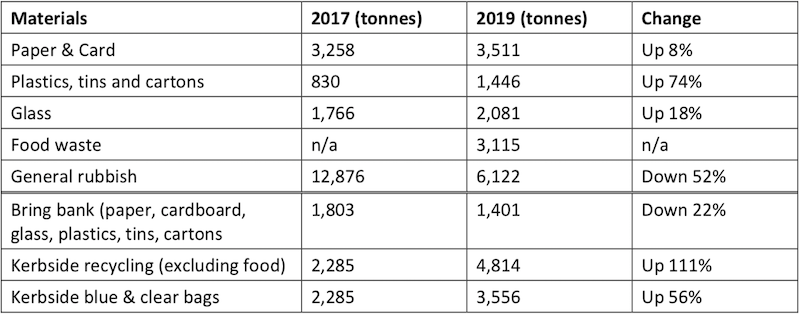
Pictured: Recycling rates of domestic products have increased in the last couple of years since kerbside recycling was rolled out fully.
Guernsey Waste will be going out to tender for a company to manage the export and processing. For now, it is working with a local contractor that already provides recycling services for Guernsey businesses.
Once full-time arrangements have been put in place, the material will be exported to a specialist processing plant in the UK where it will be refined and sorted before being blended with raw gypsum to make new plasterboard. The paper that lines the board is removed as part of the process and is recycled into things like cattle bedding.
Mrs Norman-Ross added: “To enable it to be recycled, the plasterboard must be dry and relatively clean, preferably without insulation, wallpaper, screws and tiles attached. Anything with more than 10% ‘contamination’ with these other materials will need to be disposed of as general waste, which will incur a charge.
Pictured top: Longue Hougue Household Waste & Recycling Centre.
