
Social renter and partial owner households experienced the highest increase in overall costs at 4.8%, while high income households saw the lowest at 3.2%, according to the latest quarterly report on inflation.
In the report the States says “staple goods and services increased by 5.0% on average for these [Social renter and partial owner] households and contributed 3.8 percentage points to the 4.8% increase in their index”.
Later on they added: sStaple goods and services increased by 4.1% on average for high income households and contributed 2.1 percentage points to the 3.2% increase in their index.”
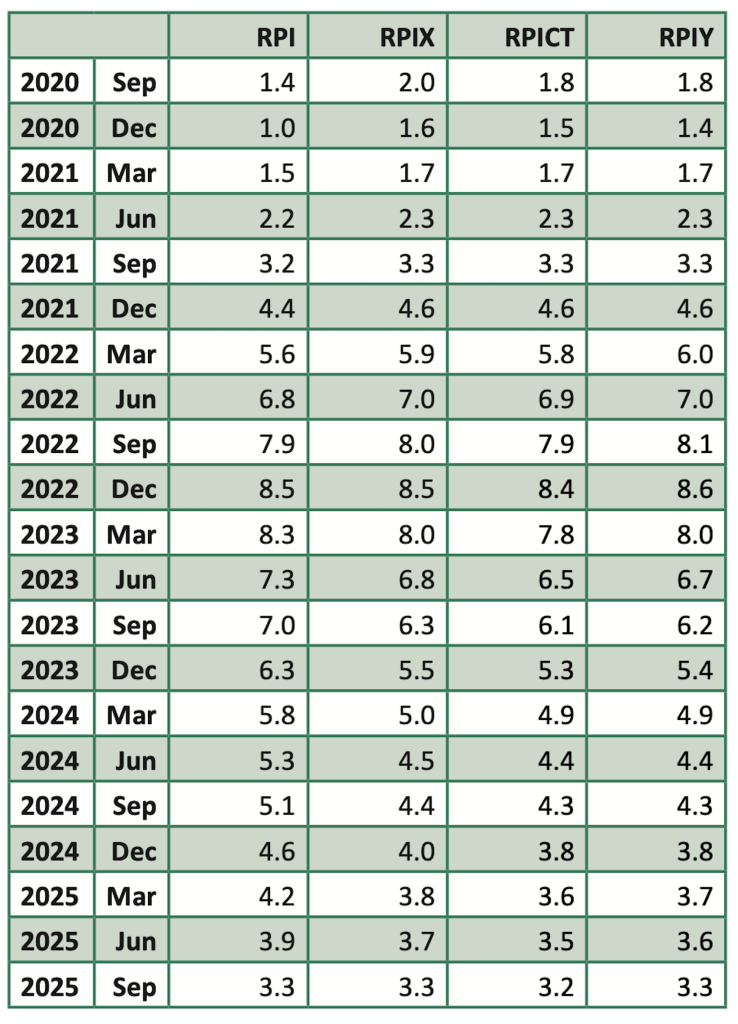
Guernsey’s headline inflation rate, measured by the Retail Price Index (RPI), for the year ending September 2025 was 3.3%, an overall average annual increase in the cost of a typical ‘shopping basket’ of goods and services in Guernsey.
That’s 1.8% down on the figure for 2024, and 0.6% down from June – the last time a quarterly update was released.
The cost of living is still rising, but it is doing so at a much slower pace than it was a year ago.
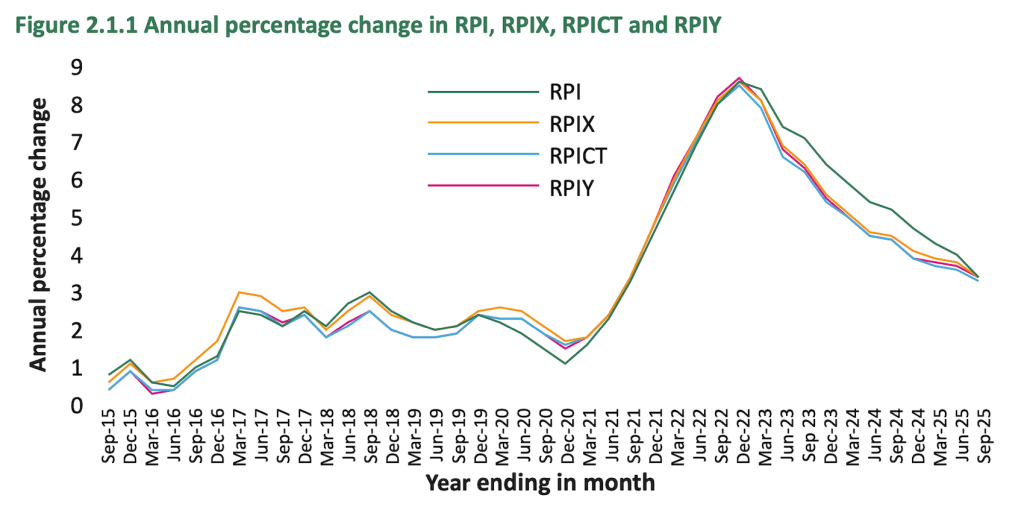
The core inflation rate, (RPIX, which excludes mortgage payments), was also listed as 3.3%, 1.1% down year on year, and 0.4% lower that the previous quarter.
The groups that saw the largest price increases over the year were: tobacco (11.1%), catering (6.1%), and housing (5.1%).
The housing group was the single largest contributor to the overall 3.3% RPI figure, accounting for one-third of the total increase, at 4.8% (1.2 percentage points above the increase in the overall average HCI).
This could suggest that costs associated with mortgages and rents continue to place the most upward pressure on inflation.