


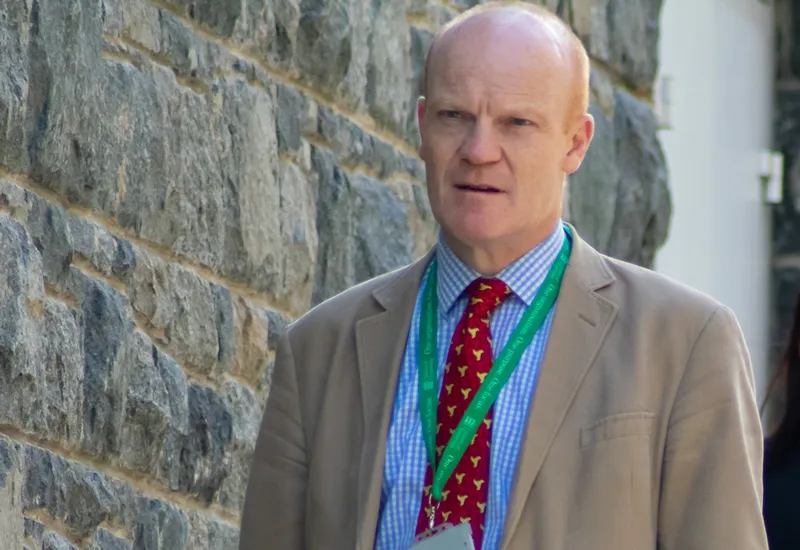
The States Chief Executive is now personally signing off any contracts involving consultants or contractors.
Speaking in the States last week, the Vice President of Policy and Resources gave further details of how Boley Smillie is continuing to try and effect change throughout the civil service.
“It is acknowledged that there is a time and place for specialist contractors and consultants; their expertise can be valuable for technical challenges or independent insight,” acknowledged Deputy Gavin St Pier. “Even an organisation the size of the States cannot permanently employ specialists for the infrequent times their expertise may be needed.
“However, through the 2026 Budget and his personal objectives, the Chief Executive was tasked with reviewing — and reducing — spending by £4m. This is not just a financial exercise, but one of discipline and accountability. He remains confident of achieving this target principally by focusing on consultancy spend.”
Deputy St Pier said tightening the purse strings has included keeping a closer eye on spending on consultants and contractors.
“All new requests for consultancy or contractor support are now reviewed by senior leadership will require the Chief Executive’s approval,” he said.
“There will be no automatic renewals or passive extensions,” he added.
“Much greater transparency is also being recommended by the Chief Executive. It is his intention to publish details of all consultancy engagements later this year, detailing where consultants are used, why they are engaged, what they deliver, their cost and the value they add.”
Deputy David Goy tried to uncover how much public money is spent on consultants last year.
Using a parliamentary option to ask formal questions, he found out from P&R that the States had spent the equivalent of nearly £1,000 per person in Guernsey on consultants in the past five years. Most of that money left the island, he said.
Deputy St Pier has now said that there are other implications to consider too, when spending on off-island experts, not just the monetary value.
“High levels of consultancy use have not only financial implications but cultural and capability impacts. When external resource becomes the default response to complex problems, opportunities for staff to develop expertise, lead major work and build institutional knowledge are eroded. Capability cannot grow if it is continually outsourced.
“We have talented public servants. A resilient Civil Service requires investing in their technical skills, leadership ability and confidence to take on complex delivery. That means creating space for teams to lead, strengthening development and succession planning, and being deliberate about when external support is genuinely needed. Consultants should transfer knowledge — not retain it.”
Deputy St Pier said this work is all part of Mr Smillie’s wider efforts to try and ensure the States is fit for purpose and serving the public as well as it can.
“… the Chief Executive is committed to this reform and the Policy & Resources Committee is committed to the openness and transparency needed to rebuild trust.”
