

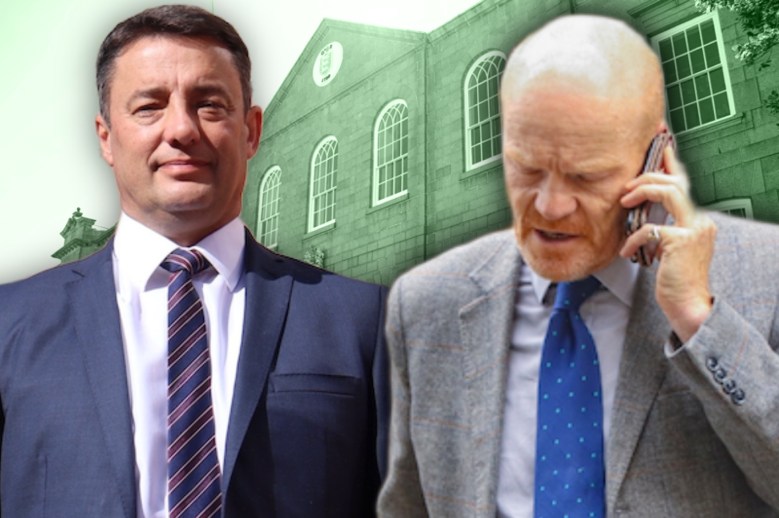
Deputy Gavin St Pier has this morning provided an update on Guernsey’s beleaguered Revenue Service, outlining “structural and cultural problems” in the process.
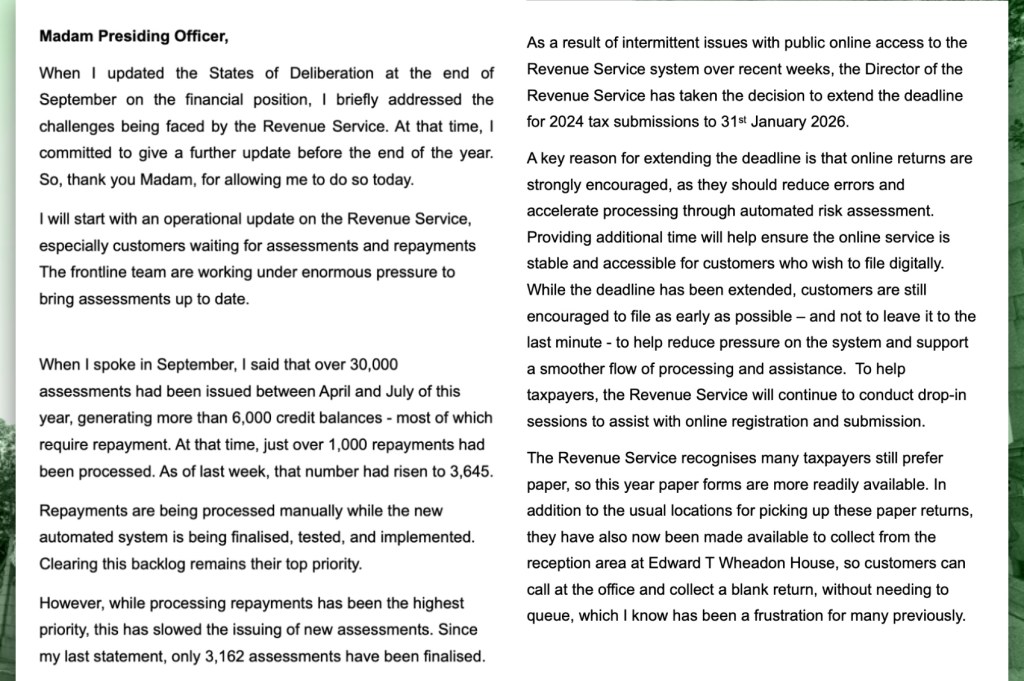
The Vice President of Policy and Resources also announced that the deadline for 2024 tax returns is being pushed back from this coming Sunday until 31 January 2026.
He spoke of work to tackle a significant repayment backlog, with the number of processed repayments rising from “just over 1,000” to 3,645 since September.
That means that although Revenue Service staff have been busy clearing previous years assessments, there are still thousands of people awaiting repayments.
Deputy St Pier added that the manual clearing of this backlog remains the “top priority”.
The focus on repayments has “slowed the issuing of new assessments”, he said, with only 3,162 assessments finalised since his last statement earlier this term.
To try and combat some of these issues, the deadline for 2024 Returns has been pushed back to the end of January.
That’s partly down to the tech issues that many people have been experiencing while attempting to file their own tax assessments.
Express has been made aware of website crashes, processing delays, and a number of other prevalent problems people have experienced when trying to simply file their tax data.
Due to the “intermittent issues with public online access”, the deadline for 2024 tax submissions has been extended to 31 January 2026 Deputy St Pier said, to ensure the “online service is stable and accessible” as “online returns are strongly encouraged”.
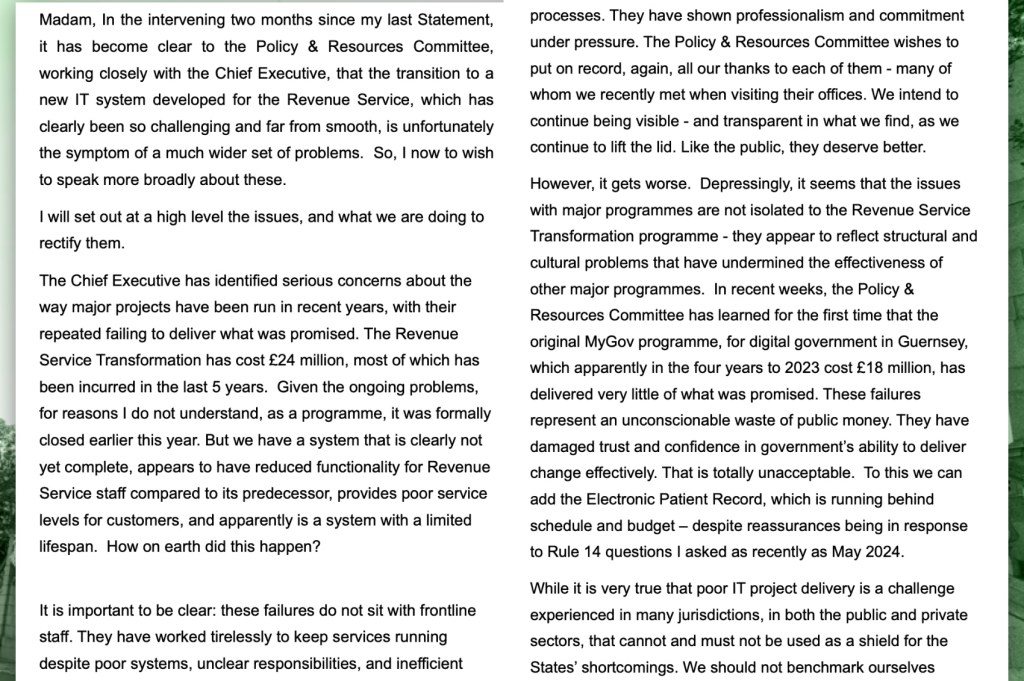
Deputy St Pier said the Revenue Service’s “challenging and far from smooth” IT transition is “the symptom of a much wider set of problems” concerning the way major projects have been run.
The programme in question, which cost £24 million, was “formally closed earlier this year” despite resulting in a system that is “clearly not yet complete, appears to have reduced functionality for Revenue Service staff,” and “provides poor service levels for customers”.
The original digital government programme, MyGov, came under specific scrutiny with Deputy St Pier pointing to its price, which “cost £18 million” over four years, but “has delivered very little of what was promised”.
He also noted the failure of the Electronic Patient Record system, a project which he says is “running behind schedule and budget”.
He called these failures an “unconscionable waste of public money” that has “damaged trust and confidence in government’s ability to deliver change effectively”.
Deputy St Pier did stress who was to blame for such failures, and it’s not the staff assisting islanders, or those filing the taxes, but those managing the projects he said.
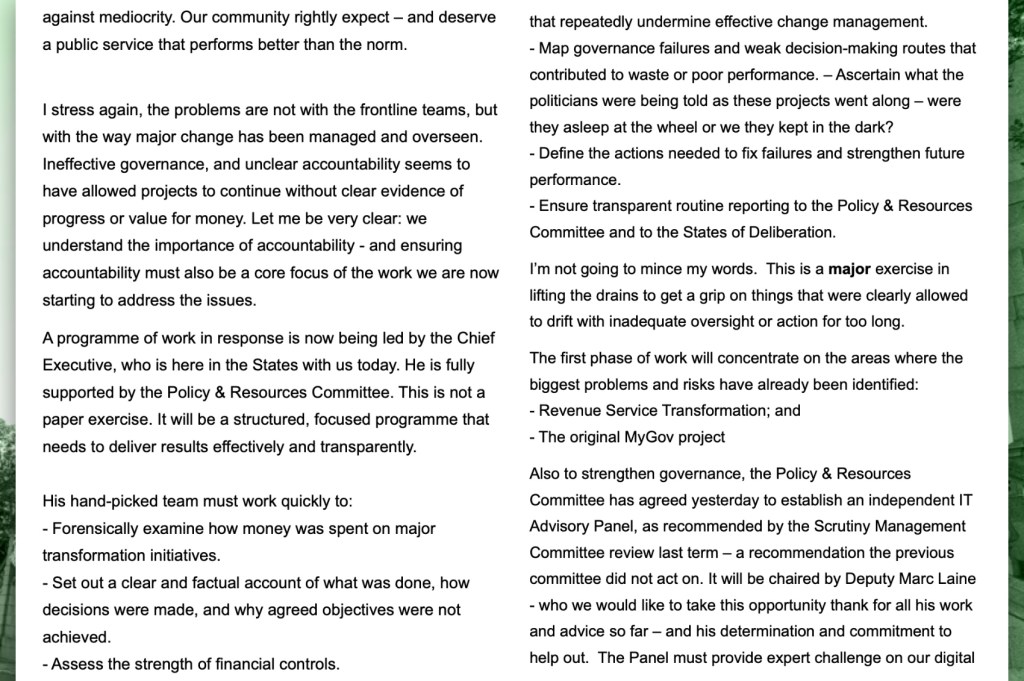
Specifically, he repeatedly stressed that the failures are not with the “frontline staff” who “have worked tirelessly”, but with the management and oversight of change, adding that the problems reflect “ineffective governance, and unclear accountability”.
The VP of P&R also announced that a “structured, focused programme” is now being led by the States’ Chief Executive, Bollie Smillie, which is being “fully supported by the Policy & Resources Committee”.
P&R has set up a new independent IT Advisory Panel, chaired by Deputy Marc Laine, to provide “expert challenge on our digital strategy, major IT contracts, and the resilience and security of our systems”.
Deputy St Pier concluded by saying: “We will report quarterly, publicly, and without spin. Transparency is the only way to rebuild trust” adding, their goal is for a “a public service that is accountable, efficient, and worthy of the trust placed in it”.
You can read his statement in full below.

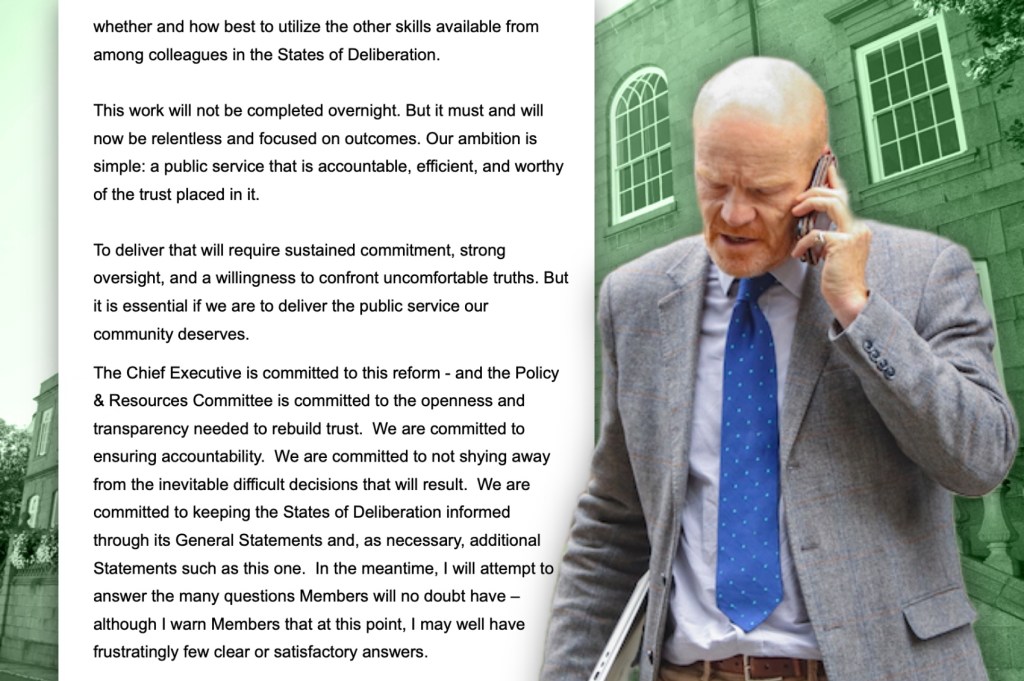
Following this morning’s announcement, in a statement issued by the States of Guernsey, Mr Smillie cemented that position, and locked in on looking to rebuild trust.
“I am committed to rebuilding trust in the public service and showing that every pound we spend delivers value. That begins with being honest about the position we find ourselves in, and it’s clear to me that there has been significant waste across several major transformation projects.”
He continued: “I have been especially concerned about the first version of the MyGov programme. It was meant to digitise government services, yet from everything I’ve seen, it delivered nothing of any substance. We need to understand how that was allowed to happen.”
The States Chief Executive continued by emphasising that the States staff who are dealing with members of the public, as well as their files, are not to blame.
“It is important to be clear that none of what we are saying today sits with the frontline staff of our public services.
“Our staff have worked tirelessly to keep services running despite poor systems, unclear responsibilities, and inefficient processes. They show professionalism and commitment under difficult circumstances. Like the public, they deserve better.”
