

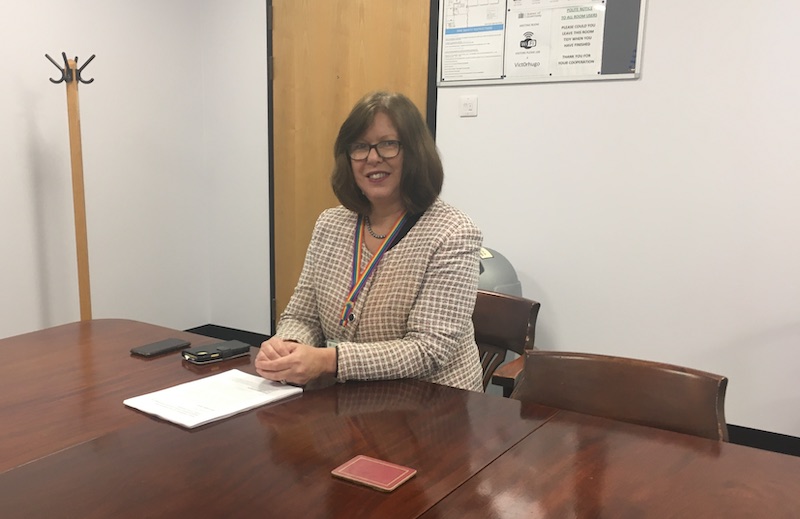
The vaccine’s emergency approval in the UK has made the outlook “far more optimistic” according to Director of Public Health Dr Nicola Brink.
The process of creating and administering a vaccine is normally quite substantial, with single phases of the clinical trials taking multiple years. Dr Brink said that the timely development of the vaccine is the result of an “incredible effort” by the medical community.
“People realised the urgency of developing this vaccine, and how much it was needed globally,” she said.
“That really encouraged people to work hard, so I think it has been the result of an incredible global effort that we are where we are. For the first time, I think we can see light at the end of the tunnel.”
She stressed that people should not be worried about the safety of the vaccine; as noted in the most recent media briefing, there are no pressing safety concerns with the Pfizer vaccine, and the side effects are relatively minor.
The States of Guernsey has provided an initial reaction to the MHRA announcement that the Pfizer/BioNTech coronavirus vaccine, which offers up to 95% protection against COVID-19 illness, is safe for roll-out from next week in the UK.
Read more at: https://t.co/Gx4Kfl2Ut0 pic.twitter.com/i5Zi8vn70F— States of Guernsey (@Govgg) December 2, 2020
Dr Brink is due to meet with Guernsey’s Medicines Committee this morning to discuss the Pfizer vaccine. From there, the Committee for Health and Social Care will consult with the States of Alderney, the Government of Sark, and Guernsey’s Policy & Resources Committee to determine whether or not to authorise it for use in the Bailiwick.
The Community Vaccination Centre at Beau Sejour is unlikely to be ready before Christmas – preparation is due to start on 21 December – but Guernsey will be prepared to deliver the vaccine to the first priority groups even without that facility.
“The plan was always to do categories one and two through primary care and occupational health services,” explained Dr Brink.
“As always with any new programme, we will be flexible in our approach. There are some gaps to fill in with regards to transportation, so we’re waiting for further information on that.
“But from our perspective, as soon as practically possible, we will be looking at getting the vaccine out.”
She added that the vaccine will help to protect the island’s most vulnerable, saying it was a “very good day” when it was approved on Tuesday.
“The outlook has become far more optimistic after the emergency approval by the MHRA. It is a huge step forward for us, and incredibly encouraging.
“For the first time, I think we can see light at the end of the tunnel.”
Pictured top: Dr Nicola Brink MBE, Director of Public Health.
