

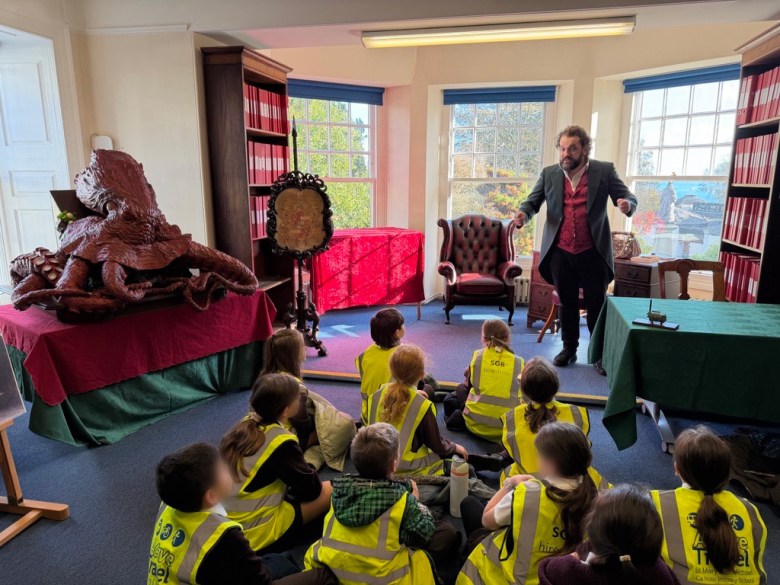
A Victorian writer, a giant octopus and a very enthusiastic group of primary school pupils might sound like an unusual combination, but organisers say it is proving a hit.
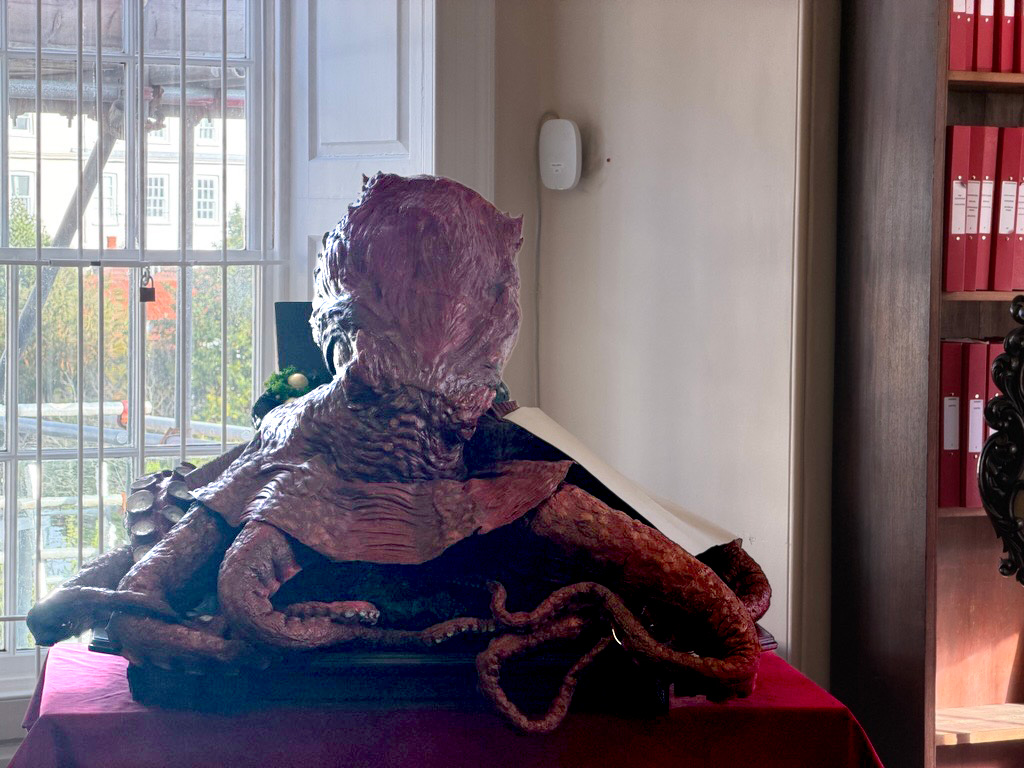
Children visiting the Priaulx Library are being introduced to Victor Hugo through a short piece of living theatre, complete with an actor playing the famous French writer and an enormous octopus puppet inspired by his novel ‘Toilers of the Sea’.
“The kids really love the octopus – they get really excited when they see it,” said Dr Laura Harrison, Operations Manager at the Victor Hugo Centre.
The sessions are part of a new partnership between Guernsey Museums, States of Guernsey Education, the Victor Hugo Centre and the Priaulx Library, marking 160 years since the publication of ‘Toilers of the Sea’.
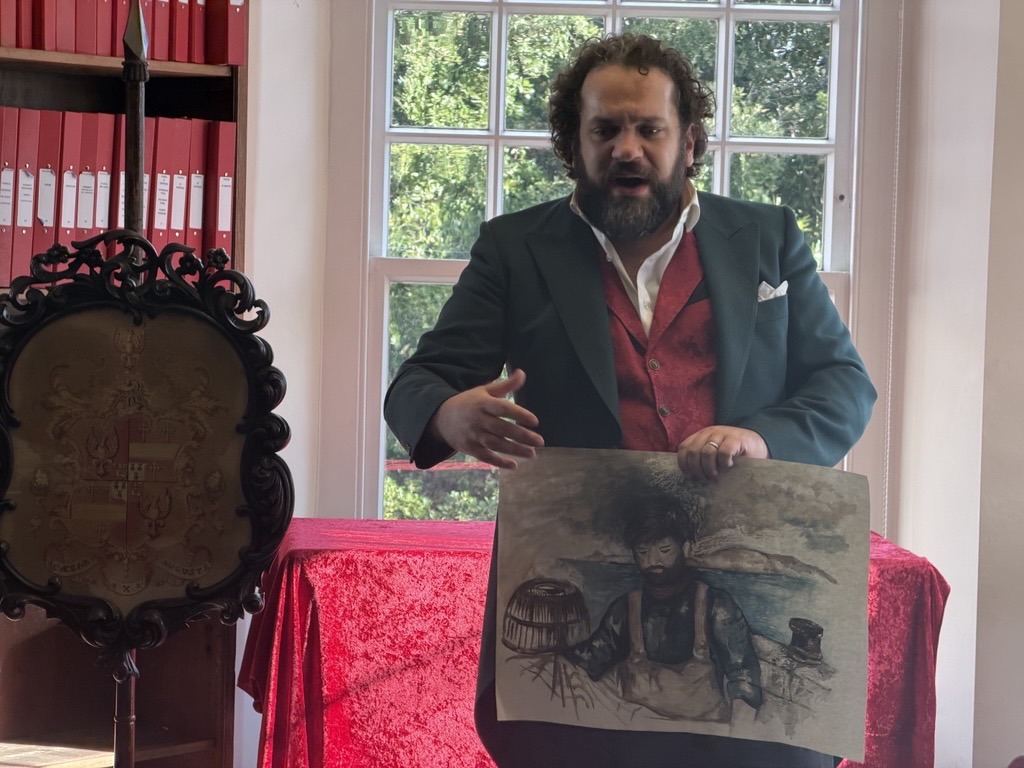
Bringing Hugo to life
The performance imagines Hugo developing the ideas for his novel, drawing inspiration from Guernsey, its people and its beaches.
The octopus was commissioned from local artist James Kitt, with support from the Social Investment Fund.
It has already appeared at events around the island, but was mainly created for the school programme.
Pupils also discover why Hugo came to Guernsey in the first place.
Forced into exile after speaking out against the French government, he could not safely return to his homeland.
His former home, Hauteville House, is just a short walk from the library.
Its famous glass-filled study gave him views of the sea, sky and the country he had been forced to leave.
Keeping his story alive
Michael Sullivan-Pugh, who plays Hugo in the sessions, said it was rewarding to see children so engaged with someone they might otherwise associate with their grandparents’ generation.
“It’s such a cool little part of history to be able to be a part of and help portray, especially for some of these kids who are incredibly enthusiastic,” he said.
“Hopefully they can tell these stories and keep him alive for the next 100 years.”
A library full of Hugo history
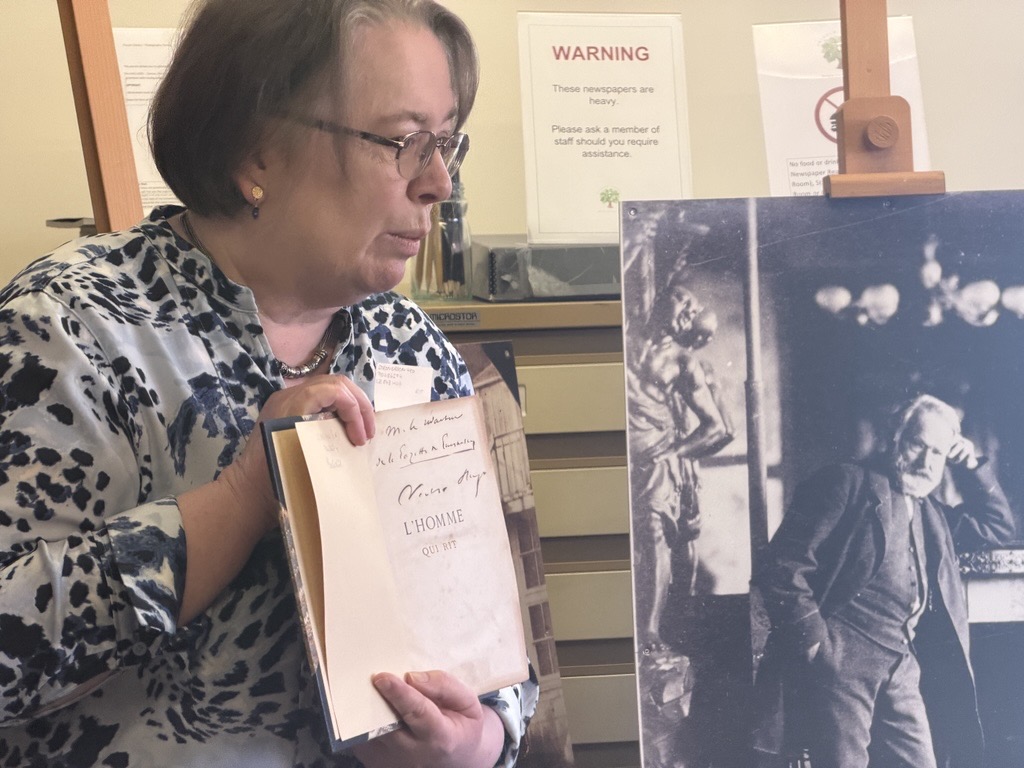
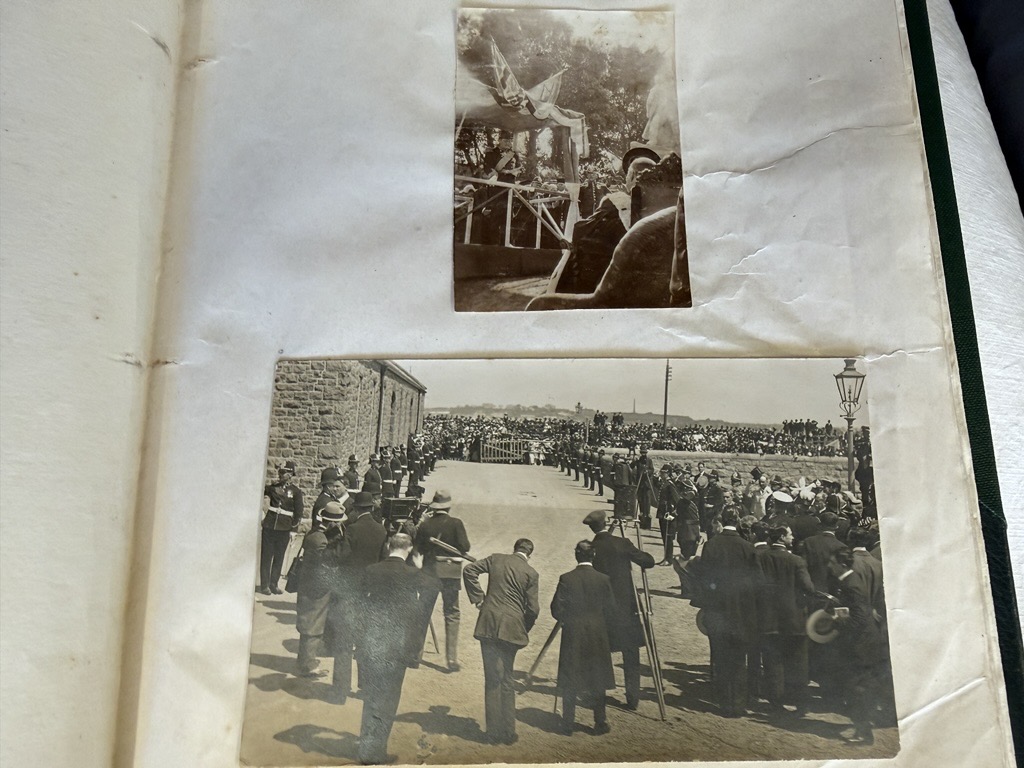
The visit also gives pupils the chance to see some of the original material the Priaulx Library holds about the writer.
Its collection includes photographs, signed books and different editions of his works, as well as a small calling card Hugo left behind after visiting the library building, in its former life as the Bailiff’s home.
The Bailiff at the time was Peter Stafford Carey, whose daughter was a great admirer of Hugo.
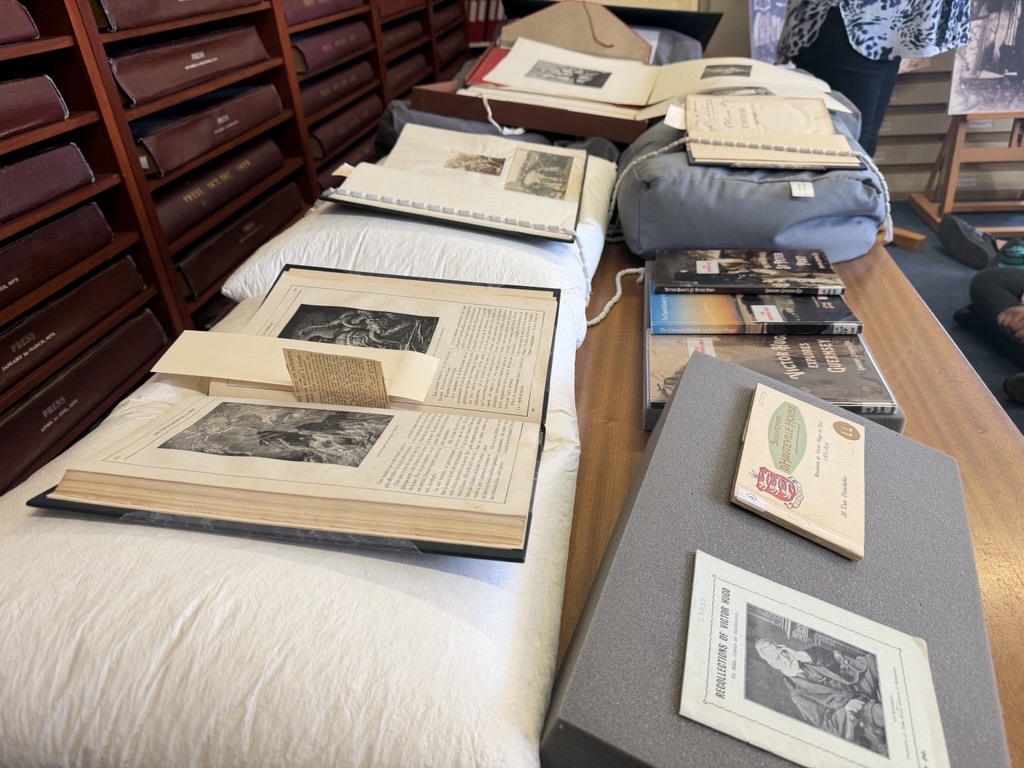

The writer called in to return the family’s New Year greetings, but the Bailiff was out, so he left his card instead.
Pupils are also shown how the library’s collection helps tell the story of Hugo’s life in Guernsey, rather than simply introducing them to his books.
The programme explores the wider Victorian period too, with pupils starting at Victoria Tower before visiting the library and finishing at Guernsey Museum to discover Victorian toys.
Dr Harrison said Hugo’s writing still had plenty to say to modern audiences, from the impact of new technology to humanity’s relationship with nature.
Nobody’s expecting eight and nine-year-olds to tackle the full novel, however.
Dr Harrison recommended Patrick Dixon’s abridged version for younger readers, saying older English translations could be difficult to follow.
The visits take place every Friday until the end of November as part of the States’ Cultural Enrichment Programme, which provides free experiences beyond the classroom for primary-age pupils.
The Victor Hugo Centre hopes to develop further educational initiatives as it works towards becoming fully operational by 2029.
