

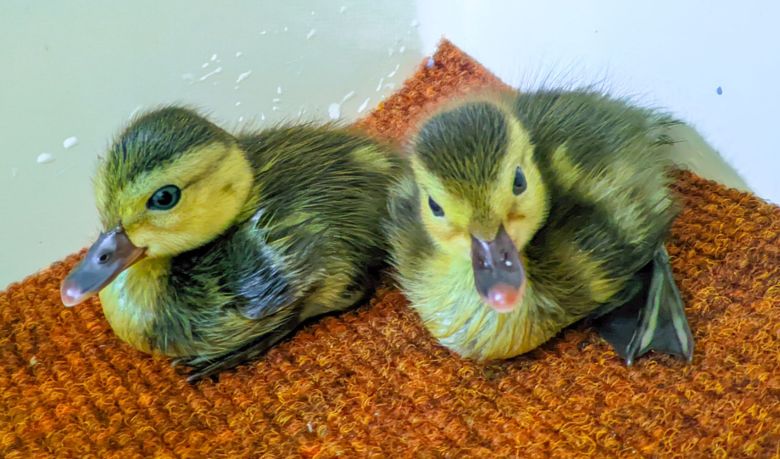
The precious cargo was 15 eggs, packed into a cooler and carried 44km on foot across Madagascar, with the survival of the world’s rarest duck potentially riding on the journey…
Six of those eggs have now been successfully reared to adulthood by Durrell conservationists, proving that the extraordinary rescue method works – and giving conservationists a new way to protect the species when nests are under threat.
The achievement marks the latest breakthrough in an extraordinary effort to bring a species once declared extinct back from the brink, as Express found out…
Madagascar pochards, the world’s rarest species of duck, were officially declared extinct in 2004.
But, after a flock was found on a remote lake two years later, Durrell conservationists began a long-running recovery effort involving breeding birds in captivity, searching for lakes where a new wild population could thrive and working with local communities.
Conservationists from Durrell and the Wildfowl and Wetlands Trust later released a flock of Madagascar ducks into Lake Sofia, after a flood broke the lake’s banks and reduced it to a 40cm-deep puddle.
Now, the latest stage of that recovery effort has shown conservationists another way to intervene when the remaining birds are at risk.
Durrell staff and colleagues from The Peregrine Fund collected 15 fertile eggs from Lake Matsaborimena, the species’ only known wild nesting site, before carrying them 44km on foot in a cooler using a traditional Malagasy method.
The eggs were then transported to Durrell’s specialist breeding centre in Antsohihy, where six hatched and have now been successfully reared to adulthood at a specialist breeding centre in Antsohihy.
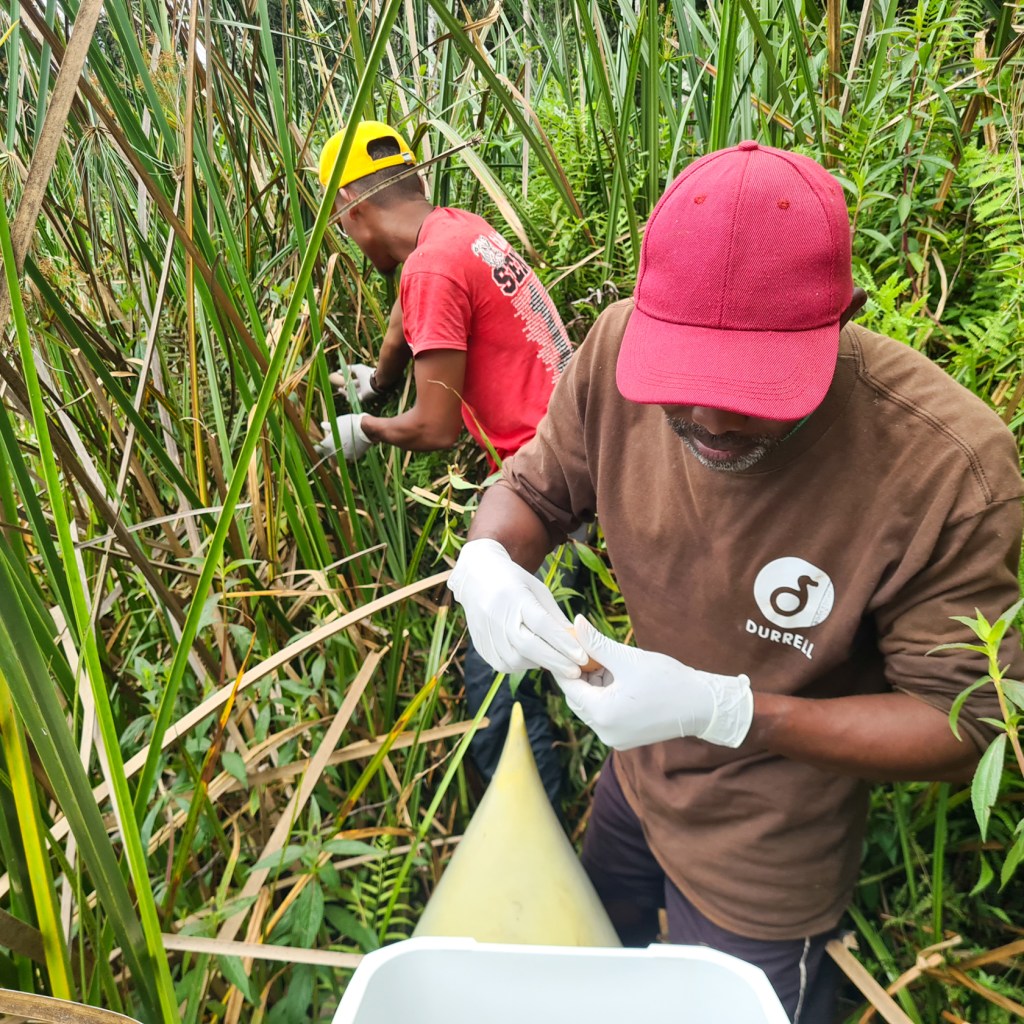

The fact the birds have now reached adulthood has been lauded as a key breakthrough by conservationists, who believe it shows the entire process – from removing threatened eggs from the wild and transporting them overland to incubating, hatching and rearing them – can successfully produce healthy birds.
Roland Digby, Conservation Biologist at Durrell Wildlife Conservation Trust, said: “This is an important milestone for the Madagascar pochard. We’ve shown that, when conditions demand it, we can safely collect eggs from the wild, transport them on foot and successfully incubate and rear healthy birds. That gives us another valuable conservation tool to help secure the future of this remarkable species.”
“Every breeding season matters when a species survives at just one wild site, so having another proven conservation tool could make a real difference,” he added.
Once thought extinct, the Madagascar pochard was rediscovered at Lake Matsaborimena in 2006 and remains one of the world’s rarest ducks.
Around 180 birds now exist across captive and wild populations, after years of conservation work which Durrell played a significant part in.
Rebecca Brewer, Chief Executive Officer of Durrell Wildlife Conservation Trust, said: “For many people, this is a story about six ducks. For us, it’s about what long-term conservation can achieve.
“Recovering a species like the Madagascar pochard doesn’t happen in a few months or even a few years. It takes persistence, partnerships and a willingness to keep going when the work becomes difficult. This is what long-term conservation is all about.”
The new approach could be particularly important when nests are threatened by flooding or predators and field incubation is not possible because of logistical challenges.
