


It’s no secret that the third-sector has always supported Health, but the new figures add weight to the arguments of those who have long called for more recognition of its role in keeping essential services running.
The contracts
In a recent written question, the Health Minister revealed that his department spent over £14m on contracts with charitable and third sector organisations in 2023.
However, the specific amounts given to each charity are deemed as “commercially sensitive” and the funding figures have therefore not been published.
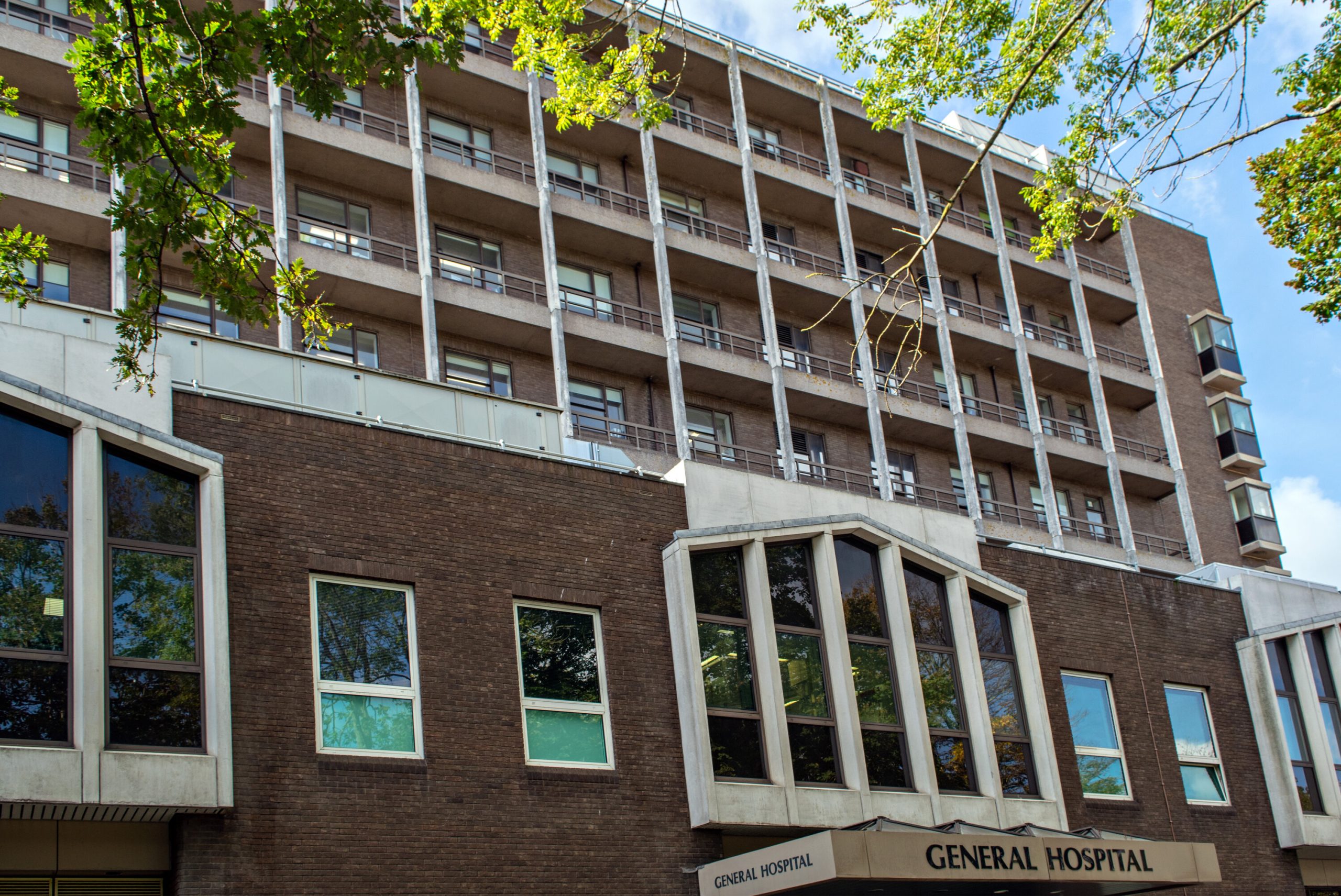
Pictured: The Health Department spent over £14m on contracts with charitable and third sector organisations in 2023.
Some of the charities who have benefitted from Health Department funding over the past three years include Age Concern, Brook Jersey, Family Nursing & Home Care, MIND, and Silkworth.
Most of the contracts are awarded for just one year, with the longest being for three.
Not the whole story
But holding contracts with government is not the only way charities support the Health service – often, rather than being paid to provide a service, the charities are the ones putting up the cash.
Figures compiled by the Jersey Community Foundation in 2021 showed that around one in five of all charities registered on the island were health and social care-related – and that they had highest outgoings of any charity sub-sector, with £41.2m spent in 2021 alone.
While they already give a lot, many charities say they want to be able to do more, with some expressing frustration when offers of help and/or funding to Government are not taken up swiftly – or sometimes at all.
When frustrations run high
Last year, local child cancer charity the Antoine Trust called out “slow and ineffective decision-making” within Health after “no material progress” was made on recruiting a Paediatric Oncology Nurse assistant role after the charity agreed to fund it in 2022.
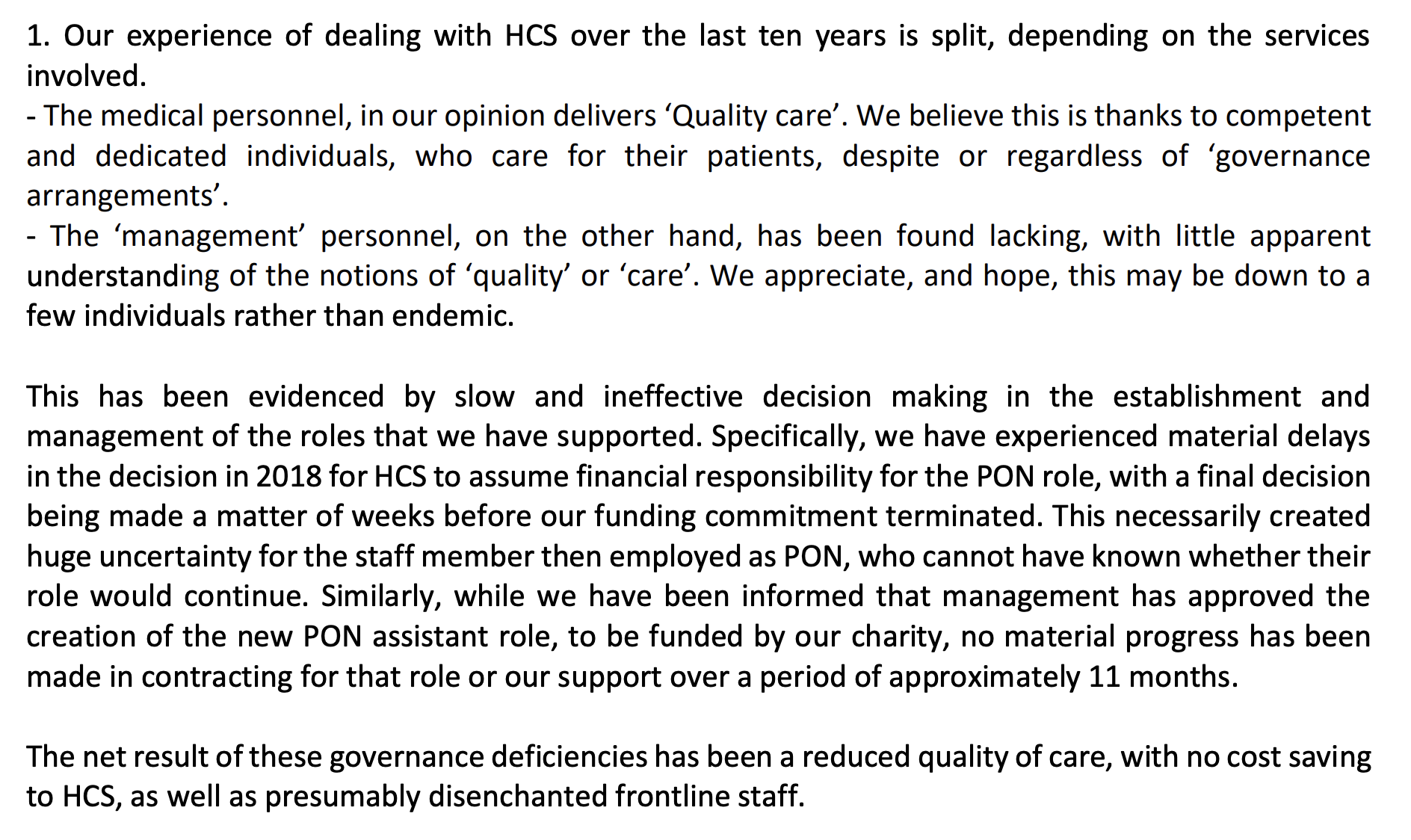
CLICK TO READ IN FULL: The Antoine Trust’s letter criticised “slow and ineffective decision-making” in a letter to Scrutiny.
In spring of this year, Diabetes Jersey’s Chair Bill O’Brien explained how HCS had accepted an offer from the charity for it to fund a post, but that as many as five years later, a job description had still not been finalised.
Dementia Jersey was also recently involved in providing support to the development of the island’s Dementia Strategy.
However, it recently emerged that no funding was allocated to governmental strategies aimed at preventing suicide and supporting individuals with dementia, ADHD, and autism.
Although the Health Department requested £1 million in funding to implement strategies for dementia, neurodiversity, and suicide prevention, the funds were never allocated – meaning that the Adult Mental Health Service does not have the money to implement proposed actions and recommendations.

Pictured: Health Minister Tom Binet said he was “disturbed” to discover that the dementia strategy lacked funding.
At the time, Health Minister Tom Binet said: “It is very, very clear to me that we are suffering from probably a decade or more of underinvestment in a lot of areas.”
He added that he was “disturbed” to discover that the dementia strategy lacked funding to implement the proposed actions outlined in six pages of suggestions developed over a decade in response to calls from Dementia Jersey.
The local charity had greater success more recently in striking a deal with Health that means islanders who suspect they have a rare form of genetic diabetes called MODY will no longer have to cobble together around £1,000 for a specialist test.
Due to a lack of funding, individuals at risk of MODY were not previously offered automatic genetic testing by the Diabetes Service, costing patients in the region of £1,000 per test.
However, Diabetes Jersey has now offered Health and Community Services the necessary funding to resolve this issue.
With this funding from the charity, the Diabetes Service will now be able to provide genetic testing for patients until the beginning of 2026.
As part of the deal, HCS will have to fund it after that point.
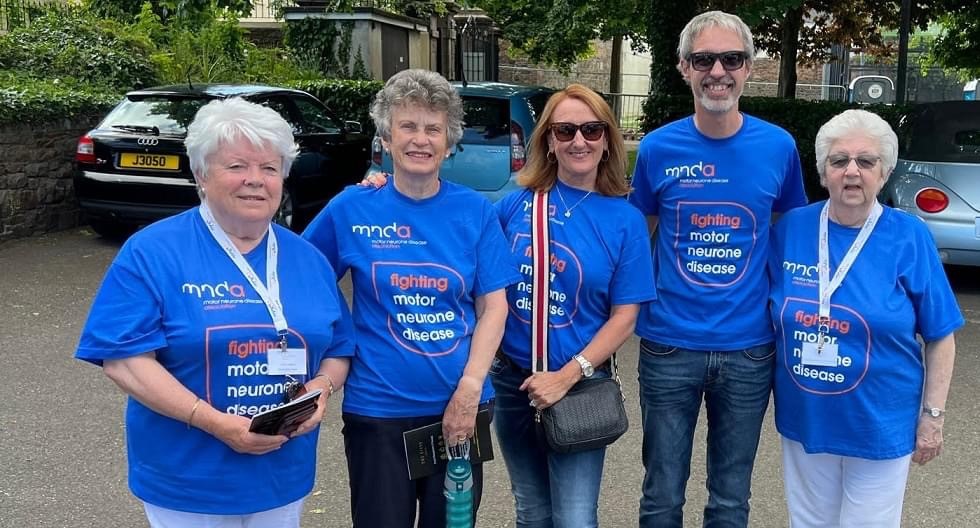
Pictured: The Motor Neurone Disease Association Jersey had to find funding for a specialist nurse role from the end of 2022 until the end of October 2023.
The Motor Neurone Disease Association (MNDA) Jersey faced a similar situation at the end of 2022, when the Health Department announced that it would not be funding a specialist nurse anymore – and the charity took over the baton.
After covering the costs of the role for almost a year, MNDA Jersey expressed its “relief” in October 2023 when the funding was reinstated permanently.
Why does the relationship between charities and Health even matter?
After years of overspending, and being “read the Riot Act” by a previous Treasury Minister, the Health Department was put under a rigorous ‘Financial Recovery Plan’ overseen by a team parachuted in to help bring the ailing service back on track last year.
But despite this, it recently emerged that Health needs an extra £24 million this year and next year to continue functioning.
This is due to a global rise in the cost of providing care, according to Deputy Binet.
In a recent hearing of the Health and Social Security Scrutiny Panel, Vice-Chair Jonathan Renouf said that Health “always seems to be needing more money” – and asked whether the department’s financial situation was the result of increased demand for services or historic underfunding.
But Chief Officer of Health, Chris Bown, said that healthcare costs were rising globally.
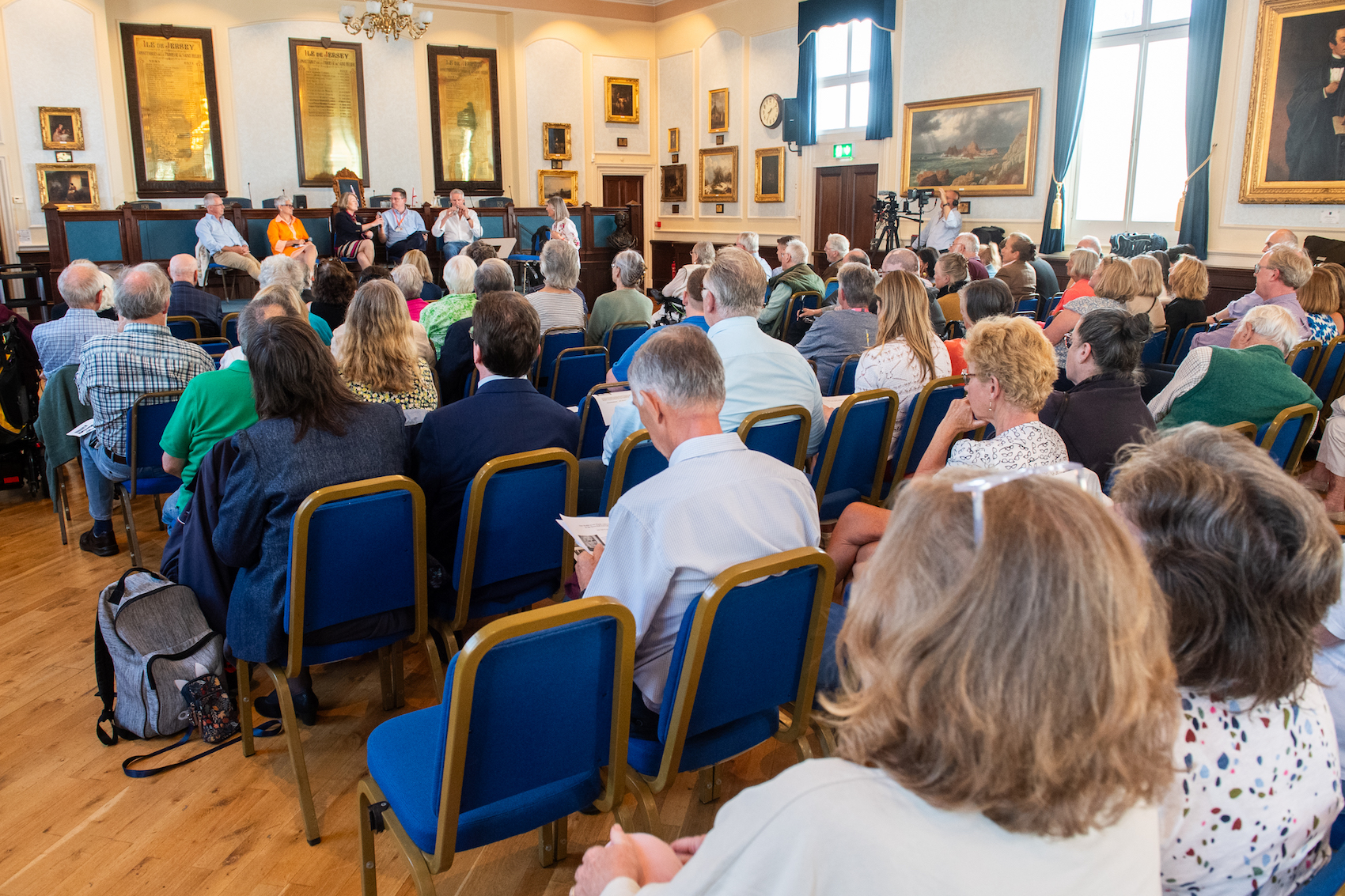
Pictured: Deputy Binet spoke about the relationship between Health and charities at a recent conference organised by the Friends of our New Hospital.
It comes at a time when the way that the Health Department functions and is funded is under consideration – but is likely to still include help from charities going forward.
Deputy Binet recently said that the island needs an “all-encompassing, single health system” with a board bringing together care providers from the public, private and charitable sectors.
The Health Minister said that developing such a model was vitally important for the creation of the island’s new hospital to avoid creating a “fragmented service without seamless interconnections”.
Deputy Binet was addressing a conference organised by the Friends of our New Hospital when he set out a new vision for the island’s health system in which the different care providers would work together in a partnership overseen by a board of public executive and non-state, non-executive members.
It would bring together functions currently provided directly by the Government with GPs, the care sector and charities.
The Health Minister said: “At the end of the day, when someone needs treatment, they don’t particularly care if it’s provided by a private business, a charity or a government department.
“As with any supply business, all the customer or patient wants is excellent, seamless service.”
READ MORE…
FOCUS: Charities “shocked” by lack of funding for mental health strategies
