

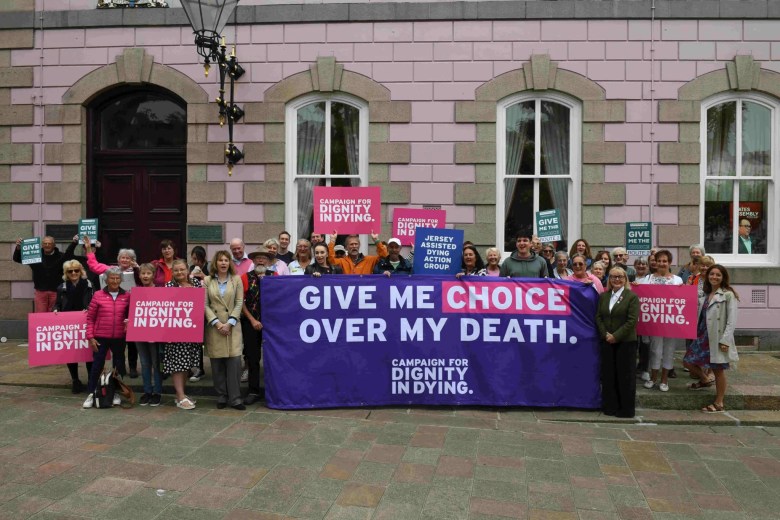
UK professional regulators are to review Jersey’s draft assisted dying law to ensure it does not create “unintended consequences” for healthcare workers in the island, the Health Minister has confirmed.
In a letter to the chair of the Assisted Dying Review Panel, Health Minister Tom Binet explained that UK-based regulatory bodies – which oversee doctors, nurses and other health professionals – are being consulted as part of the legislative drafting process now underway.
Their role, he said, is not to revisit the policy behind assisted dying but to ensure that the law is workable in practice for professionals.

He wrote: “UK Professional Regulatory bodies are being asked to review the draft law on the basis that those bodies have a direct interest in ensuring that the drafting does not create any unintended consequences for health and care professionals operating in Jersey.
“The professional regulatory bodies are not, at this point in the process, commenting on public policy (as this has been settled), they are working to ensure that detailed provisions operate as intended vis-à-vis professionals.”
The legislation, which will provide a legal framework for terminally ill adults to end their lives under carefully defined conditions, is currently being developed.
It comes after a landmark vote in the States Assembly in May 2024 in which politicians approved the creation of an assisted dying service for islanders with terminal illnesses and neurodegenerative diseases.
The draft law is due to be published in September and will then go through a 14-week period of scrutiny, ahead of a final debate and vote in December.
If passed, it will require an 18-month implementation phase, meaning the earliest the law could take effect would be mid-2027.
The proposed framework will include eligibility criteria and safeguards stipulating that assisted dying will only be available to adults with a terminal illness who are suffering unbearably and are making a voluntary and informed choice.
There will also be a minimum 14-day period between a formal request and the act itself.
Health professionals will be able to opt-out, giving them the right to refuse to participate, and an oversight committee will be set up to monitor the process.
The update builds on a 2021 decision in which the States Assembly supported assisted dying “in principle”, a step that signalled formal approval to explore the concept and set a path for the current proposals.
Deputy Binet also confirmed that a plain-English summary of the law, a Q&A section, and a timeline of next steps will be published on gov.je/assisteddying, along with a series of public information meetings to take place later this year.
Meanwhile, in the UK, a separate Assisted Dying Bill has passed its final reading in the House of Commons and has moved to the House of Lords for further scrutiny.
