


Now, in an exclusive interview with Express, the officers who led the operation share the inside story of how they brought down an international drug syndicate – and the painstaking work behind the headlines.
A quick recap…
By the time the investigation had reached its conclusion, Jersey-based Operation Elf had traced a major drug network’s roots to Liverpool, with connections spanning Europe.
Five men were sentenced in Jersey’s Royal Court in November for the parts they played in the syndicate.

Pictured: Five men were sentenced in Jersey’s Royal Court in November for the parts they played in the syndicate.
Ibrahim Roslan (35) from Liverpool was sentenced to nine years and six months in prison, whilst 33-year-old Aaron Nursaw from Wirral was jailed for nine years.
Jersey-born Michael Quinn (23) was jailed for a total of nine years and six months – made up of eight years and 11 months for drugs importation offences, and another seven months for cyber-crime offence.
Meanwhile, 28-year-old Kyle Samuel Dawson from Jersey was jailed for eight years and six months.
Jordan Barnett-Roberts (23), also from Jersey, was sentenced to 456 hours of community service – the equivalent of three years’ imprisonment.

Pictured: Mark Cockerham had led the Jersey Customs and Immigration Service since 2018.
Following the sentencings, Mark Cockerham, Head of Jersey Customs and Immigration Service, and Neil Hutton, one of the operation’s key investigating officers, sat down with Express to share how the case unfolded – shedding light on the intricate methods and challenges involved in disrupting organised crime in Jersey and beyond.
What’s in a name?
The sentencing of those involved in Operation Elf took place just before Christmas – but the name was not chosen in honour of the festive season.
Mr Cockerham explained that the operation names are randomly selected but officers ensure that the chosen title does not relate to anybody involved in the case in the event that discussions are overheard.
Mr Hutton said: “Sometimes, we do actually have a list of the next operation names to keep it random.
“So rather than having to think of a new one, we’ll have a list of names, and we’ll check the next one isn’t somehow related to anyone involved.
“It could be by sheer coincidence that something comes up.”
He added: “The thing that gives an investigation a name, generally, is if we move into the realms of surveillance.
“When we conduct surveillance, we have to create an operation at that point.
“We might get a couple of seizures of drugs in the post that link together, but because we didn’t do any surveillance on it, it generally won’t have an operation name.
“It would just have what we call the unit reference number.”
From suspicion to syndicate
Operation Elf also began as routine Customs work – a single postal interception – but soon revealed a larger pattern.
Customs officers intercepted a postal packet from Liverpool which contained 185 grams of cocaine.
Mr Hutton explained: “When Customs officers get a straightforward seizure of drugs in the post, they don’t necessarily need my team to investigate it further.
“But when we start to get multiple jobs, like this operation here, where an organised crime group behind it, then my team will sort of step in and support them.”
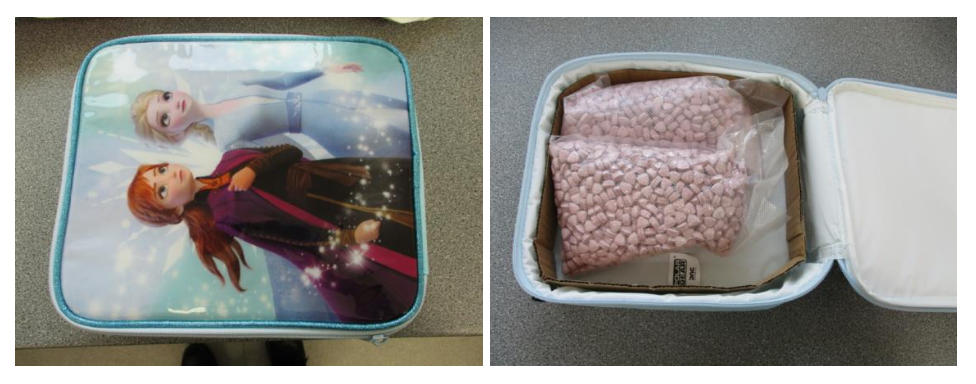
Pictured: Operation Elf began in 2022 when customs officers intercepted a postal packet containing 185 grams of cocaine.
Operation Elf required considerable investment in money and manpower, so decisions about escalating an investigation aren’t made lightly.
“You’re potentially committing quite significant resources,” said Mr Cockerham.
“And obviously that’s expensive, so there has to be a bit of a cause to think: are we going to get a result out of this? What are the chances of getting this home and getting some arrests outside of the borders?
“You look at the quantities, you look at the commodities. A large amount of Class A drugs would give rights to that sort of thing.”
Operation Elf also required close cooperation with UK agencies.
“In this case, we had the Merseyside Police working jointly with the States of Jersey Police,” explained Mr Cockerham.
“If we’re going to them and saying, ‘we need your help with this operation’, we’ve got to be reasonably sure [of success] because we’re asking them to commit resources as well.”
Cross-border collaboration
Operation Elf’s success was made possible by close cooperation with UK agencies, particularly Merseyside Police.
Officers in Liverpool conducted key raids, uncovering crucial evidence such as champagne glasses engraved with the same branding found on intercepted drug shipments.
Mr Cockerham emphasised the importance of cross-border collaboration.
“The cross agency work is key, because we wouldn’t get these results without that element,” he said. “There’s no doubt about that.”

Pictured: Another package involved in Operation Elf contained over 50 grams of cocaine in a ‘Barbie’ lunchbox.
In some investigations, there are stand-out moments that truly underscore the value of working across borders.
For Operation Elf that moment began when a parcel intercepted in Jersey on 7 October 2023 was found to contain 164 grams of cocaine, concealed within ’40th Birthday’ gift boxes.
Two days later, Roslan was arrested in Liverpool by the Merseyside Police County Lines Investigation Team.
He was passed over to customs officers who escorted him back to Jersey.
When Merseyside Police searched Roslan’s flat, they found two champagne glasses engraved with ‘40th Birthday’ that fit the gift boxes previously seized by Jersey customs officers.
Mr Hutton said: “With this one in particular, it was really rewarding that when the Liverpool police responded for us and they went and did the warrants, they found evidence that helped our case over here – the champagne glasses, the boxes, and things like that.”
From Mersey to Jersey
The smuggling of drug hauls from Merseyside to Jersey has become a well-established narcotics route in recent decades – with notorious gangster Curtis Warren being the most famous case to reach Jersey’s Royal Court.
Mr Cockerham explained that the island’s high street value for drugs makes it a tempting target for traffickers.
“The street price over here is significantly higher than it is in cities like Liverpool,” he said.
“For example, a gram of heroin sells for around £1,000 here.”
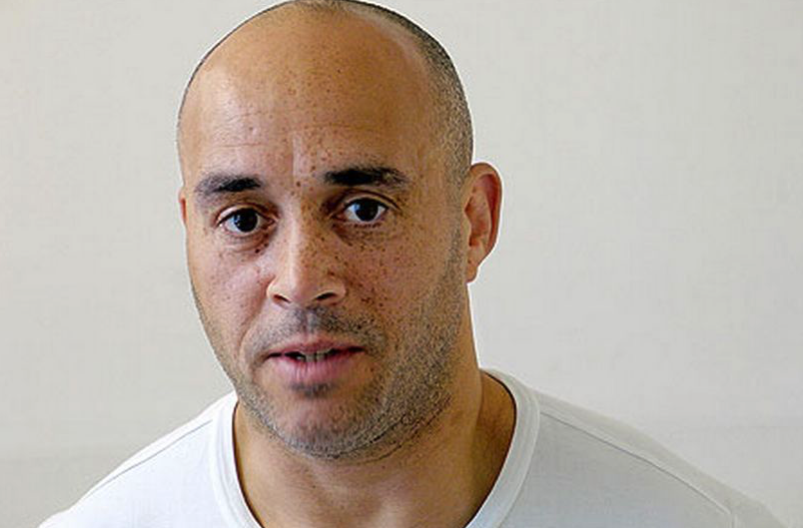
Pictured: Curtis Warren – who left his native Liverpool to become an international cocaine smuggler – is reportedly the only criminal to ever make the Sunday Times Rich List.
This profitability fuels the demand for creative smuggling methods, from postal packages to concealment in cars and even internal couriers.
“It’s a bit of a mix,” admitted Mr Cockerham.
“We saw a massive increase when in postal importations when we had covid because obviously the commercial movements just came to a halt, so there was an enormous rise.
“But I’d say it moves around. It can come in a variety of ways because obviously we’re an island.
“It could be a small boat, post, car, internal courier, the airport.”
Mr Hutton described it as a “game of disruption,” where enforcement actions force syndicates to adapt.
“If we disrupt quite a few couriers coming in with internal concealments, then maybe the people behind it will think: ‘Well, that’s not working. What should we try next?’
“And it could be concealed in a car, could be in freight, or could be trying the post.
“Then if we get lucky there, you just see it almost just moving around, and they’re just trying the next trick to get whatever they want in.”
The mechanics of Operation Elf
Operation Elf was a long and complex investigation with large amounts of phone, financial and forensic data – all of which needed close examination and analysis.
“A lot of the reasons that people get charged for importations and otherwise is down to what was on their phones,” said Mr Hutton.
“Or if it wasn’t on their phones, then it’s what the service providers could tell us was on their phone before they threw their phone away.
“Or it’s looking at all their finances to see who they sent money to before the gear came over.
“There’s a lot of that side of things.”
Mr Cockerham added: “Most of the work happens post-seizure.
“The not-so-exciting stuff takes place over the following weeks and months.
“It’s painstaking stuff, really, but you’ve got to get it right.”
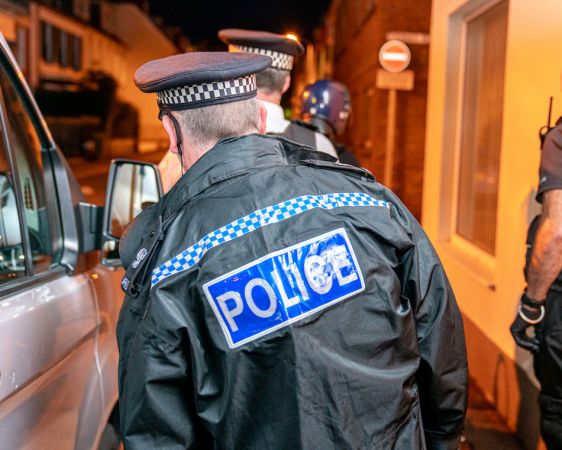
Pictured: Operation Elf involved a “stressful” controlled delivery.
One of the Operation Elf’s more thrilling moments involved a controlled delivery where seized drugs are replaced with fakes and the package is sent to the intended address, allowing officers to monitor suspects and catch them in the act.
Mr Hutton explained that drugs used to be substituted with fakes that looked similar to the actual substance, but now its done with boxes of the correct weight to remove the risk of anything being consumed.
“There will be extremely tight control over how it’s delivered,” said Mr Hutton. “Surveillance teams all around, commanders on the ground, all ready to react accordingly – and the idea to catch them [the drugs] in hand.”
But with fakes that don’t look like drugs, there is a very small window of time before suspects realise that package contents have been substituted.
“It’s all about getting the timing right,” said Mr Hutton.
“You’re following suspects from when they pick up the drugs to where they’re taking it to catch the other people involved.
“It’s stressful. The commander on the ground has got to make a decision of when to go public.
“And seconds can make all the difference between them passing it to you and then us showing up, or us showing up just before you take it and you suddenly stop and say, ‘I don’t know what’s happening, I was just walking down the road, and this guy tried to put something in my hand. I don’t know what’s going on!’.
“Getting that timing right is stressful.”
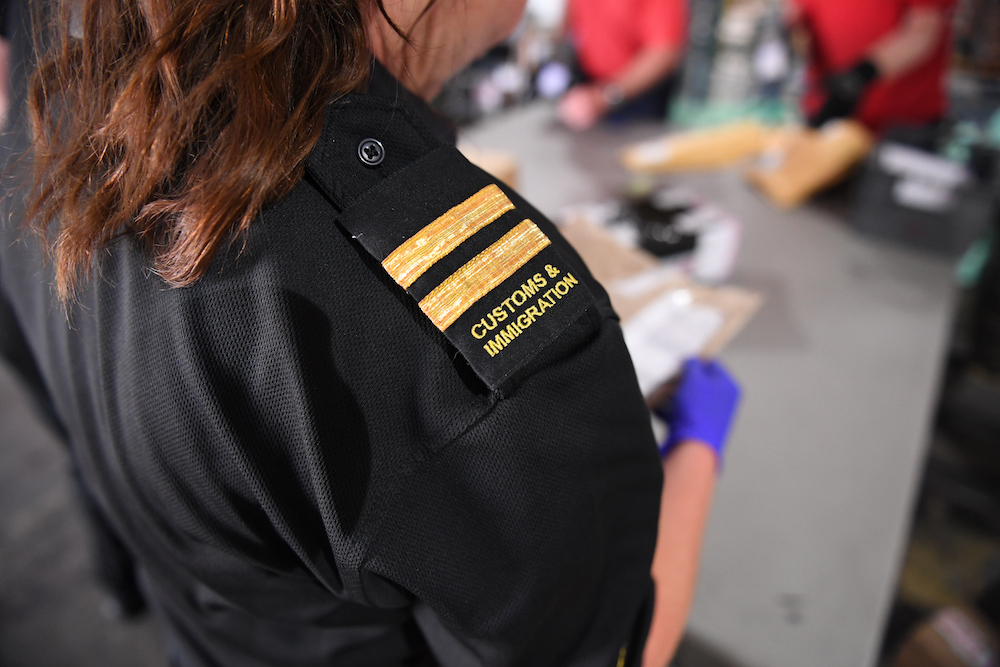
Pictured: In a controlled delivery, drugs are seized and substituted before the package is delivered as intended.
Despite the stress, moments like these are what Hutton described as the “exciting part” of the job.
“Most of the real work is desk driven,” he laughed.
“I tell my wife when she sits and watches CSI and that on TV, it’s never that fast!
“It’s just long detective work, identifying CCTV footage, walking around.
“For example, if something happened outside a commercial premises that has CCTV footage then we’ll go and get that and get witness statements from all witnesses – all the usual kind of crime stuff.”
“Importing drugs is a massive gamble”
Operation Elf served as a clear warning to those considering drug trafficking.
“Importing drugs is a massive gamble,” said Mr Cockerham.
“The consequences are significant, as we’ve seen with this operation, in terms of the sentencing.”
More than that, the operation was a reminder of the dedication behind the scenes.
Mr Cockerham said: “A lot of hard work goes into an operation like this.
“A lot of hours of people canceling meals at home last minute because things need to be done.
“There’s a long period of time of working long hours.”
Looking ahead
Though the case has concluded, its lessons will shape future investigations.
“There’s always a debrief at the end of an operation,” said Mr Cockerham.
“The team, sit down to ask: What could we do better next time? What did we learn? What do we need to look at to proceed? Is anything that needs changing? Is any more training required?
“It’s a bit of a learning exercise.”
But for those working to keep Jersey safe, the task is never truly done.
“By the time sentencing actually occurs and breaks the media, it’s old news in the office,” laughed Mr Hutton.
“We’re already working on the next one or two.”
As traffickers adapt, so too do the officers tasked with stopping them – and with investigations like Operation Elf, Jersey has shown it’s ready to meet the challenge.
READ MORE…
Operation Elf: Drugs syndicate jailed for total of over 36 years
