

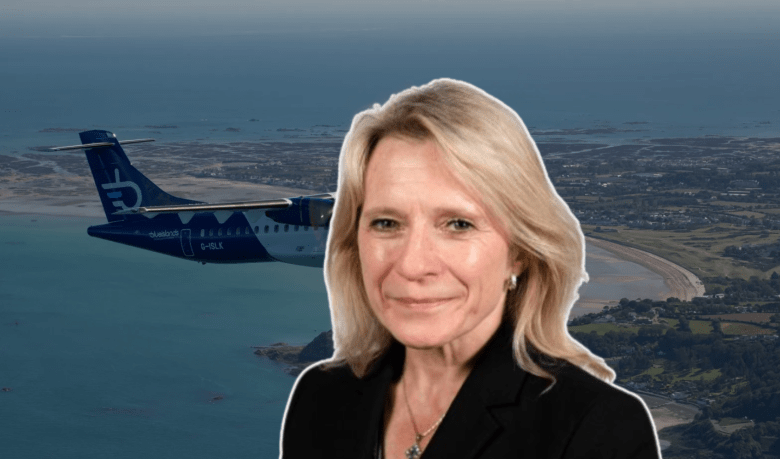
The routes operated by Blue Islands were understood to “profitable” and there is no reason why Loganair shouldn’t continue with them, according to the Treasury Minister.
In a wide-ranging interview on public finances, Deputy Elaine Millar, said that despite Blue Islands’ failure, Islanders should be reassured that the commercial viability of Jersey’s key connections to the UK had not changed.
“Blue Islands were running well until they were hit by technical issues,” she said. “We believe that all of the routes are profitable. So if you are an airline who is running a sustainable [service] – if all your aircraft never ever break down – those routes are all capable of being profitable. They are all profitable.”
She said the key challenge had been reliability: “When airlines have to cancel flights and make refunds, that’s when it becomes really difficult. I think that’s what became difficult for Blue Islands.”
Loganair, she argued, has the scale needed to absorb operational shocks and guarantee service continuity.
“Loganair have the resilience from having a much bigger fleet to make sure that they can continue a service, that they will have an aircraft running on those routes so that they’re not having to cancel flights.”
The Scottish operator, which took over Jersey’s critical Southampton and regional routes within hours of Blue Islands grounding operations, already provides services to island areas including Orkney and Shetland.
“It fully understands the importance of medical routes, because it’s serving Scottish islands – getting people from Orkneys and Shetlands and Inverness and Aberdeen. It knows the importance of those,” she said.
Loganair had already planned to launch a Jersey–Southampton route before Blue Islands collapsed, something the minister said reflected clear market confidence.
“They would not have done that if they didn’t think they could make it work,” the Minister added.
And she believes their long-term commitment is genuine.
“I do believe they are here for the long-term, and that they will provide that service into the future. The feedback I have heard from people who’ve booked with them or travelled with them has been very positive. So I’m very optimistic, very confident in Loganair, so they had better not let me down.”
To help Blue Islands through the pandemic, a £10m government loan was granted, from which £8.5m was drawn down. Further financial help was also given to the airline in recent months while a sales process, which was ultimately unsuccessful, was explored.
Following its sudden closure, it emerged that Blue Islands owed a total of £9.1m to government, as well as £3.275m to Ports of Jersey from landing charges, and other fees and services.
Deputy Millar previously said that the government may be able to recover “some” of the money owed by Blue Islands as part of the liquidation process, but a source at Ports of Jersey told Express that the arms-length-organisation is not expecting to recover what it is owned.
While Aurigny, which is now operating a Jersey-Guernsey route, is backed by the States of Guernsey as a means of safeguarding vital air links, Deputy Elaine Millar said she would not like to see a similar set-up here.
“Something would have to be absolutely catastrophic before I would vote for Jersey to buy an airline, because that is just enormous risk, enormous financial risk,” she said.
Deputy Millar added that government’s role was to ensure the right operating environment, not to be responsible for flying planes itself.
“What matters is that we have good providers,” she said.
“I think with DFDs, we have a long-term secure partner.
Loganair are a very good long term partner for the regional links, certainly to Southampton and the South of England routes that are generally flown by smaller aircraft.”
