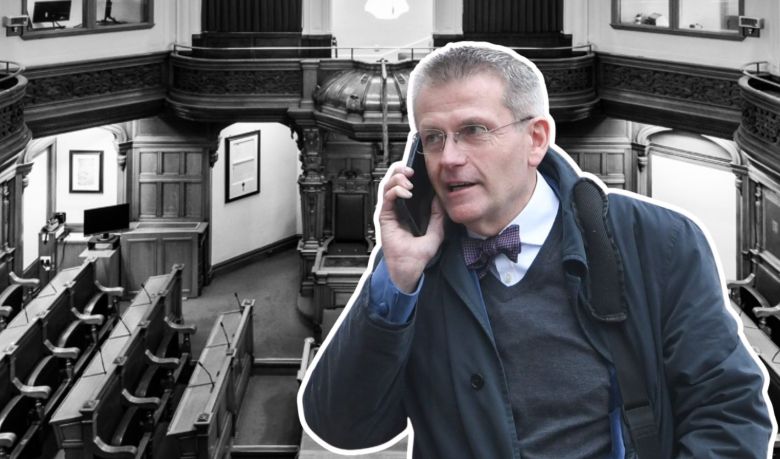
Long-serving Deputy Philip Ozouf “portrayed himself as a philanthropist, helping people from a poor African country to come and get work” – but the Royal Court heard yesterday that the reality was very different.
The States Member was handed 120 hours’ community service after pleading guilty to five immigration offences involving the illegal employment of Rwandan nationals.
What’s his current status?
Ozouf had already been suspended from attending and participating in States Assembly sittings after pleading guilty, pending the outcome of the criminal case.
That suspension – approved by the States Assembly late last year – did not prevent him from continuing constituency work or receiving his salary.
Under the law governing States Members, a prison sentence of three months or more would have resulted in Ozouf automatically losing his seat.
A career “in tatters”?
Instead, despite his political career being described as “in tatters” by his own defence lawyer, the community service sentence leaves him legally able to remain a Deputy – a position many are now questioning.
Among those to do so are the 10 sitting politicians of Reform Jersey.
The party said in a statement yesterday: “Following the news of Deputy Ozouf’s sentencing for Immigration Law offences, Reform Jersey’s thoughts are with the victims of these crimes.
“All migrant workers who come to Jersey to live and work deserve to be treated with dignity and respect, and should be protected from exploitation.”
“Elected representatives are rightly held to the highest standards of conduct”
They continued: “…Given the gravity and nature of these offences, Reform Jersey questions whether it is appropriate for Deputy Ozouf to continue serving as a Member of the States. Elected representatives are rightly held to the highest standards of conduct, and the public must be able to trust that those entrusted with making the law will themselves respect it.
“This case raises important questions about accountability, and about the message sent to migrant workers and to the wider community if those standards are seen to be compromised.”
Action “unlikely”?
But the leader of the committee responsible for overseeing the running of the States Assembly appeared to take a different view.
Privileges and Procedures chair Deputy Steve Ahier said that while further disciplinary action was “possible”, he felt it “highly unlikely” – particularly given that there are only three States Assembly meetings left before activity ceases before the June general election.