


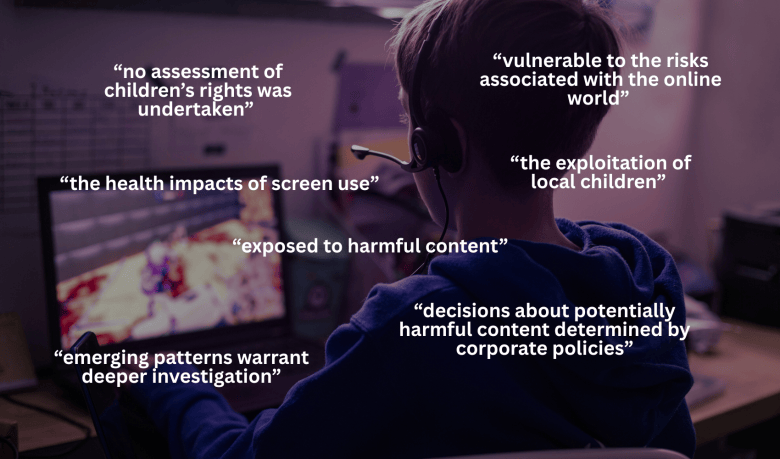
Children in Jersey “may face fewer barriers” to accessing adult or harmful material than their peers in the UK, according to a major review into online harms.
Published today, the Children, Education and Home Affairs Scrutiny Panel’s report found that Jersey’s online-safety system is “fragmented” and “lacking an overarching framework” – leaving children in Jersey more exposed to exploitation, abuse and harmful content than their peers in the UK.
The island’s safeguards remained weaker than those in the UK and Europe, particularly when it came to checking users’ ages, holding tech companies to account and enforcing rules across borders, according to the report.
The panel said Jersey’s laws did not require social-media or streaming platforms to check how old their users were, meaning children “may face fewer barriers” to accessing adult or harmful material than their peers in the UK, where the Online Safety Act requires websites to confirm users’ ages before they can view pornography or material related to self-harm or eating disorders.
The report also said there were no clear rules that forced platforms to remove illegal or harmful material or design their services to be safe for children.
“Unlike the UK’s Online Safety Act, Jersey has no equivalent obligations for platforms to prevent children from circumventing safety measures,” the report read.
“In the absence of government-defined standards, platform-led content governance, driven by corporate policies, has become the default, raising concerns about consistency and accountability.”
Without cross-border enforcement agreements, the report warned that Jersey had little power to make overseas firms comply with local laws, saying “influence over global digital platforms may be limited”.
The panel said the government’s decision not to hook into the UK Online Safety Act – which seeks to place new responsibilities on social-media companies and search services to prevent children from accessing harmful and age-inappropriate content – was taken by a single minister, Economic Development Minister Kirsten Morel, without any formal documentation, consultation with the Council of Ministers or scrutiny by the States Assembly.
“This lack of process limited opportunities for democratic oversight and public accountability,” the report read.
Deputy Catherine Curtis, who chairs the panel, said such a major policy “should have been a considered decision involving the relevant ministers”.
The scrutiny review – which included 63 findings and 38 recommendations – called on the government to “prioritise the development of a comprehensive online safety strategy, with a particular emphasis on safeguarding children”.
Deputy Curtis said: “We have discovered a significant number of findings during this review, and our report presents several crucial recommendations to government that we feel must be acted upon to protect our island’s children now and into the future.”
She added: “Ultimately Jersey, despite its reputation as a safe environment, is not immune to global online threats, as evidenced by recent cases involving local children.
“Any strategy to tackle online harms and protect the safety of our children and young people must reflect Jersey’s unique context, while remaining informed by global standards and best practice.”
