


An “urgent audit” of ‘do not resuscitate’ forms had to be carried within Jersey’s General Hospital amid concerns about how these life-and-death decisions were being documented, it has emerged.
The Serious Incident Review Panel commissioned a department-wide review of compliance with the paperwork following concerns around DNACPR.
DNACPR stands for ‘do not attempt cardiopulmonary resuscitation’. This means if a patient’s heart or breathing stops, their healthcare team will not try to restart it.
Some people make a DNACPR decision simply because they do not want to be resuscitated in an emergency. Others make the decision along with their health care provider, after experiencing health issues that might inform their decision.
In some instances, healthcare teams may have to make decisions on behalf of patients. This might happen because a patient is so unwell from an underlying illness, that CPR will not prevent their death.
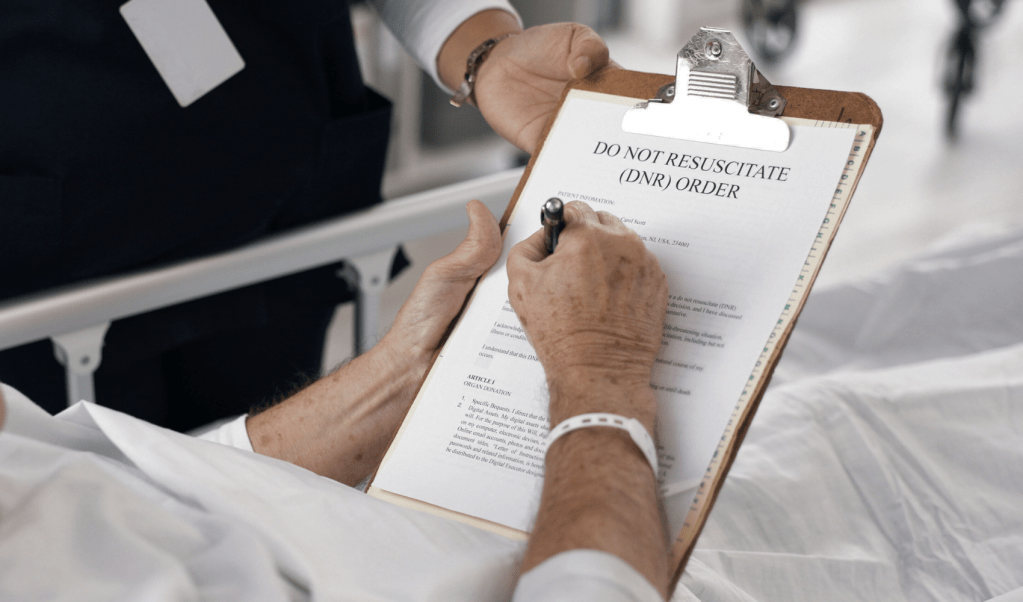
DNACPR only specifies whether a person will receive CPR or not. Patients will still receive all other appropriate treatment for their health issues, and all personal care needs will be attended to.
DNACPR forms are usually kept in a patient’s medical records.
But, in this month’s meeting of the Health Advisory Board, a panel which oversees the running of the department, it emerged that there were concerns about how DNACPR decisions were being documented across Health.
In response, a department-wide review was carried out to check if the proper procedures were being followed.
This resulted in several “immediate actions” being taken, according to a report prepared for the Board.
The electronic patient record team was contacted to supply a scanner on the same day as the audit to ensure copies of the DNACPR form could be immediately uploaded to the care records.
The resuscitation service did “on the spot” training for uploading the documents on to the patient administration system.

It also emerged that some DNACPR forms that had been completed in the community by GPs were incomplete, and this was immediately escalated to primary care governance.
Meanwhile, any cases where the policy wasn’t being followed were reported to senior staff.
“Support was also provided for an urgent audit of DNACPR forms in the Hospital,” the report said.
Express has asked the Government for a copy of the department-wide compliance audit commissioned by the Serious Incident Review Panel, and a copy of the urgent review of DNACPR forms in the Hospital that was carried out as a result of this.
Papers released in advance of last week’s Board meeting also revealed that the use of strong sedative injections on dementia patients led to a number of “safety events” last year, prompting an urgent crackdown, including greater training and a new drug monitoring system.
