


Around one in seven people in Jersey is managing multiple long-term health conditions at once, according to new stats – up from one in 10 less than a decade ago.
‘Multi-morbidity’ is a term used when an individual has two or more long-term medical conditions.
Produced annually using data from GPs, Jersey’s latest multi-morbidity report found that 33,080 islanders are registered with at least one of 12 monitored long-term conditions.
Of these, 14,195 people – 14% of the total population – have been diagnosed with more than one.
This is a rise from 11% in 2016 and 13% in 2023.
Has the prevalence of multi-morbidity changed?
In 2023, 14,140 people were classified as having multiple conditions, an increase of 765 from the previous year.
Projections indicate this number could rise by a further 20% by 2043.
What was the most common long-term condition?
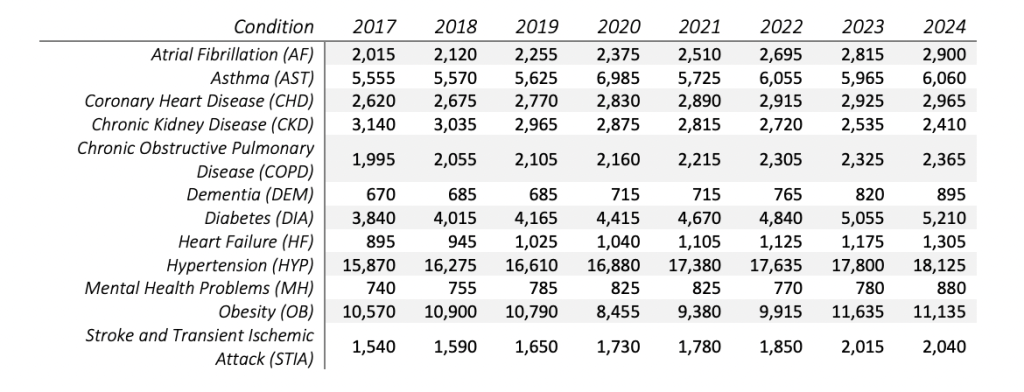
Hypertension (high blood pressure) was the most common condition at the end of last year — affecting 18,125 patients.

Dementia and mental health conditions are the least prevalent among the 12 monitored conditions – with around 900 cases each.
Patient numbers, however, are still on the rise – up from 670 in 2017 and 820 in 2023.
What was the impact of gender?
The report also identified differences in how these conditions affect different groups.
Women are more likely to be diagnosed with obesity, asthma, and chronic kidney disease, while men are more commonly affected by coronary heart disease, atrial fibrillation, and diabetes.
For example, 67% of coronary heart disease cases affected men while 60% of chronic kidney disease cases affected women.
What was the impact of age?
Age is also a key factor.
Most people under 30 have no long-term conditions, but by age 65, more than half are managing at least one.
By 85, most are living with two or more.
What conditions occur together?
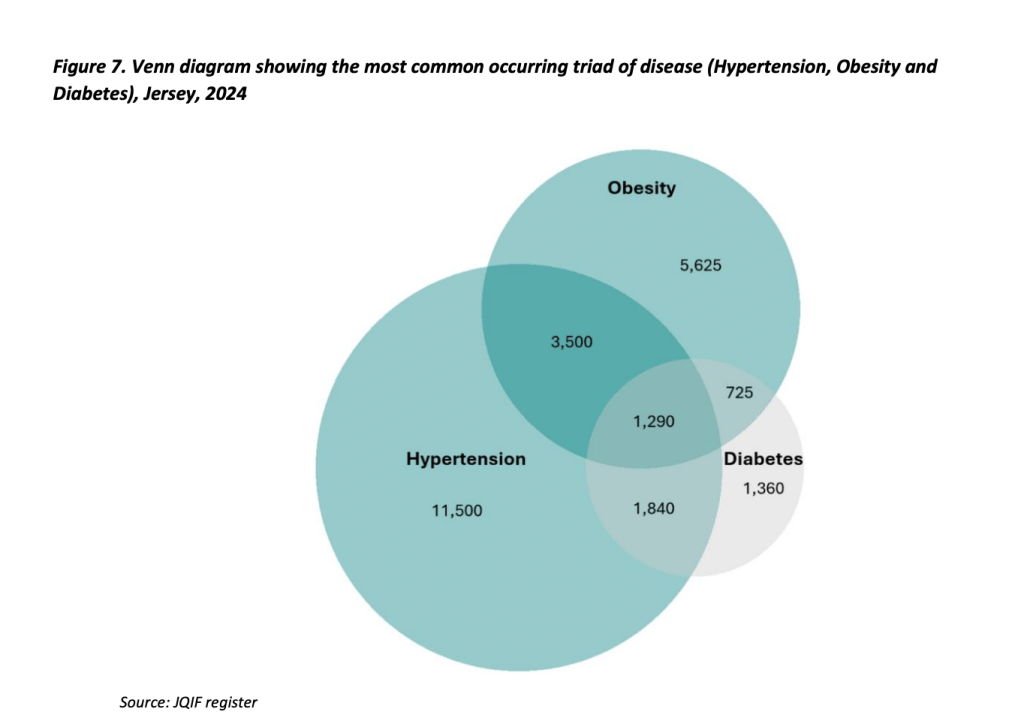
Certain conditions frequently occur together. Hypertension and obesity remain the most common pairing – affecting 4,785 people – though this is a decrease of 155 cases from the previous year.
Among heart failure patients, 96% have at least one additional condition, and more than half are managing three or more.
Clusters of three or more conditions are also common.
The most frequently occurring ‘triad’ includes hypertension, diabetes, and obesity – affecting 1,290 people.
The most prevalent combination of four conditions – coronary heart disease, diabetes, hypertension, and obesity – affects 195 people.
