


The island’s most recently-published inflation rate was the lowest it has been in over three years, according to new figures from Statistics Jersey.
The latest Retail Prices Index report, published today, shows that during the 12 months to December Jersey’s RPI increased by 2.5%.
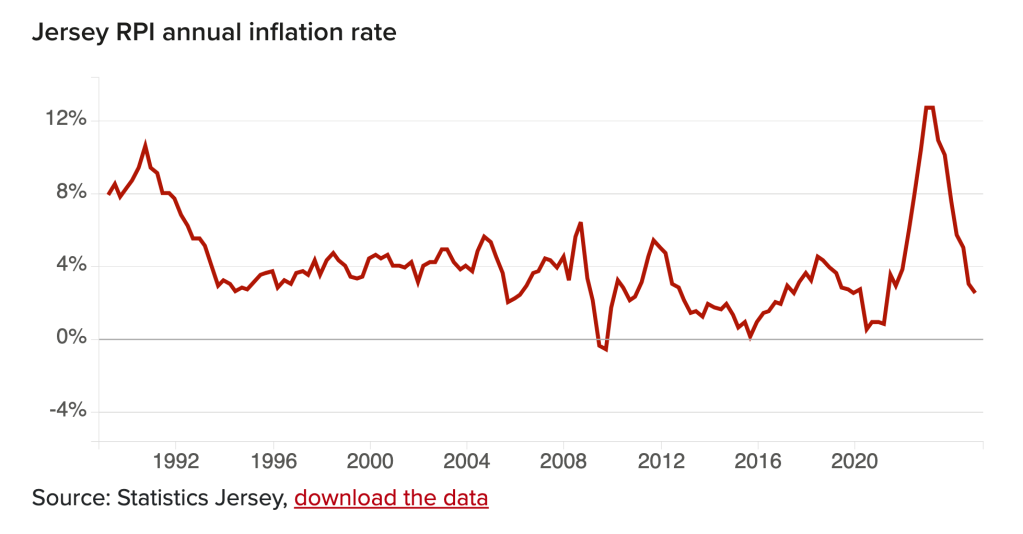
The All Items Retail Prices Index is the main measure of inflation in Jersey.
It measures the change from quarter to quarter in the price of the goods and services purchased by an average household.
While the new data means costs are still rising, it marks a continued drop from the figure of 3% documented in the previous quarter and the 5% rate reported in July.
It is also the lowest figure recorded since March 2021 (0.8%).
Changes in a number of spending areas contributed to the overall decrease, including housing, which saw prices rise by 0.5% overall, compared with an increase of 0.8% over the same period of time to September 2024.

According to the report, this change was “mainly driven by decreases to mortgage interest rates”.
Other areas that contributed to the RPI decrease included:
• Fuel and light (Prices rose 7.8% compared to 10.1% over the 12 months to September)
2024
• Household services (Prices rose 3.8% compared to 4.6% over the 12 months to September)
• Personal goods and services (Prices rose 0.6% compared to 2.0% over the 12 months to September)
• Fares and other travel (Prices rose 2.5% compared with 5.9% over the 12 months to September)
• Leisure goods (Prices decreased by 2.4% as opposed to increasing by 0.7% over the year to September)
• Leisure services (Prices rose by 6.5% compared to 7.9% over the 12 months to September)
The new overall rate of 2.5% is also lower than the UK’s broadly comparable CPIH figure of 3.5%, which is the first time that this has been the case since June 2022.
“Both indices saw contributions from the group relating to housing,” the report explained.
“The Jersey RPI contains a component for mortgage interest payments, which are more affected by changes in the Bank of England Bank Rate.
“Instead, the UK CPIH uses a rental equivalence method, which is less directly affected.”
