

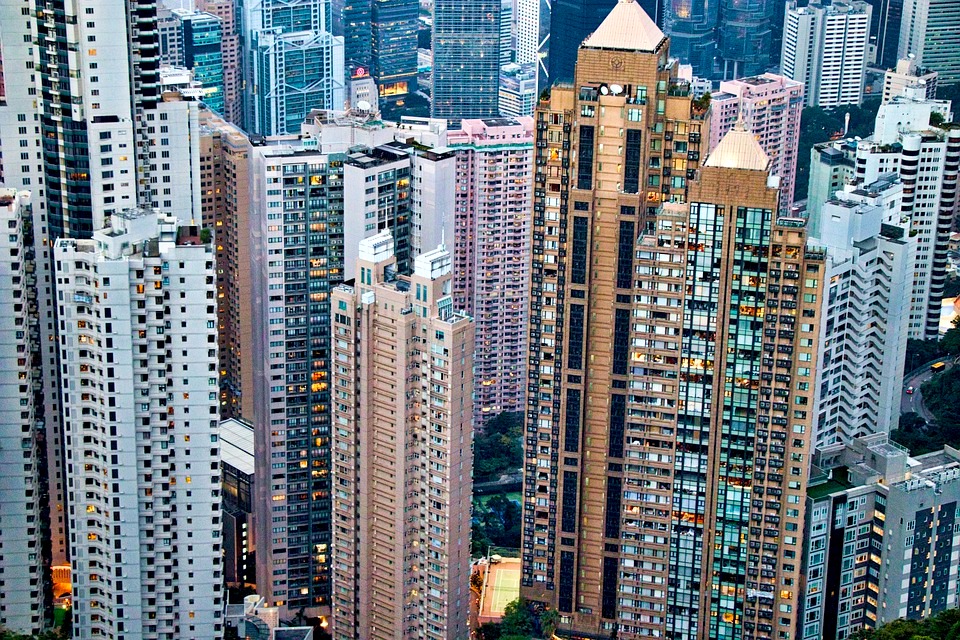
In a dispute that spanned years, Walter Kwok (67) – a member of Asia’s third richest family, who own the continent’s largest real estate company Sun Hung Kai Properties – contended that his younger siblings, Thomas (66) and Raymond (65), were due to get a larger slice of the family wealth than him.
Upon his father’s death, the property dynasty’s multi-billion riches were put into a series of trusts. His mother, Madam Kwong, was the settlor and due to hold 55% of the assets, with her three sons and their children each owed a third of the remaining chunk.
But Walter was unhappy with the properties included in his portion which were mostly based in San Francisco, but also included a Holiday Inn Express in Causeway Bay, Hong Kong, because they hadn’t surged in value over the years like his brothers’ in Hong Kong and Canada.
The issue sparked a family fall-out and, despite his mother’s attempts to broker a peace deal, Walter alleged that she would not know how to properly distribute trust funds and may have been acting “under the influence of someone behind the scenes.”
Caught in the middle, Jersey-based trustee HSBC CI sought guidance from the Royal Court, who concluded after a lengthy process that it would be acceptable for Walter’s trust to be ‘topped up’.

Pictured: Trustee HSBC CI sought guidance from the Royal Court on the matter.
But although the case was heard by Commissioner Sir Michael Birt and Jurats Grime and Sparrow ‘in private’, details of the case were leaked to the press – something that irked Walter, who was keen to not let this latest family dispute play out in the public eye.
The “high profile” family were already frequent protagonists in the media – Walter had, after all, been abducted and kept in a wooden crate for a week in 1997, then rumoured to have escaped after his family paid HK$600million in ransom. The experience reportedly left him with psychological problems, which allegedly led him to have an affair with a woman who influenced his business decisions. Media reports said that this led his brothers to remove him from the board of the family company.
In another twist, years later in 2012, Raymond and Thomas were charged with conspiracy to bribe a public official – Walter was not.
Such a history sparked what Walter branded in court as “intrusive and distressing” press coverage, with press photographers “regularly found outside the homes of family members” and said to “follow members of the family around Hong Kong as they go about their day to day business.”
Therefore, Walter reasoned, publishing the Royal Court judgement “would only increase the intensity and regularity of this intrusive press attention, which often borders on harassment.”
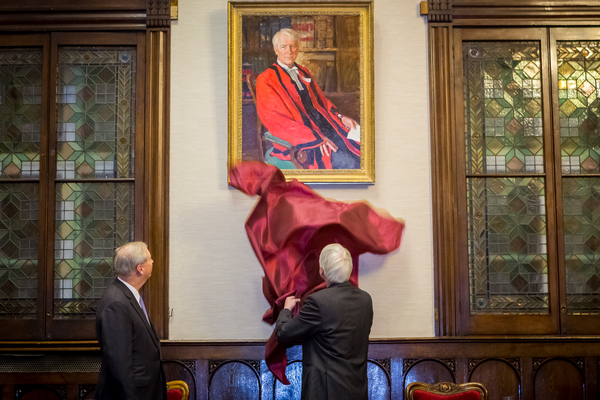
Pictured: Commissioner Michael Birt – pictured here unveiling a portrait of himself – heard the case.
Moreover, he felt that he was being unfairly painted as a villain in the family dispute via “sensational and misleading reports”, while concerns were also raised over whether the judgement’s mention of his two sons and their “substantial interest” in the family wealth would threaten their security, given that Walter had been kidnapped some years earlier.
While Walter’s representative, Advocate Langlois, appealed to the court to consider how publishing the judgement would “act as a source of oxygen and lead to another spate of about the family’s private affairs”, Advocate Kelleher argued on behalf of Madam Kwong that it would correct inaccurate details in reports based on ‘leaks’.
Although noting that the act of leaking private court information was a criminal offence, Commissioner Birt noted: “One cannot undo the fact that the information is in the public domain.”
He also noted that anonymising the information would be a “pointless” act, given how easily identifiable the family are, and that publishing his conclusions openly was an important act of public justice.
“The Judgment will not add materially to what has already been published about the private affairs of the family and in the circumstances, apart from the initial flurry upon publication, it is hard to see why publication of the Judgment should increase the intensity and regularity of press attention in the future, as is suggested by Walter,” he stated.
In his concluding remarks, the Commissioner added: “At some stage questions will undoubtedly be asked as to whether the Court has given a decision and if so what that decision was. It would in our judgment be unsatisfactory at that stage for the media to be told that the decision and the reasons for it are private. It is likely to lead to further speculative (and possibly inaccurate) reporting coupled with the risk of unofficial leakage of the decision. Given the level of detail already in the public domain and the attitude of the other members of the family, we consider that, in the particular circumstances of this case, the balance comes down firmly in favour of publication of the Judgment rather than non-publication.”
