


“Sobering” advice from the panel of experts responsible for advising the Government on economic matters has been highlighted by the CEO – who said Ministers have been advised to take “a more prudent approach to public spending”.
Dr Andrew McLaughlin told members of the Public Accounts Committee that the Fiscal Policy Panel’s latest report had warned that “the risks to growth have increased”.
The FPP stated that the island’s economy shrank by 1.5% in 2024, explaining that banking profits “appear to have levelled off following the very fast growth in 2022 and 2023 driven by sharply rising interest rates”.
It also pointed to “escalating trade tensions and geopolitical uncertainty” in the wake of US President Donald Trump’s new tariff regime, suggesting Jersey policymakers should “prepare for a more subdued economic environment, build up capital and liquidity cushions, and plan for weaker demand”.
Really what they’re saying is the world is a riskier place
Dr Andrew McLaughlin
The panel predicted that “a period of elevated inflation” is forecast for 2025 and 2026, before a return “to more moderate levels” in 2027.
Dr McLaughlin explained: “There are mounting risks in the world economy, they’re translating into increased downside risk in Jersey in the form of potentially a forecast for lower growth than we had previously and higher inflation, which is not a great mix.
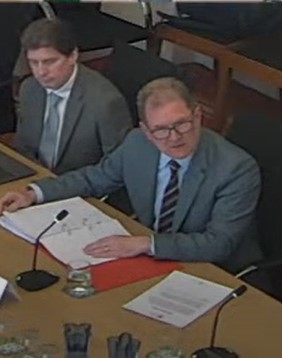
“They’ve called out a heightened risk to Jersey’s international financial centre, because of the change in trade policy in the main between nations – it is impacting global capital flows and creating a lot of uncertainty around global capital flows.”
Dr McLaughlin also noted the panel’s reference to uncertainty surrounding proceeds from a new global tax framework – known as the Pillar 2 international tax agreement – as the US is pushing for changes to the system.
“You put all that together, it’s very sobering – and really what they’re saying is the world is a riskier place,” he added.
“The risks to growth have increased. The risks, in particular, to financial services may have increased – it’s unclear.”
Saving for a rainy day
The Committee also heard that several major events, including the Covid pandemic, had depleted the island’s strategic reserve fund, with recommendations being made to Ministers to try to rebuild it each year.
The FPP has previously raised concerns about the strategic reserve – known as the rainy day fund – which it has argued was “unlikely to be sufficient to meet a major crisis”.
Dr McLaughlin said: “[The panel is saying] you only really have three things you can do with your money Jersey.
“You can save it to reserves, you can spend it on capital and hope that it gives you productivity in the long run, or you can spend it on services.”
He continued: “They are advising that, because the world’s riskier, that we pay more attention to saving, to reserves, and to a lesser extent capital over spending on services,” he continued.
“Our advice to ministers around this, but pre-dating this, has been very clear – which is trying to urge prudentialism.
“A more prudent approach to public spending, a more prudent approach to public finances, and a more prudent approach given the risks and uncertainty around those risks in the world economy.”
£63m deficit
Later in the hearing, the panel also discussed the £63 million deficit across government, documented by the latest States of Jersey Annual Report and Accounts.
Health was the largest departmental spending area, exceeding its budget by £28 million in 2024.
Dr McLaughlin said that several factors driving health overspending, including reliance on agency staff, increases in the price of drugs as well as “tertiary costs” incurred procuring off-island care, “don’t look like they’re going away,”.
He also discussed concerns surrounding the complexity of the Government’s portfolio of arms-length bodies, which he said “create work for each other”.
