


Global tensions in the Middle East have sent energy markets into turmoil… but what does that mean for Islanders?
While the government said this afternoon that supply chains “remain stable” for now, fuel suppliers this week warned that volatility in global markets could eventually filter through to local prices, with heating oil already impacted.
Express lays out what we know so far…
What has conflict in the Middle East got to do with us?
Energy markets are global, meaning shocks in one region can quickly affect prices elsewhere.
Global prices have already moved sharply.
Since the United States and Israel began bombing Iran last Saturday, Brent crude has risen by around 15% while liquified petroleum gas has increased by more than 50%.
Heating oil in particular is sensitive to disruptions affecting aviation fuel.
In information shared with customers, ATF explained that “although crude oil has risen, the main driver of heating oil prices in the UK and therefore the Channel Islands is jet fuel, as both fuels are kerosene-based”.
The company added that “the wholesale price of jet fuel has more than doubled, reaching its highest level in over three years”.
What is causing the spike in jet fuel prices?
Supply routes are a key factor.
ATF noted that “around 40% of Europe’s jet fuel imports normally come from the Middle East via the Strait of Hormuz, which is currently blocked”.
If shipments through that route are disrupted, alternative supply becomes harder and more expensive.
As the fuel business explained: “European refineries cannot fully replace this supply, and shipping costs from other regions are rising, pushing wholesale prices higher.”
What does that mean for heating oil?
Higher wholesale prices for fuel can quickly feed through to household heating costs.
ATF warned that “higher wholesale prices mean distributors pay more for fuel, which unfortunately leads to higher prices for customers”.
The company also said demand patterns have changed as the crisis unfolds.
It explained that “demand is also higher than usual as households order early due to the Middle East crisis, so prices are currently updated daily”.
Are petrol and diesel affected in the same way?
The picture is more mixed.
ATF said diesel prices “have substantially increased as the UK relies on the net import of diesel”.
Petrol markets are less exposed to the same pressures.
The company said “increases have been more limited, as the UK does not rely on the imports of petrol”.
Are prices already rising in Jersey?
So far, the impact at the pump has been limited.
ATF director Jon Best explained: “The key message is that there is no need to panic: there is no information to suggest any disruption to supply but because of volatility in the wholesale market.”
However, he warned the market could move quickly.
“The volatility will remain as long as the activity in the Middle East remains,” he said. “The market will go up and possibly down on a daily basis.”
ATF operates a “just in time” supply model, meaning it purchases fuel in line with daily market prices rather than storing large reserves.
Mr Best said: “This means we have a live price which is more volatile as a result.”
The company added that “our forecourt prices remain unchanged at present” and that “these will only be reviewed when current stock holdings are replenished”.
However, “there has already been an increase in our domestic heating oil prices”.
Price comparisons compiled by the Jersey Consumer Council show how there was a sudden spike last week.
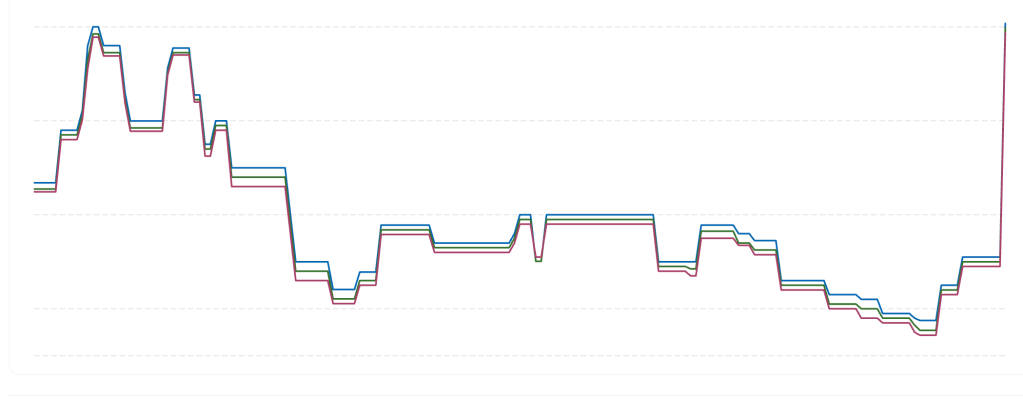
ATF saw the most extreme jump between 25 February and 5 March, going from 85.5 for 500 litres to 110.38.
What are other suppliers saying?
Other fuel providers say conditions remain stable for now.
According to price comparison information from the Jersey Consumer Council, heating oil provided by CI Fuels went from 87.12 on 25 February to 89.22 by 5 March, PDJ went from 84.07 to 89.06, while Rubis held at 88.62.
Rubis Channel Islands head of marketing Nick Crolla said: “Global fuel prices fluctuate daily as part of normal market conditions. We actively manage this volatility to help provide pricing stability for our customers and maintain strong, reliable supply chains.”
He added: “At present, it is business as usual with no supply concerns.”
But energy suppliers are monitoring the situation closely.
A spokesperson for Islands Energy Group said: “It is true that in the last couple of days, following the commencement of hostilities in the Middle East, the spot commodity price for gas has been very volatile and has risen significantly.”
They added: “If the recent dramatic rise in gas prices is maintained for any length of time, then we will reluctantly have to look at our pricing structure.”
What is the government saying?
The Chief Minister has sought to reassure Islanders that supplies remain secure.
In a statement issued on Sunday afternoon, Deputy Lyndon Farnham said: “At present, supply chains remain stable and we do not anticipate any disruption to the availability of goods or essential products.”
However, officials were said to be “monitoring potential economic impacts, including any inflationary pressures arising from wider global uncertainty”.
UPDATE – Our thoughts remain with all those affected by the recent events in the Middle East.
— Dep. Lyndon Farnham (@lyndonfarnham) March 8, 2026
Islanders experiencing travel disruption are strongly encouraged to check the latest updates on the UK Foreign, Commonwealth and Development Office (FCDO) website, which remains the… pic.twitter.com/FlFbPYZUSq
Deputy Farnham said the government was also working with local partners including the Jersey Consumer Council, “who continue to track local market conditions and pricing trends”.
So… should I be worried?
For now, there is no need to panic… but, as all suppliers have noted, the situation remains unpredictable.
Follow Express for all the latest updates and explainers on how the news affects you.
