

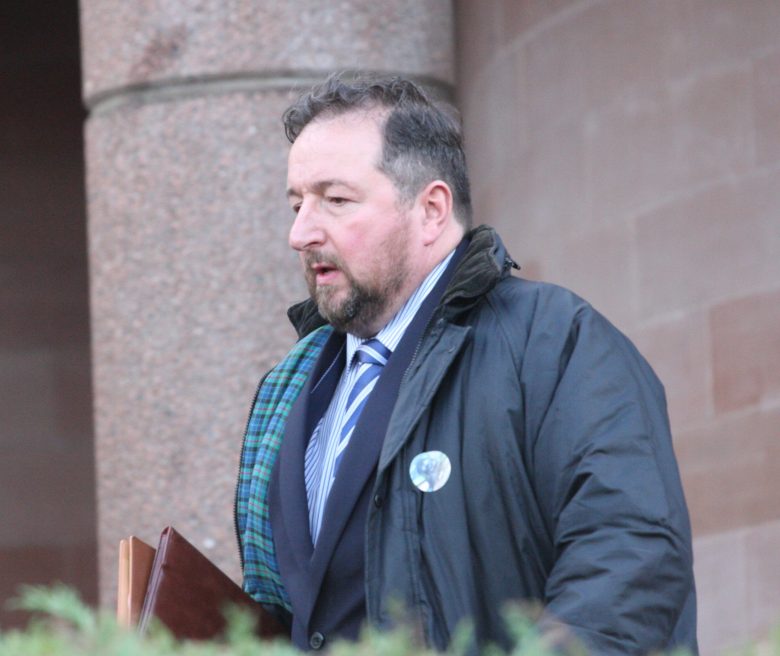
A Scottish fraudster who conned the Jersey Royal Company as part of a half-a-million pound tea-growing scam has been found guilty.
Thomas Robinson told the island business, and several other tea growers and producers in the UK, that the thousands of tea plants he was supplying were grown on a Perthshire farm, when in fact they were bought from a horticulturalist in Italy and sold on to duped customers for a vastly inflated price.
Falkirk Sheriff Court was told many of these plants later died or did not thrive.
The court heard Robinson also defrauded high-profile clients including the Dorchester Hotel in London and the Balmoral Hotel in Edinburgh with his claims that he was selling “Scottish-grown tea”, a prestige label which allowed him to make huge profits.
Robinson ultimately made £550,000 from the fraud.
Trading as the Wee Tea Plantation, Robinson pretended that he had learned about agriculture while serving in the armed forces and also purported to have academic qualifications and awards from industry bodies that he did not, the court heard.
The 55-year-old – who also went by Thomas O’Brien or ‘Tam O’Braan’ – was described as having the “CV of a fantasist”.
By using a “special biodegradable polymer”, which the prosecution said looked like a bin bag, Robinson claimed that he was able to make his tea grow twice as quickly as usual, and said he had presented to the Royal Horticultural Society about it.
Robinson even claimed to have sold tea to Kensington Palace, court documents showed, and was also said to have boasted that tea he had supplied to the Dorchester Hotel in London was the “Queen’s favourite”.

Robinson’s duplicity was “all in order to support the pretence” that he had “developed new techniques for growing tea efficiently in the climate of Scotland”, according to the documents.
The fraud against the Jersey Royal Company took place between 2014 and 2018, before its sale to supplier Albert Bartlett in 2024.
Robinson was caught after Perth and Kinross Council checked whether he had a food processing licence in 2017 which ultimately led to Food Standards Scotland’s food crime unit launching an investigation.
Robinson pleaded not guilty to two counts of fraud at Falkirk Sheriff Court, and said in his defence that paperwork which could prove his innocence had been destroyed in a flood.
A jury found him guilty within six hours of deliberation following a three-week trial.
This was not a victimless crime
Ron McNaughton, Head of the Scottish Food Crime and Incidents Unit
The conviction followed a “highly complex and protracted investigation” by Food Standards Scotland, which “required a significant amount of time, expertise and coordination across our team and with partner agencies”.
Ron McNaughton, Head of the Scottish Food Crime and Incidents Unit, explained that the sort of fraud perpetrated by Robinson “is often difficult to detect and even harder to prove”.
But he said his team was “determined to pursue every line of enquiry to build the strongest possible case”.
“This was not a victimless crime – individuals, businesses, and an emerging sector of genuine Scottish tea growers suffered real financial and reputational harm as a result of deliberate deception,” he added.
“I would like to thank the witnesses who came forward and supported the investigation; their cooperation was essential to achieving this outcome.”
Robinson is currently scheduled to be sentenced on 25 June at Stirling Sheriff Court.
Sheriff Keith O’Mahony warned him to expect “significant sentencing consequences”.
