

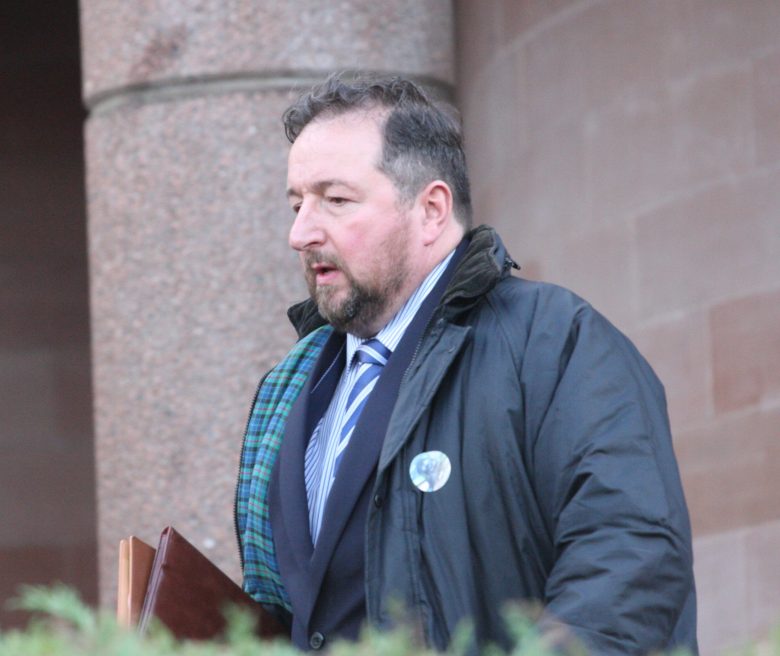
A Scottish conman has been sent to prison for three-and-a-half years after he scammed the Jersey Royal Company and other businesses in a £550,000 fraudulent tea-growing scheme.
Thomas Robinson falsely claimed that he grew thousands of tea plants – many of which later died – on a Perthshire farm in an act of deceit which allowed him to sell them at a high price to prestigious buyers due to their “Scottish-grown” label.
But the plants were actually sourced from Europe for cheap before being sold on at a significant mark-up to unsuspecting customers, which included the Jersey Royal Company.
The fraud against the Jersey Royal Company took place between 2014 and 2018, before its sale to supplier Albert Bartlett in 2024.
Robinson – who also went by Thomas O’Brien or ‘Tam O’Braan’ – made £550,000 from the scam over a five-year period.
The Dorchester Hotel in London and the Balmoral Hotel in Edinburgh were among the high-profile clients defrauded by Robinson via his Wee Tea Plantation business, and the conman even claimed he sold tea to Kensington Palace.
The 55-year-old was said to have the “CV of a fantasist”, which included faking academic qualifications and agricultural expertise to back up his claims to have developed new techniques for growing tea in the Scottish climate.
Robinson was sentenced to three-and-a-half years in prison at Stirling Sheriff Court on Wednesday. A jury previously found him guilty of two counts of fraud following a three-week trial at Falkirk Sheriff Court.
He was ultimately brought to trial following a “highly complex and protracted investigation” by Food Standards Scotland, after Perth and Kinross Council checked whether the fraudster had a food processing licence in 2017.
Robinson’s sentencing was delayed after his lawyer withdrew from the case on Wednesday and Robinson instead represented himself. Appearing via videolink from HMP Low Moss, Robinson asked for the court to show “compassion”.
A bid to defer sentence was rejected by the court.
Robinson told the court he had “sleepless nights” over his crimes and had come to realise “how wrong and stupid” he had been.
He admitted he had been responsible for the reputational damage of tea growing in Scotland.
The convictions were described as “significant”, requiring “significant planning”, by Sheriff Keith O’Mahony.
Ron McNaughton, head of the Scottish Food Crime and Incidents Unit, welcomed the sentencing as a “clear signal that food fraud is a serious crime with serious consequences”.
He added: “A three-and-a-half year custodial sentence reflects the scale and impact of Robinson’s deception. His actions caused real financial and reputational harm to individuals, businesses and a developing sector of genuine Scottish tea producers.
“This outcome is the result of a complex and painstaking investigation involving a dedicated team at FSS and the co-operation of partner agencies and key witnesses.”
