


Proposed changes to Jersey’s food law will make allergen labelling a legal requirement for the first time – and introduce a new paid licensing scheme for food businesses.
The draft secondary legislation was published today as part of a 10-week public consultation.
Feedback will help to finalise the secondary legislation, which is due to be presented to the States Assembly for debate in early 2026.
The proposed regulations include mandatory allergen labelling, updated food hygiene rules, and a licensing scheme for food businesses.
If approved, food allergen labelling will be a legal requirement in the island for the first time and bring Jersey in line with UK and EU labelling standards.
The changes will apply to pre-packed food, food pre-packed for direct sale such as sandwiches made and packed on-site, non-pre-packed food such as restaurant meals, and distance selling such as online or phone orders.
Some informal or charitable events such as school cake sales will be exempt from licensing and labelling requirements.
Plans for a new licensing scheme for food businesses are proposed to replace the current free registration model with a paid, risk-based licensing scheme.
Currently, registration of food premises is free and includes access to services such as inspections, technical guidance, and participation in the Eat Safe scheme.
“Because registration is free, there is little incentive for businesses to keep their records
up to date,” the consultation explains.
“This can hinder effective communication and, ultimately, pose risks to public health.”
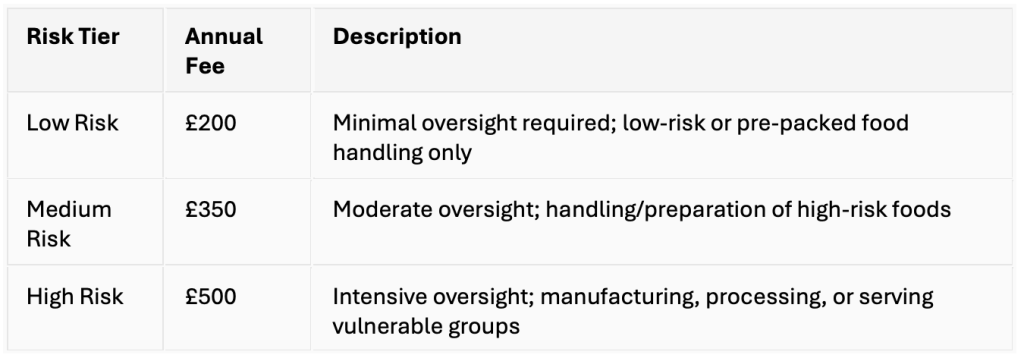
But if the changes are approved, all food businesses involved in preparation, processing, or sale of food will have to obtain an annual licence – with fees determined by the level of risk their operations pose to public health.
Low-risk businesses such as retailers selling only pre-packed goods would pay £200 per year, while medium-risk businesses like cafés or butchers would pay £350.
High-risk operations, such as those manufacturing food or serving vulnerable populations, would pay £500.
The move is designed to modernise Jersey’s food safety oversight by improving data accuracy through annual licence renewals, allowing regulators to prioritise inspections based on risk, and providing stronger enforcement powers – including the ability to revoke licences for serious non-compliance.
The consultation explains that the new scheme would create a fairer and more sustainable framework by ensuring that businesses contribute proportionately to the cost of maintaining high food safety standards.
The estimated annual cost of delivering these services is approximately £300,000, according to the consultation.
The changes would impact the approximately 1,300 food businesses currently registered in Jersey.

Environment Minister Steve Luce said the proposed changes are a “crucial step to ensuring Jersey’s food system is aligned with international standards”.
He explained: “The law has been designed with proportionality in mind, and I want to reassure those with concerns that it is not intended to target occasional activities, like charity cake sales for example.
“This is ensuring high standards of food hygiene, safety and standards at every stage of the food chain – from the primary producer to the end consumer.
“Many food businesses are already making great efforts to do this, and the legislation will help ensure that everyone can enjoy food safely.”
Deputy Luce added: “I encourage islanders, food businesses, and stakeholders to review the proposed legislation and share your thoughts.
”Your feedback will help inform the final legislation which will be brought to the States Assembly for approval early next year.”
