


The government hasn’t yet given the official reason for the change, but it’s thought fears over the more transmissible variant of covid, first identified in India, is behind the tightening of restrictions.
On Tuesday evening, the Government published the new list of ‘red’ regions in the UK, which means travellers will have to isolate on arrival in Jersey until they get a negative PCR test result after 10 days. That rule applies even if the person has been fully vaccinated.
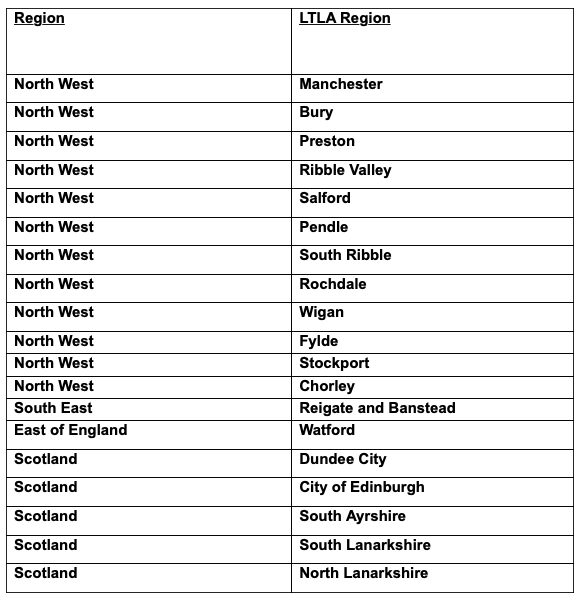
Pictured: the 19 new ‘Local tier local authorities’ which have now been added to the red list.
The emergency brake classifications will be reviewed twice a week.
The new list adds to the 15 areas which were designated as red last week.
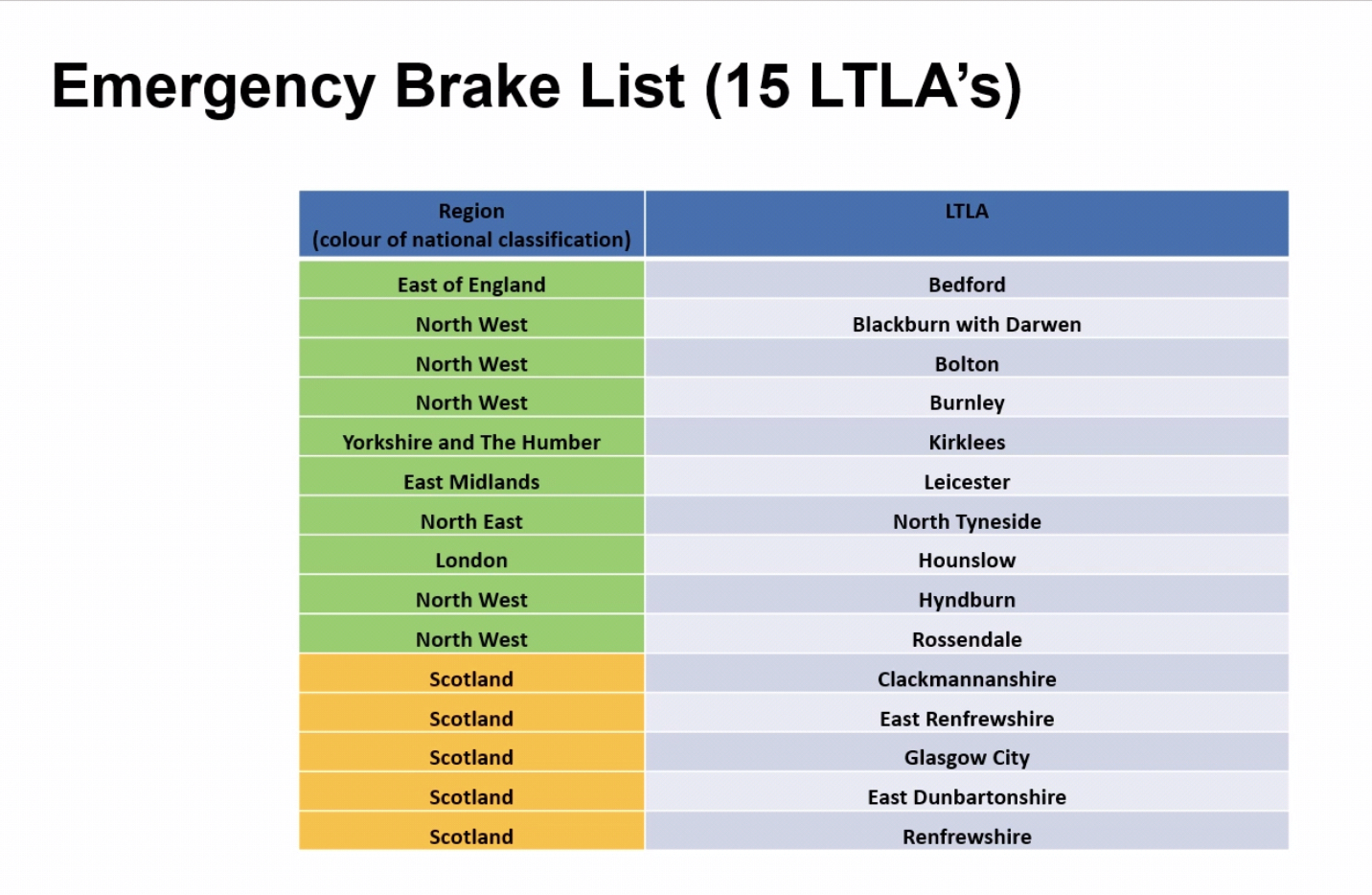
Pictured: the 15 ‘red’ areas announced last week.
Speaking last week, Chief Minister John Le Fondré, said: “When Ministers made the decision a couple of weeks ago to move to national classifications for the UK, infection rates were on a downward trend.
“Ministers have reviewed the options for travel classifications from 28 May with the recent emergence of the B1.617.2 variant of concern and have agreed that continuing to national classifications remains the best option.
“Having reviewed the latest data from the UK, alongside the Minister for Health and Social Services and officers from Public Health, 15 areas of concern in the UK have been identified where the B1.617.2 variant is prominent.
“The Minister for Health and Social Services has applied the emergency brake for these lower tier areas, so they will be classified as red.”
From Thurs 3 June at 00:01, 19 additional Red emergency brakes will be introduced in UK regions.
The emergency brake data will be run twice a week, and the Red emergency brake classification will apply for a minimum of 14 days. Emergency brakes currently in place still remain. pic.twitter.com/379RdxBGMx
— Government of Jersey (@GovJersey) June 1, 2021
Travellers need to declare their 14-day travel history when completing their pre-departure forms.
All arriving passengers must check the up-to-date classifications of where they have stayed in the past 14 nights. The testing and isolation requirements will be based on the highest classification of all the places a passenger stayed during that period.
The latest figures record that Jersey has 5 officially confirmed cases of covid.
