

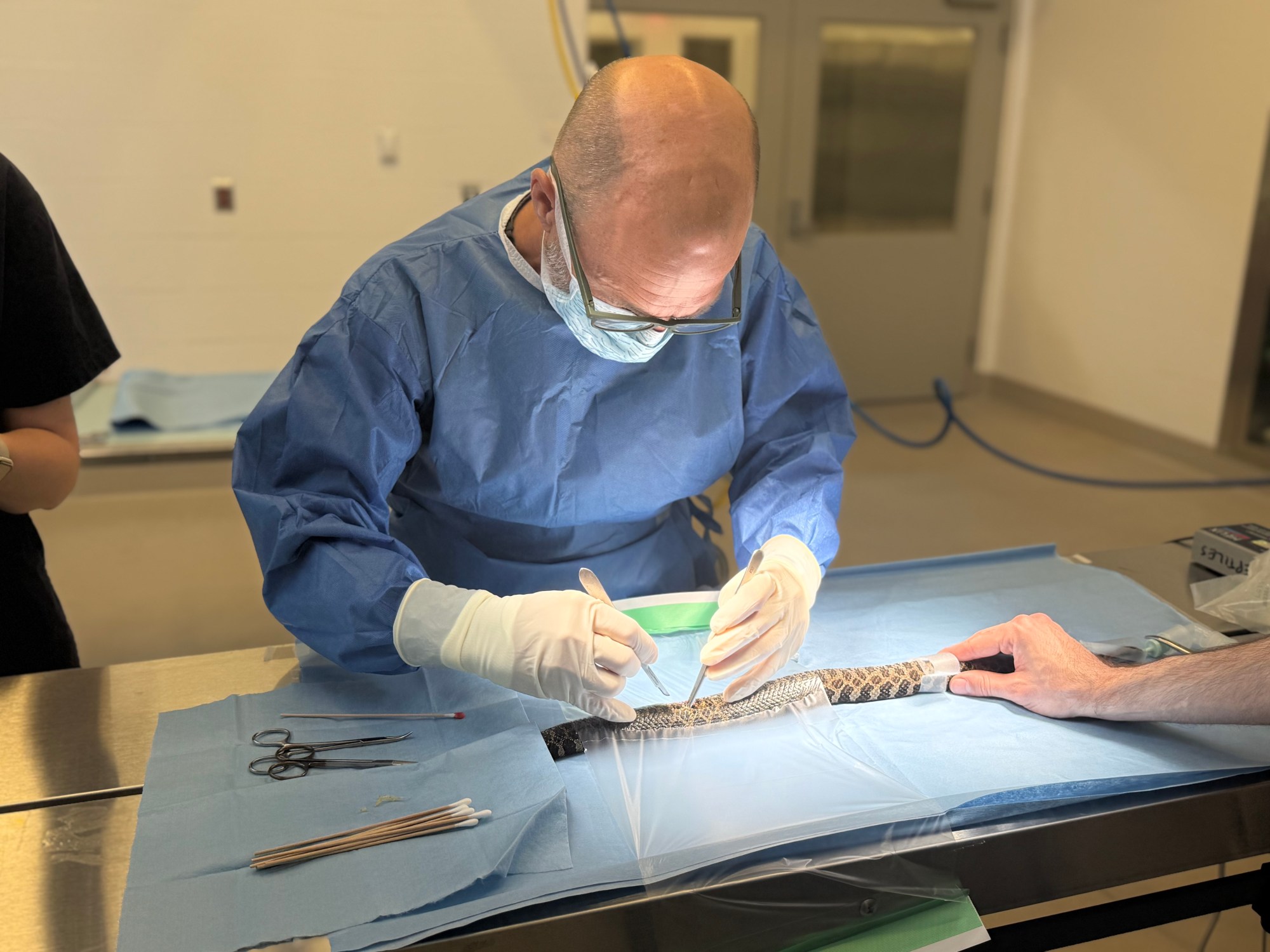
Durrell has appointed the former director of wildlife health at Toronto Zoo as its new head of veterinary services.
Dr Nic Masters is a “highly experienced wild-animal vet” who has worked at Toronto Zoo for the past three years.
Prior to that, he worked at the Zoological Society of London for 10 years as head of veterinary services, interim director of living collections, and assistant director of wildlife health services.
Dr Masters has arrived in Jersey to join the existing Jersey Zoo vet team – which comprises veterinary surgeons Dave and Violaine, veterinary support manager Theresa, and veterinary nurse Anne.

Dr Masters said: “I am incredibly excited to be joining the team at Durrell. Gerry’s prescient mission of ‘saving species from extinction’ was trailblazing, and I was equally drawn to the trust’s ‘Rewild our World’ strategy and long-term vision.
“I believe Durrell is an amazing organisation, achieving and capable of even more global impact, and I’m delighted to be part of it.”
He added: “I am looking forward to meeting the animals under our care at the Zoo, the staff who look after them every day, and doing my very best to ensure their well-being through excellent zoological medicine.
“And I’ll be exploring all the ways in which the veterinary team can extend that knowledge, skillset and experience to field programmes, to training, and to research.”
Durrell’s director of zoo operations, Mark Habben, said: “I am really looking forward to welcoming Nic to the team, especially after working together at the Zoological Society of London.
“Many people do not know about the important role the vet team plays both at Jersey Zoo and in our field programmes around the world, helping to provide all of the animals we look after with the best-possible care.”
Durrell chief executive Rebecca Brewer added: “We are incredibly fortunate to have such a skilled team of vets on site at Jersey Zoo and Nic’s appointment strengthens this even further, enabling us to continue in leading the way in conservation science.”
