

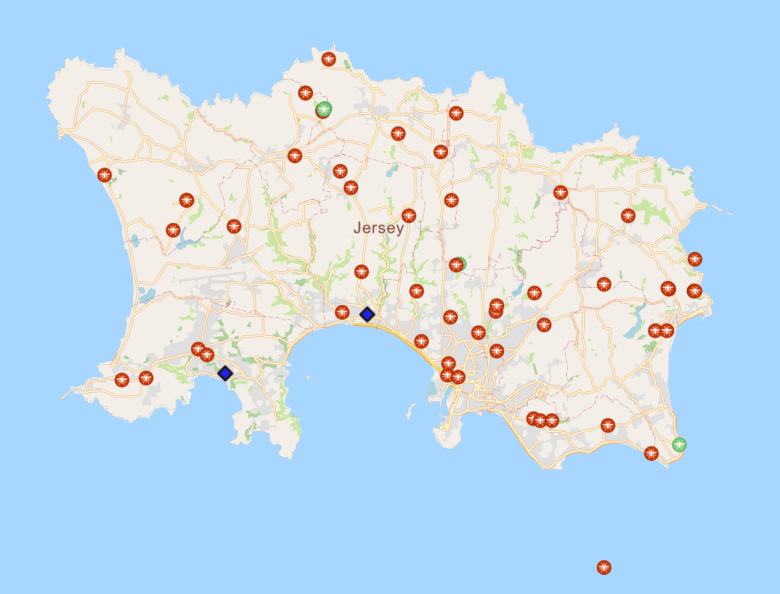
The experts charged with cracking down on invasive species in Jersey have unleashed a new weapon for tracking and tracing the spread of Asian hornets after more than 4,000 reports were received last year.
The Infrastructure and Environment Department’s biosecurity team have launched a new interactive map and online form to help streamline the process for reporting sightings of the insects and their nests, with many previously having been reported via phone and email.
The map, which can be found here, allows the public to see if a sighting has already been reported, or if the nest has already been destroyed.
It also allows Islanders to monitor if a new report is confirmed or plausible.
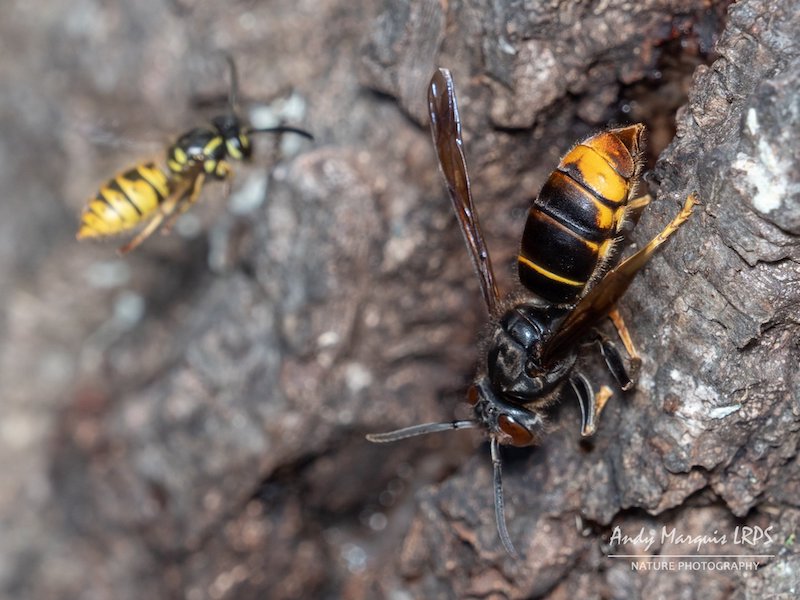
Because it’s easy to confuse Asian hornets with European hornets, the map will also help Islanders differentiate between different types of insects.
European hornets, for example, can be identified via their predominantly yellow bodies, whereas Asian hornets are generally dark in colour and have black heads with orange-and-yellow faces.
It’s important to note that Asian hornets are an “invasive” species, in contrast to European hornets, which are native to Jersey, meaning the Natural Environment team doesn’t deal with their nests.
Islanders are warned never to disturb, remove or treat a nest – and are advised to call 01534 441633 to report “emergency” sightings.
READ: How to spot Asian hornets and their nests
Senior Scientific Officer for Invasive Species Alastair Christie said: “This is an exciting development in our management of this invasive species and should significantly reduce the time spent processing reports, allowing us to concentrate on prompt nest destruction or appropriate actions.
“We hope that the public of Jersey, who have very much been our eyes on the ground with the control programme, will embrace this new and efficient way of reporting, which will provide the key information that we need without so much processing.
“By consulting the map, Islanders can also see if a nest that they spot has already been reported.”
Government advice states that spring queen hornets will be emerging from hibernation and establishing nests.
“Islanders are encouraged to check outbuildings, lean-tos, sheds, carports, door and window lintels and eaves for any sign of nest building,” according to the advice.
